Kirjojen hintavertailu. Mukana 11 244 527 kirjaa ja 12 kauppaa.

Kirjahaku

Etsi kirjoja tekijän nimen, kirjan nimen tai ISBN:n perusteella.

6 kirjaa tekijältä Tony Cheng

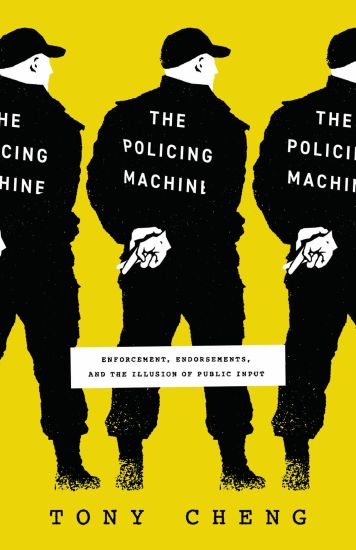
The Policing Machine

The Policing Machine

Tony Cheng

THE UNIVERSITY OF CHICAGO PRESS
2024
sidottu
A revelatory look at how the NYPD has resisted change through strategic and selective community engagement. The past few years have seen Americans express passionate demands for police transformation. But even as discussion of no-knock warrants, chokeholds, and body cameras has exploded, any changes to police procedures have only led to the same outcomes. Despite calls for increased accountability, police departments have successfully stonewalled change. In The Policing Machine, Tony Cheng reveals the stages of that resistance, offering a close look at the deep engagement strategies that NYPD precincts have developed with only subsets of the community in order to counter any truly meaningful, democratic oversight. Cheng spent nearly two years in an unprecedented effort to understand the who and how of police-community relationship building in New York City, documenting the many ways the police strategically distributed power and privilege within the community to increase their own public legitimacy without sacrificing their organizational independence. By setting up community councils that are conveniently run by police allies, handing out favors to local churches that will promote the police to their parishioners, and offering additional support to institutions friendly to the police, the NYPD, like police departments all over the country, cultivates political capital through a strategic politics that involves distributing public resources, offering regulatory leniency, and deploying coercive force. The fundamental challenge with police-community relationships, Cheng shows, is not to build them. It is that they already exist and are motivated by a machinery designed to stymie reform.
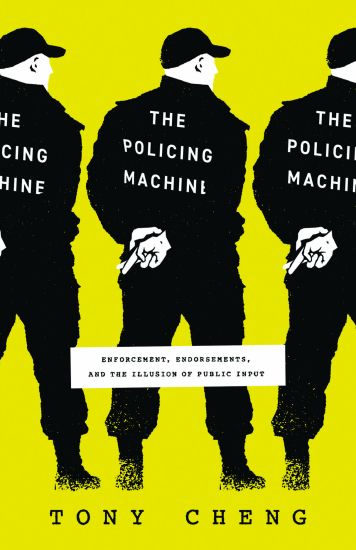
The Policing Machine

The Policing Machine

Tony Cheng

THE UNIVERSITY OF CHICAGO PRESS
2024
nidottu
A revelatory look at how the NYPD has resisted change through strategic and selective community engagement. The past few years have seen Americans express passionate demands for police transformation. But even as discussion of no-knock warrants, chokeholds, and body cameras has exploded, any changes to police procedures have only led to the same outcomes. Despite calls for increased accountability, police departments have successfully stonewalled change. In The Policing Machine, Tony Cheng reveals the stages of that resistance, offering a close look at the deep engagement strategies that NYPD precincts have developed with only subsets of the community in order to counter any truly meaningful, democratic oversight. Cheng spent nearly two years in an unprecedented effort to understand the who and how of police-community relationship building in New York City, documenting the many ways the police strategically distributed power and privilege within the community to increase their own public legitimacy without sacrificing their organizational independence. By setting up community councils that are conveniently run by police allies, handing out favors to local churches that will promote the police to their parishioners, and offering additional support to institutions friendly to the police, the NYPD, like police departments all over the country, cultivates political capital through a strategic politics that involves distributing public resources, offering regulatory leniency, and deploying coercive force. The fundamental challenge with police-community relationships, Cheng shows, is not to build them. It is that they already exist and are motivated by a machinery designed to stymie reform.
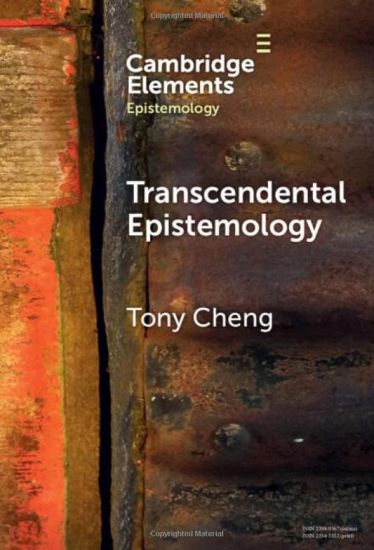
Transcendental Epistemology

Transcendental Epistemology

Tony Cheng

Cambridge University Press
2024
pokkari
Transcendental arguments were prominent in Western philosophy, German idealism, phenomenological tradition, and P. F. Strawson's thinking. They have fallen out of fashion because of their associations with transcendental idealism and verificationism. They are still invoked by important figures in the analytic tradition even if the very same tradition has cast doubt on such arguments. The nature of transcendental arguments remains unclear: Are they supposed to be deductive? Are they synthetic or analytic? If they are a priori, how are they supposed to be about the empirical world? What are their relations to necessity, conceivability, and essence? This Element takes up the challenge of elucidating the nature of transcendental arguments, embedded in the wider context of transcendental epistemology. It will be argued that the key premise 'transcendental conditional' is synthetic, necessary, and a posteriori.
Transcendental Epistemology

Transcendental Epistemology

Tony Cheng

Cambridge University Press
2024
sidottu
Transcendental arguments were prominent in Western philosophy, German idealism, phenomenological tradition, and P. F. Strawson's thinking. They have fallen out of fashion because of their associations with transcendental idealism and verificationism. They are still invoked by important figures in the analytic tradition even if the very same tradition has cast doubt on such arguments. The nature of transcendental arguments remains unclear: Are they supposed to be deductive? Are they synthetic or analytic? If they are a priori, how are they supposed to be about the empirical world? What are their relations to necessity, conceivability, and essence? This Element takes up the challenge of elucidating the nature of transcendental arguments, embedded in the wider context of transcendental epistemology. It will be argued that the key premise 'transcendental conditional' is synthetic, necessary, and a posteriori.
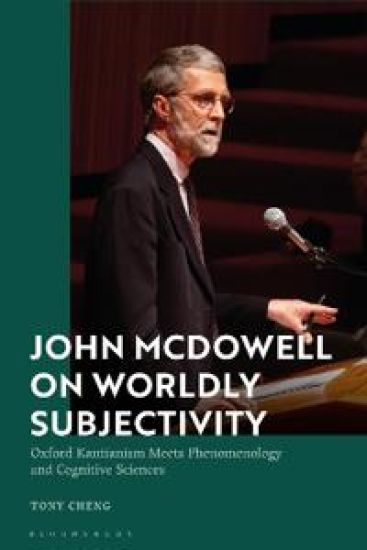
John McDowell on Worldly Subjectivity

John McDowell on Worldly Subjectivity

Tony Cheng

Bloomsbury Academic
2021
sidottu
John McDowell’s philosophical ideas are both influential and comprehensive, encompassing philosophy of mind, philosophy of language, epistemology, ethics, metaphysics and the history of philosophy. This book is a much-needed systematic overview of McDowell’s thought that offers a clear and accessible route through the main elements of his philosophy. Arguing that the world and minded human subject are constitutively interdependent, the book examines and critically engages with McDowell’s views on naturalism of second nature, the inner space model, intentionality, personhood and practical wisdom. The book presents novel discussions on the debates between McDowell and other key philosophers, including Hubert Dreyfus, Robert Brandom, Hans-Georg Gadamer, Donald Davidson, Maurice Merleau-Ponty and Immanuel Kant, amongst others. Demonstrating a thorough understanding of McDowell’s work, Tony Cheng makes connections to both the phenomenological tradition and cognitive sciences to show the wider relevance of McDowell’s philosophy. In doing so, he sheds light on how influential McDowell’s thought is to the analytic tradition.
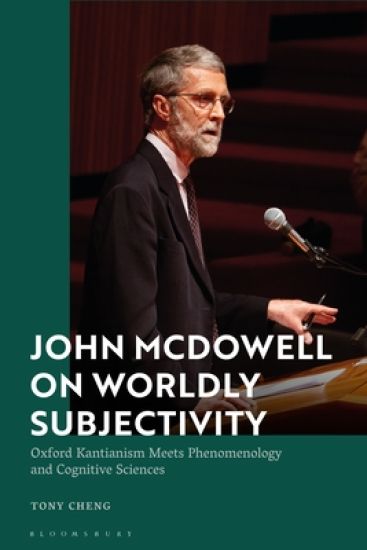
John McDowell on Worldly Subjectivity

John McDowell on Worldly Subjectivity

Tony Cheng

BLOOMSBURY PUBLISHING PLC
2022
nidottu
John McDowell’s philosophical ideas are both influential and comprehensive, encompassing philosophy of mind, philosophy of language, epistemology, ethics, metaphysics and the history of philosophy. This book is a much-needed systematic overview of McDowell’s thought that offers a clear and accessible route through the main elements of his philosophy. Arguing that the world and minded human subject are constitutively interdependent, the book examines and critically engages with McDowell’s views on naturalism of second nature, the inner space model, intentionality, personhood and practical wisdom. The book presents novel discussions on the debates between McDowell and other key philosophers, including Hubert Dreyfus, Robert Brandom, Hans-Georg Gadamer, Donald Davidson, Maurice Merleau-Ponty and Immanuel Kant, amongst others. Demonstrating a thorough understanding of McDowell’s work, Tony Cheng makes connections to both the phenomenological tradition and cognitive sciences to show the wider relevance of McDowell’s philosophy. In doing so, he sheds light on how influential McDowell’s thought is to the analytic tradition.