Kirjojen hintavertailu. Mukana 11 646 264 kirjaa ja 12 kauppaa.

Kirjahaku

Etsi kirjoja tekijän nimen, kirjan nimen tai ISBN:n perusteella.

13 kirjaa tekijältä Tony Crowley

Wars of Words

Wars of Words

Tony Crowley

Oxford University Press
2005
sidottu
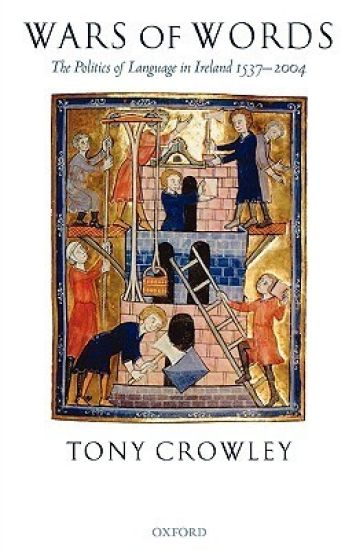
Wars of Words is the first comprehensive survey of the politics of language in Ireland during the colonial and post-colonial periods. Challenging received notions, Tony Crowley presents a complex, fascinating, and often surprising history which has suffered greatly in the past from over-simplification. Beginning with Henry VIII's Act for English Order, Habit, and Language (1537) and ending with the Republic of Ireland's Official Languages Act (2003) and the introduction of language rights under the legislation proposed by the Northern Ireland Human Rights Commission (2004), this clear and accessible narrative follows the continuities and discontinuities of Irish history over the past five hundred years. The major issues that have both united and divided Ireland are considered with regard to language, including ethnicity, cultural identity, religion, sovereignty, propriety, purity, memory, and authenticity. But rather than simply presenting the accepted wisdom on many of the language debates, this book re-visits the material and considers previously little-known evidence in order to offer new insights and to contest earlier accounts. The materials range from colonial state papers to the writings of Irish revolutionaries, from the work of Irish priest historians to contemporary loyalist politicians, from Gaelic dictionaries to Ulster-Scots poetry. Wars of Words offers a reading of the crucial role language has played in Ireland's political history. It concludes by arguing that the Belfast Agreement's recognition that languages are 'part of the cultural wealth of the island of Ireland', will be central to the social development of the Republic and Northern Ireland. The final chapter analyses the way in which contemporary poets have used Gaelic, Hiberno-English, Ulster-English, and Ulster-Scots, as vehicles for the various voices that demand to be heard in the new societies on both sides of the border.
Wars of Words

Wars of Words

Tony Crowley

Oxford University Press
2008
nidottu
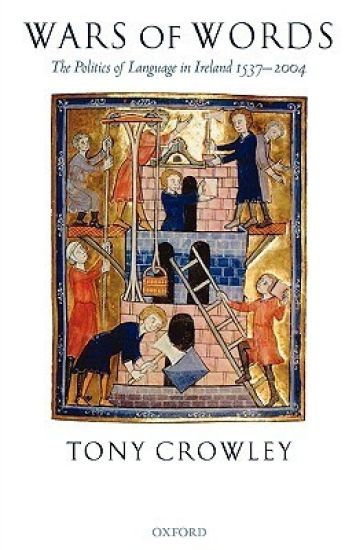
Wars of Words is the first comprehensive survey of the politics of language in Ireland during the colonial and post-colonial periods. Challenging received notions, Tony Crowley presents a complex, fascinating, and often surprising history which has suffered greatly in the past from over-simplification. Beginning with Henry VIII's Act for English Order, Habit, and Language (1537) and ending with the Republic of Ireland's Official Languages Act (2003) and the introduction of language rights under the legislation proposed by the Northern Ireland Human Rights Commission (2004), this clear and accessible narrative follows the continuities and discontinuities of Irish history over the past five hundred years. The major issues that have both united and divided Ireland are considered with regard to language, including ethnicity, cultural identity, religion, sovereignty, propriety, purity, memory, and authenticity. But rather than simply presenting the accepted wisdom on many of the language debates, this book re-visits the material and considers previously little-known evidence in order to offer new insights and to contest earlier accounts. The materials range from colonial state papers to the writings of Irish revolutionaries, from the work of Irish priest historians to contemporary loyalist politicians, from Gaelic dictionaries to Ulster-Scots poetry. Wars of Words offers a reading of the crucial role language has played in Ireland's political history. It concludes by arguing that the Belfast Agreement's recognition that languages are 'part of the cultural wealth of the island of Ireland', will be central to the social development of the Republic and Northern Ireland. The final chapter analyses the way in which contemporary poets have used Gaelic, Hiberno-English, Ulster-English, and Ulster-Scots, as vehicles for the various voices that demand to be heard in the new societies on both sides of the border.
Proper English

Proper English

Tony Crowley

Routledge
1991
sidottu
First published in 1991. Debates about the state and status of the English language are rarely debates about language alone. Closely linked to the question, what is proper English? is another, more significant social question: who are the proper English? The texts in this book have been selected to illustrate the process by which particular forms of English usage are erected and validated as correct and standard. At the same time, the texts demonstrate how a certain group of people, and certain sets of cultural practices are privileged as correct, standard and central. Covering a period of three hundred years, these writers, who include Locke, Swift, Webster, James, Newbolt and Marenbon, wrestle with questions of language change and decay, correct and incorrect usage, what to prescribe and proscribe. Reread in the light of recent debates about cultural identity - how is it constructed and maintained? what are its effects? - these texts clearly demonstrate the formative roles of race, class and gender in the construction of proper ‘Englishness' . Tony Crowley's introductory material breaks new ground in rescuing these texts from the academic backwater of the 'history of the language' and in reasserting the central role of language in history.
Language in History

Language in History

Tony Crowley

Routledge
1995
nidottu
In Language in History, Tony Crowley provides the analytical tools for answering such questions. Using a radical re-reading of Saussure and Bahktin, he demonstrates, in four case studies, the ways in which language has been used to construct social and cultural identity in Britain and Ireland. For example, he examines the ways in which language was employed to construct a bourgeois public sphere in 18th Century England, and he reveals how language is still being used in contemporary Ireland to articulate national and political aspirations and why the Irish language died.By bringing together linguistic and critical theory with his own sharp historical and political consciousness, Tony Crowley provides a new agenda for language study; one which acknowledges the fact that writing about history has always been determined by the historical context, and by issues of race, class and gender. Language in History represents a major contribution to the field, and an essential text for anyone interested in language, discourse and communication.
The Politics of Language in Ireland 1366-1922
For almost a thousand years language has been an important and contentious issue in Ireland but above all it reflects the great themes of Irish history: colonial, invasion, native resistance, religious and cultural difference.Collected here for the first time are texts on language from the date of the first legislation against the Irish: the Statute of Kilkenny, 1366, to the constitution of the Free State in 1922. Crowley's introduction connects these texts to current debates, giving The Belfast Agreement as a textual example and illustrating that the language debates continue today. Divided into six historical sections with detailed editor's introductions, this unique sourcebook includes familiar cultural texts such as essays and letters by Yeats along side less familiar writings including the Preface to the New Testament in Irish. (1602).Providing direct access to original texts, this is an historical resource book which can be used as a case study in the relations between language and cultural identity.
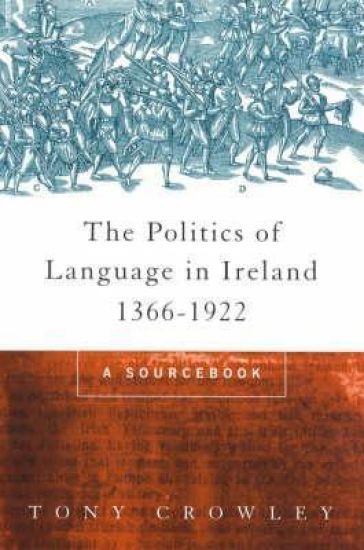
The Politics of Language in Ireland 1366-1922
For almost a thousand years language has been an important and contentious issue in Ireland but above all it reflects the great themes of Irish history: colonial, invasion, native resistance, religious and cultural difference.Collected here for the first time are texts on language from the date of the first legislation against the Irish: the Statute of Kilkenny, 1366, to the constitution of the Free State in 1922. Crowley's introduction connects these texts to current debates, giving The Belfast Agreement as a textual example and illustrating that the language debates continue today. Divided into six historical sections with detailed editor's introductions, this unique sourcebook includes familiar cultural texts such as essays and letters by Yeats along side less familiar writings including the Preface to the New Testament in Irish. (1602).Providing direct access to original texts, this is an historical resource book which can be used as a case study in the relations between language and cultural identity.
Proper English

Proper English

Tony Crowley

Routledge
2014
nidottu
First published in 1991. Debates about the state and status of the English language are rarely debates about language alone. Closely linked to the question, what is proper English? is another, more significant social question: who are the proper English? The texts in this book have been selected to illustrate the process by which particular forms of English usage are erected and validated as correct and standard. At the same time, the texts demonstrate how a certain group of people, and certain sets of cultural practices are privileged as correct, standard and central. Covering a period of three hundred years, these writers, who include Locke, Swift, Webster, James, Newbolt and Marenbon, wrestle with questions of language change and decay, correct and incorrect usage, what to prescribe and proscribe. Reread in the light of recent debates about cultural identity - how is it constructed and maintained? what are its effects? - these texts clearly demonstrate the formative roles of race, class and gender in the construction of proper ‘Englishness' . Tony Crowley's introductory material breaks new ground in rescuing these texts from the academic backwater of the 'history of the language' and in reasserting the central role of language in history.
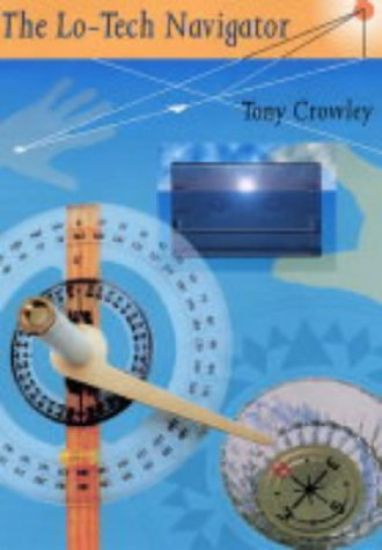
Lo-tech Navigator

Lo-tech Navigator

Tony Crowley

Seafarer Books
2004
nidottu
Today, with the rapid advances in science and technology, increasing numbers of sailors and boat owners venture across the world's oceans relying almost entirely on electronic aids and global positioning systems. In the unfortunate event of damage by electric storm, equipment failure, disruption by a truculent government or space junk, they may be left struggling to master the mysteries of celestial navigation and, like the flying Dutchman, doomed forever to circle the globe. Many of the ideas which are presented in this book are intended for the benefit of those sailors who wish to be less dependent on modern and expensive equipment and who want to discover how the early navigators found their way safely across vast oceans. In the first part of the book, several gadgets are presented which focus on pilotage skills, the use of charts and the management of tidal and other information. The second half is devoted to the basics of navigating by the sun and the stars and how to make a selection of traditional instruments.
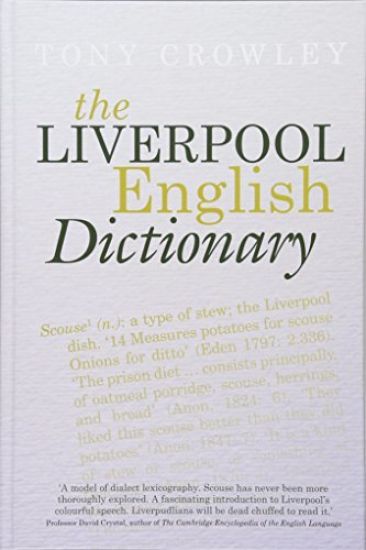
The Liverpool English Dictionary

The Liverpool English Dictionary

Tony Crowley

Liverpool University Press
2017
sidottu
Know someone with an antwacky stem-winder? Heard the Band of Hope Street? Ever been on a vinegar trip? Do you jangle? Ever met a Cunard yank in the Dingle? Could you pay for a dodger with a joey? Have you heard a maccyowler in a jigger? The Liverpool English Dictionary records the rich vocabulary that has evolved over the past century and a half, as part of the complex, stratified, multi-faceted and changing culture of this singular city. With over 2,000 entries from ‘Abbadabba’ to ‘Z-Cars’, the roots/routes, meanings and histories of the words of Liverpool are presented in a concise, clear and accessible format. Born and bred in Liverpool, Professor Tony Crowley has spent over thirty years compiling this bold and innovative dictionary, investigating historical lexicons, sociological studies, works of history, local newspapers, popular cultural representations, and, most importantly, the extensive ‘lost’ literature of the city. Illuminating, often remarkable, and always enjoyable, this book transforms our understanding of the history of language in Liverpool.
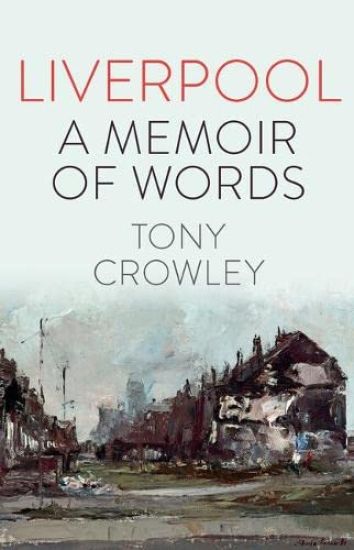
Liverpool: A Memoir of Words

Liverpool: A Memoir of Words

Tony Crowley

LIVERPOOL UNIVERSITY PRESS
2023
sidottu
Included in the TLS Books of the Year 2023 Written by an author brought up in working-class Liverpool in the 1960s and 1970s, Liverpool: A Memoir of Words is a work of creative non-fiction that combines the study of language in Liverpool with social history, the history of the English language and personal memoir. A beautifully written book, based on a lifetime’s academic research, it explores the relationship between language and memory, and demonstrates the ways in which words are enmeshed in history and history in words. Starting with ‘Ace’ and weaving its way alphabetically to ‘Z-Cars’, the work illustrates the deep relationship that has been forged in the past two hundred years or so between a form of language, a place and a social identity. The account is funny, sad, full of surprises and always illuminating. It tells the real history of ‘Scouse’, details the multicultural complexity of Liverpool English, examines the common use of ‘plazzymorphs’, and shows how Liverpudlian words exemplify standard processes of change and development. Neither a memoir, dictionary or history book, this work crosses different fields of knowledge in order to weave an engaging and fascinating story. It is a book that will educate and delight Liverpudlians, students of language and social historians alike.
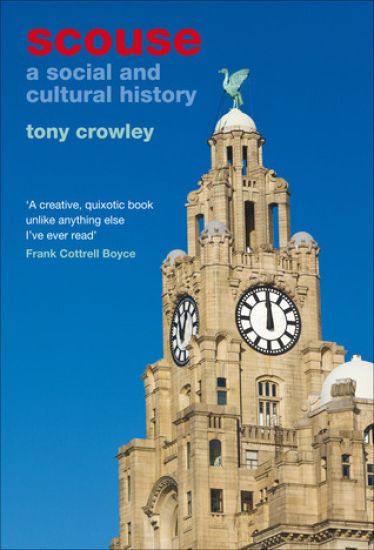
Scouse

Scouse

Tony Crowley

Liverpool University Press
2012
sidottu
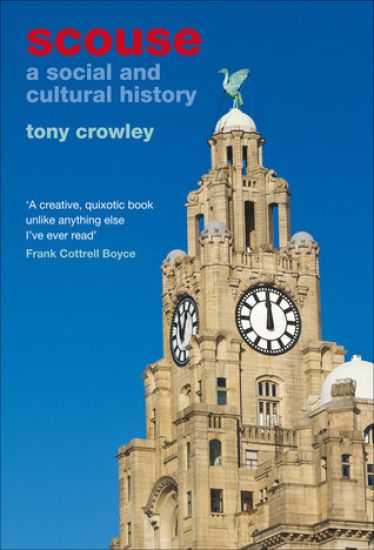
Nowhere in Britain is more closely associated with a form of language than Liverpool. Yet the history of language in Liverpool has been obscured by misrepresentation and myth-making and narratives of Liverpool’s linguistic past have scarcely done justice to the rich, complex and fascinating history which produced it. Scouse: A Social and Cultural History presents a ground-breaking and iconoclastic account which challenges many of the forms of received wisdom about language in Liverpool and presents an alternative version of the currently accepted history. Ranging from the mid eighteenth century to the present, the book explores evidence from a host of different sources including the first histories of Liverpool, a rare slaving drama set in the port, a poor house report which records the first use of ‘Scouse’ (the dish), nineteenth century debates on Gladstone’s speech, the ‘lost’ literature of the city, early to mid twentieth century newspaper accounts of Liverpudlian words, idioms and traditions, little-known essays which coined the use of ‘Scouse’ to refer to the language of Liverpool, aspects of popular culture in the 1950s and 60s, the Lern Yerself Scouse series, and examples drawn from contemporary literature. In addition the analysis draws on recent developments within the fields of sociolinguistics and linguistic anthropology - particularly with regard to the study of language and identity and the relationship between language and a sense of place – in order to provide a radically new understanding of ‘Scouse’ in terms of its history, its representation, and its contemporary social and cultural significance.
Scouse

Scouse

Tony Crowley

Liverpool University Press
2012
nidottu
Nowhere in Britain is more closely associated with a form of language than Liverpool. Yet the history of language in Liverpool has been obscured by misrepresentation and myth-making and narratives of Liverpool’s linguistic past have scarcely done justice to the rich, complex and fascinating history which produced it. Scouse: A Social and Cultural History presents a ground-breaking and iconoclastic account which challenges many of the forms of received wisdom about language in Liverpool and presents an alternative version of the currently accepted history. Ranging from the mid eighteenth century to the present, the book explores evidence from a host of different sources including the first histories of Liverpool, a rare slaving drama set in the port, a poor house report which records the first use of ‘Scouse’ (the dish), nineteenth century debates on Gladstone’s speech, the ‘lost’ literature of the city, early to mid twentieth century newspaper accounts of Liverpudlian words, idioms and traditions, little-known essays which coined the use of ‘Scouse’ to refer to the language of Liverpool, aspects of popular culture in the 1950s and 60s, the Lern Yerself Scouse series, and examples drawn from contemporary literature. In addition the analysis draws on recent developments within the fields of sociolinguistics and linguistic anthropology - particularly with regard to the study of language and identity and the relationship between language and a sense of place – in order to provide a radically new understanding of ‘Scouse’ in terms of its history, its representation, and its contemporary social and cultural significance.
The Lo-Tech Navigator

The Lo-Tech Navigator

Tony Crowley

Sheridan House
2004
pokkari
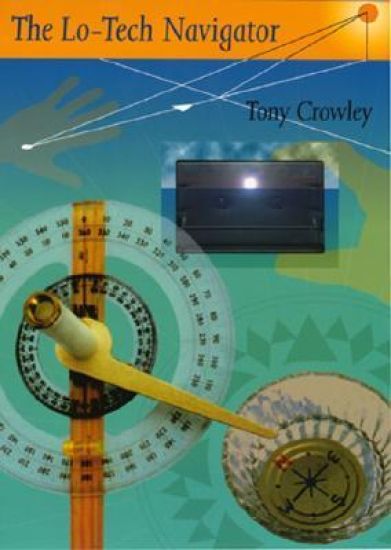
The Lo-Tech Navigator is an entertaining and practical book for those who wish to be less dependent on GPS and electronics. Through a variety of illustrated projects, you can learn to make traditional navigation instruments and explore some unusual and long forgotten techniques. Tony Crowley explains how to: detect sea currents using a kettle; find latitude and longitude by the Pole Star; take sun sights with a cassette holder, find your position through origami, navigate with the aid of poetry, make a compass from a tin lid, self-steer with a tiller sail, search for buried and discover the magic of 6.