Kirjojen hintavertailu. Mukana 12 493 138 kirjaa ja 12 kauppaa.

Kirjahaku

Etsi kirjoja tekijän nimen, kirjan nimen tai ISBN:n perusteella.

3 kirjaa tekijältä Tracey Owens Patton

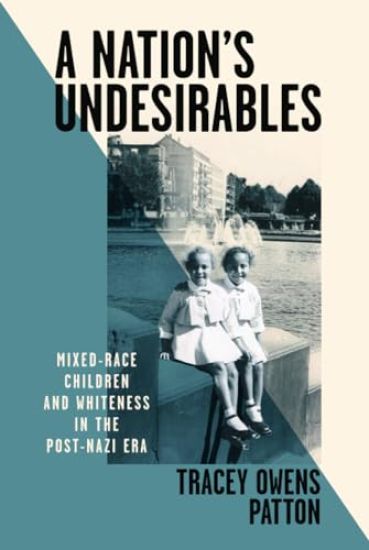
A Nation's Undesirables

A Nation's Undesirables

Tracey Owens Patton

OHIO STATE UNIVERSITY PRESS
2024
sidottu
In a moving blend of family history and cutting-edge scholarship, Tracey Owens Patton's A Nation's Undesirables synthesizes work in rhetorical postmemory studies, critical adoption studies, Afrofuturism, and more to tell the story of her mother and aunt, Lore and Lilli. Two of thousands of children born to white German women and Black American men after World War II, the twins moved to the United States at age seven, where their mother renounced her parental rights and put them into the adoption system. They did not see her again for fifty-two years. Patton takes up the twins' story and their reckoning with their mixed-race, Black German identity to disrupt standard narratives around World War II, Black experience in Germany, and race and adoption. Combining family interviews, historical artifacts, and autoethnographic reflection, Patton composes a new narrative of women and Black German children in the postwar era. In examining the systemic racism of Germany's efforts to move children like Lore and Lilli out of the country-and the suppression of German women's bodily autonomy-Patton amplifies the once unacknowledged identities of these Black German children to broaden our understanding of citizenship, racism, and sexism after World War II.
A Nation's Undesirables

A Nation's Undesirables

Tracey Owens Patton

OHIO STATE UNIVERSITY PRESS
2024
pokkari
In a moving blend of family history and cutting-edge scholarship, Tracey Owens Patton's A Nation's Undesirables synthesizes work in rhetorical postmemory studies, critical adoption studies, Afrofuturism, and more to tell the story of her mother and aunt, Lore and Lilli. Two of thousands of children born to white German women and Black American men after World War II, the twins moved to the United States at age seven, where their mother renounced her parental rights and put them into the adoption system. They did not see her again for fifty-two years. Patton takes up the twins' story and their reckoning with their mixed-race, Black German identity to disrupt standard narratives around World War II, Black experience in Germany, and race and adoption. Combining family interviews, historical artifacts, and autoethnographic reflection, Patton composes a new narrative of women and Black German children in the postwar era. In examining the systemic racism of Germany's efforts to move children like Lore and Lilli out of the country-and the suppression of German women's bodily autonomy-Patton amplifies the once unacknowledged identities of these Black German children to broaden our understanding of citizenship, racism, and sexism after World War II.
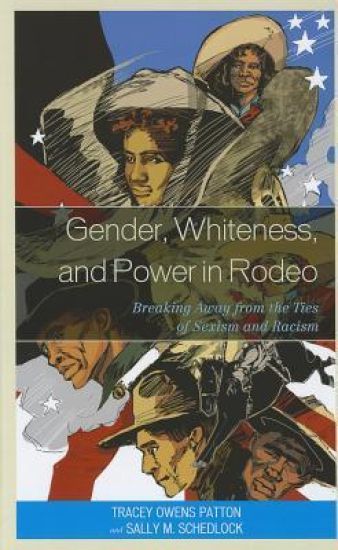
Gender, Whiteness, and Power in Rodeo

Gender, Whiteness, and Power in Rodeo

Tracey Owens Patton; Sally M. Schedlock

Lexington Books
2012
sidottu
The lure of cowgirls and cowboys has hooked the American imagination with the lure of freedom and adventure since the turn of the twentieth century. The cowboy and cowgirl played in the imagination and made rodeo into a symbolic representation of the Western United States. As a sport that is emblematic of all things “Western,” rodeo is a phenomenon that has since transcended into popular culture. Rodeo’s attraction has even spanned oceans and lives in the imaginations of many around the world. From the modest start of this fantastic sport in open fields to celebrate the end of a long cattle drive or to settle a friendly “who’s the best” bet between neighboring ranches, rodeo truly has grown into an edge-of-the-seat, money-drawing, and crowd-cheering favorite pastime. However, rodeo has diverse history that largely remains unaccounted for, unexamined, and silenced. In Gender, Whiteness and Power in Rodeo Tracey Owens Patton and Sally M. Schedlock visually explore how race, gender, and other issues of identity complicate the mythic historical narrative of the West. The authors examine the experiences of ethnic minorities, specifically Latinos, American Indians, and African Americans, and women who have continued to be marginalized in rodeo. Throughout the book, Patton and Schedlock questioned the binary divisions in rodeo that exists between women and men, and between ethnic minorities and Whites—divisions that have become naturalized in rodeo and in the mind of the general public. Using iconic visual images, along with the voices of the marginalized, Patton and Schedlock enter into the sometimes acrimonious debate of cowgirls and ethnic minorities in rodeo.