Kirjojen hintavertailu. Mukana 11 467 923 kirjaa ja 12 kauppaa.

Kirjahaku

Etsi kirjoja tekijän nimen, kirjan nimen tai ISBN:n perusteella.

15 kirjaa tekijältä Tracey Rowland

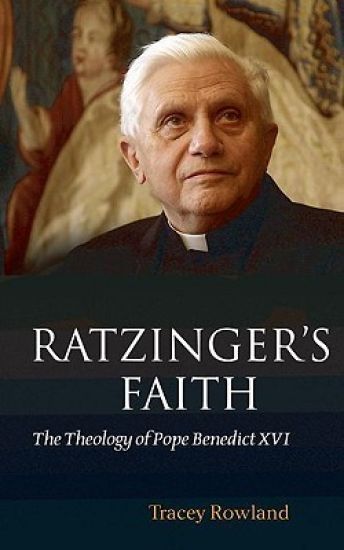
Ratzinger's Faith

Ratzinger's Faith

Tracey Rowland

Oxford University Press
2008
sidottu
A general introduction to the theology of Pope Benedict XVI, including his approach to issues in moral and political theology, ecclesiology, liturgy, interpretations of the of the documents of the Second Vatican Council, and the theology of history. Tracey Rowland also addresses the question of Pope Benedict's place in the constellation of contemporary Catholic theologians. It has become a commonplace observation that Pope Benedict has been influenced by the thought of St Augustine, in contrast to many of his predecessors in the papacy who were much more strongly influenced by St Thomas Aquinas. Rowland therefore asks in what way Benedict is an Augustinian, and how this marked difference in theological perspective may play out in the coming years. Her book includes an extensive thematic bibliography, which will be valuable for students.
Ratzinger's Faith

Ratzinger's Faith

Tracey Rowland

Oxford University Press
2009
nidottu
A general introduction to the theology of Pope Benedict XVI, including his approach to issues in moral and political theology, ecclesiology, liturgy, interpretations of the of the documents of the Second Vatican Council, and the theology of history. Tracey Rowland also addresses the question of Pope Benedict's place in the constellation of contemporary Catholic theologians. It has become a commonplace observation that Pope Benedict has been influenced by the thought of St Augustine, in contrast to many of his predecessors in the papacy who were much more strongly influenced by St Thomas Aquinas. Rowland therefore asks in what way Benedict is an Augustinian, and how this marked difference in theological perspective may play out in the coming years. Her book includes an extensive thematic bibliography, which will be valuable for students.
Culture and the Thomist Tradition

Culture and the Thomist Tradition

Tracey Rowland

Routledge
2003
sidottu
Thomism's influence upon the development of Catholicism is difficult to overestimate - but how secure is its grip on the challenges that face contemporary society? Culture and the Thomist Tradition examines the crisis of Thomism today as thrown into relief by Vatican II, the twenty-first ecumenical council of the Roman Catholic Church. Following the Church's declarations on culture in the document Gaudium et spes - the Pastoral Constitution on the Church in the Modern World - it was widely presumed that a mandate had been given for transposing ecclesiastical culture into the idioms of modernity. But, says Tracey Rowland, such an understanding is not only based on a facile reading of the Conciliar documents, but was made possible by Thomism's own failure to demonstrate a workable theology of culture that might guide the Church through such transpositions.A Thomism that fails to specify the precise rôle of culture in moral fomration is problematice in a multicultural age, where Christians are exposed to a complex matrix of institutions and traditions both theistic and secular. The ambivalence of the Thomist tradition to modernity, and modern conceptions of rationality, also impedes its ability to successfully engage with the arguments of rivial traditions. Must a genuinely progressive Thomism learn to accomodate modernity? In opposition to such a stance, and in support of those who have resisted the trend in post-Conciliarliturgy to mimic the modernistic forms of mass culture, Culture and the Thomist Tradition musters a synthesis of the theological critiques of modernity to be found in the works of Alasdair MacIntyre, scholars of the international 'Communio' project and the Radical Orthodoxy circle. This synthesis, intended as a post-modern Augustinian Thomism, provides an account of the rôle of culture, memory and narrative tradition in the formation of intellectual and moral character. Re-evaluating the outcome of Vatican II, and forming the basis of a much-needed Thomist theology of culture, the book argues that the anti-beauty orientation of mass culture acts as a barrier to the theological virtue of hope, and ultimately fosters despair and atheism.
Culture and the Thomist Tradition

Culture and the Thomist Tradition

Tracey Rowland

Routledge
2003
nidottu
Thomism's influence upon the development of Catholicism is difficult to overestimate - but how secure is its grip on the challenges that face contemporary society? Culture and the Thomist Tradition examines the crisis of Thomism today as thrown into relief by Vatican II, the twenty-first ecumenical council of the Roman Catholic Church. Following the Church's declarations on culture in the document Gaudium et spes - the Pastoral Constitution on the Church in the Modern World - it was widely presumed that a mandate had been given for transposing ecclesiastical culture into the idioms of modernity. But, says Tracey Rowland, such an understanding is not only based on a facile reading of the Conciliar documents, but was made possible by Thomism's own failure to demonstrate a workable theology of culture that might guide the Church through such transpositions.A Thomism that fails to specify the precise rôle of culture in moral fomration is problematice in a multicultural age, where Christians are exposed to a complex matrix of institutions and traditions both theistic and secular. The ambivalence of the Thomist tradition to modernity, and modern conceptions of rationality, also impedes its ability to successfully engage with the arguments of rivial traditions. Must a genuinely progressive Thomism learn to accomodate modernity? In opposition to such a stance, and in support of those who have resisted the trend in post-Conciliarliturgy to mimic the modernistic forms of mass culture, Culture and the Thomist Tradition musters a synthesis of the theological critiques of modernity to be found in the works of Alasdair MacIntyre, scholars of the international 'Communio' project and the Radical Orthodoxy circle. This synthesis, intended as a post-modern Augustinian Thomism, provides an account of the rôle of culture, memory and narrative tradition in the formation of intellectual and moral character. Re-evaluating the outcome of Vatican II, and forming the basis of a much-needed Thomist theology of culture, the book argues that the anti-beauty orientation of mass culture acts as a barrier to the theological virtue of hope, and ultimately fosters despair and atheism.
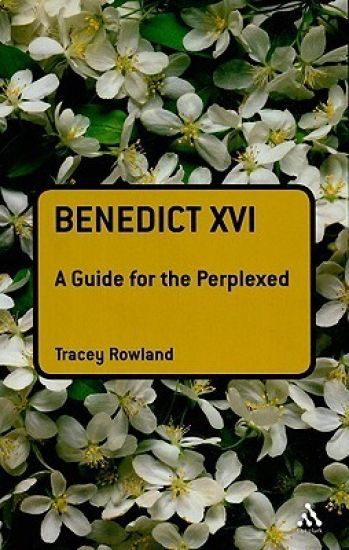
Benedict XVI: A Guide for the Perplexed

Benedict XVI: A Guide for the Perplexed

Tracey Rowland

T. T.Clark Ltd
2010
sidottu
This is an upper-level introduction to the thought and theology of Pope Benedict XVI. The book explains the foundations of Ratzinger's thought by analysing the theological axes upon which his works turn and helps readers to place his thought in the context of his intellectual antecedents and contemporary interlocutors.
Benedict XVI: A Guide for the Perplexed

Benedict XVI: A Guide for the Perplexed

Tracey Rowland

T. T.Clark Ltd
2010
nidottu
This title presents an upper-level introduction to the thought and theology of Pope Benedict XVI. This Guide provides students of theology with a guide around the theoretical axes upon which the theology of Joseph Ratzinger revolves. It begins with a presentation of the key ideas in the works of his intellectual antecedents and contemporary interlocutors and then moves to an account of Ratzinger's responses to a number of theological crises. The work then moves to an account of Ratzinger's understanding of Christianity as an encounter with the Person of Christ and his placement of Christianity within the context of world religions in general. This theme is spread throughout his publications and recurs in the first encyclical of his papacy, Deus Caritas Est. This first encyclical will be treated in depth along with the second and third encyclicals which form a trilogy on the theological virtues (love, hope and faith). The work concludes with an assessment of the primacy of the transcendental of beauty in the theology of Ratzinger, his affinity with Hans Urs von Balthasar and the Augustinian motif of the relationship between love and reason. "Continuum's Guides for the Perplexed" are clear, concise and accessible introductions to thinkers, writers and subjects that students and readers can find especially challenging - or indeed downright bewildering. Concentrating specifically on what it is that makes the subject difficult to grasp, these books explain and explore key themes and ideas, guiding the reader towards a thorough understanding of demanding material.
Catholic Theology

Catholic Theology

Tracey Rowland

Continuum International Publishing Group Ltd.
2017
sidottu
Rowland showcases here the dominant contemporary approaches to doing Catholic theology. Chapter 1 offers a summary of the two International Theological Commission (ITC) documents on the discipline of Catholic theology. These documents set out the general principles which should govern any approach to Catholic theology (at least according to the ITC). The subsequent chapters each focus on one of four different approaches frequently found in contemporary Catholic academies: the approach of Thomists, members of the Communio milieu, members of the Concilium milieu and promoters of different varieties of Liberation Theology. Rowland's work is pitched at the level of first time students of theology who are trying to make sense of the methodological choices which undergird the different approaches to Catholic theology.Rowland concludes with four appendices: a list of all Doctors of the Church, a list of all encyclicals since the 19th century, a list of the documents of the Second Vatican Council, and a list of definitions of the various Christological heresies which were the subject of the debates of the early Church Councils. These appendices will provide useful reference tables for young scholars, including seminarians.
Catholic Theology

Catholic Theology

Tracey Rowland

Continuum International Publishing Group Ltd.
2017
nidottu
Rowland showcases here the dominant contemporary approaches to doing Catholic theology. Chapter 1 offers a summary of the two International Theological Commission (ITC) documents on the discipline of Catholic theology. These documents set out the general principles which should govern any approach to Catholic theology (at least according to the ITC). The subsequent chapters each focus on one of four different approaches frequently found in contemporary Catholic academies: the approach of Thomists, members of the Communio milieu, members of the Concilium milieu and promoters of different varieties of Liberation Theology. Rowland's work is pitched at the level of first time students of theology who are trying to make sense of the methodological choices which undergird the different approaches to Catholic theology.Rowland concludes with four appendices: a list of all Doctors of the Church, a list of all encyclicals since the 19th century, a list of the documents of the Second Vatican Council, and a list of definitions of the various Christological heresies which were the subject of the debates of the early Church Councils. These appendices will provide useful reference tables for young scholars, including seminarians.
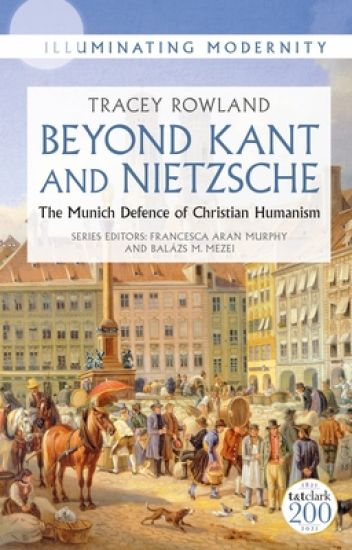
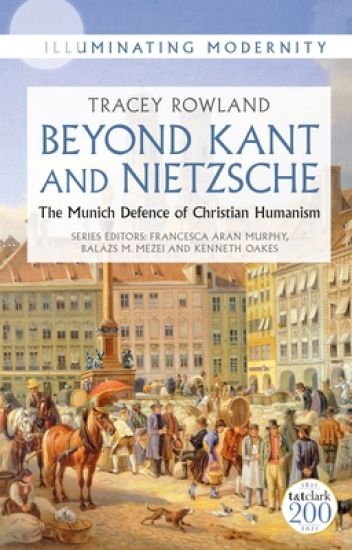
Beyond Kant and Nietzsche

Beyond Kant and Nietzsche

Tracey Rowland

T. T.Clark Ltd
2021
sidottu
The Christian Humanist ideas of six Catholic scholars who were based in Munich during the first half of the 20th century are profiled in this volume. They were all interested in presenting and defending a Christian humanism in the aftermath of German Idealism and the anti-Christian humanism of Friedrich Nietzsche. They were seeking to offer hope to Christians during the darkest years of the Nazi regime and the post-Second World War era of shame, guilt and reconstruction.
Unconformed to the Age

Unconformed to the Age

Tracey Rowland

Emmaus Academic
2024
sidottu
Since her founding by Christ, the Church on earth has recognized and sought to preserve her identity as "one complex reality" (Lumen Gentium 8) formed of both the invisible and the visible, the charismatic and the institutional. Yet within modern Catholic life and theology the ordered unity of these dimensions is increasingly obscured and undermined by distortive tendencies toward democratization, bureaucratization, and secularization. Such contemporary errors threaten not only the Church's self-understanding but also her mission to restore all things in Christ. In Unconformed to the Age, renowned Australian theologian Tracey Rowland addresses the theological and ecclesiological deviations underlying the present ecclesial disorder, including the prioritization of praxis over truth, the occlusion of the Cross from its central position in the Church's life, and the substitution of a secular, corporate vision of the Church for its true construal as Christ's Body and Bride—"Catholic Inc." versus communio. Engaging especially with the thought and writings of Joseph Ratzinger as well as other twentieth-century theological luminaries, Rowland provides both insightful diagnosis of these current pathologies and a multifaceted illumination of the mystery of the Church, underscoring the Church's divinely given vocation to bring all people into communion with the Trinity, imbuing human actions, lives, and cultures with the grace of the Incarnation.
The Culture of the Incarnation

The Culture of the Incarnation

Tracey Rowland

Emmaus Academic
2017
sidottu
In this collection of essays, distinguished Australian theologian Tracey Rowland takes up the relationship of Christ and culture, broadly understood. She contrasts the principles undergirding what St. John Paul II called a "culture of death" with those required for the flourishing of a humanism that flows from the grace of the Incarnation.Rowland returns frequently to the theological insights of Joseph Ratzinger/Pope Benedict XVI, to whose thought she is deeply indebted. Drawing upon the Augustinian and Thomist traditions of political theology, she offers a trenchant theological critique of liberalism in all its forms, with attention to our modern attraction to false utopias and accommodationist impulses.The nine essays in this volume engage such perennial topics as the place of natural law, the theological status of the "world," and the nature of true humanism, along with timely topics such as the retrieval of the sources of Catholic resistance to Communism and what is now commonly called cultural Marxism. Rowland's inimitable voice, keen wit, and penetrating insight into the distinctiveness of Catholic truth make this book a landmark volume as the Church today revisits anew its relationship to the world.