Kirjojen hintavertailu. Mukana 12 361 754 kirjaa ja 12 kauppaa.

Kirjahaku

Etsi kirjoja tekijän nimen, kirjan nimen tai ISBN:n perusteella.

4 kirjaa tekijältä Trevor Curnow

The Oracles of the Ancient World

The Oracles of the Ancient World

Trevor Curnow

Bristol Classical Press
2004
sidottu
Ranging from Abai to Zeleia, from massive temples in Egypt to modest tombs in Turkey, oracles were a major feature of the religions of many ancient cultures until their demise under the Christian Roman emperors. This work is a guide to all the known oracles of the ancient world. The greater part of it is devoted to an alphabetical listing providing details of nearly 300 sites in more than 25 countries where oracles of one kind or another functioned in antiquity. The text is extensively cross-referenced and illustrated, and supplemented by indexes, a glossary, and a substantial introduction.
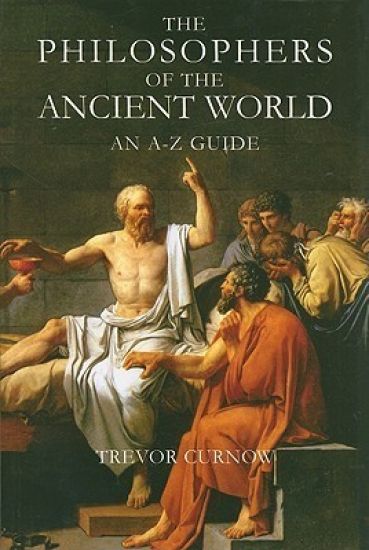
The Philosophers of the Ancient World

The Philosophers of the Ancient World

Trevor Curnow

Bristol Classical Press
2006
nidottu
This fascinating book contains information on over 2,300 ancient Western philosophers, from Abammon to Zoticus. Covering the period from the seventh century BC to the seventh century AD, it brings together the extremely well-known and the thoroughly obscure. Those already familiar with ancient philosophy will find it an invaluable and handy work of reference with a breadth of coverage that far exceeds any other single-volume work on the subject. Those new to the subject will find it a useful introduction. The ideas of the major thinkers are summarised and an historical overview of ancient philosophy allows them to be placed in their proper context. The book also provides useful background reading for anyone interested in the ancient world who wants to find out more about its intellectual life. A minimum of philosophical jargon ensures its accessibility to a wide audience. As in ancient histories of philosophy, there is also a modest amount of gossip.
Wisdom in the Ancient World

Wisdom in the Ancient World

Trevor Curnow

Bristol Classical Press
2010
nidottu
'But where shall wisdom be found?' asked Job, and from across the ancient world came many different replies. Some conceived of wisdom in supernatural personified form and answered the question in appropriate terms. For others, wisdom was something far more human, manifested in a number of different possible ways. For many philosophers, on the other hand, it was simply the highest human intellectual attainment possible. However understood, wisdom was highly prized across the ancient world and throughout ancient history. To the extent to which there was a shared ancient culture, wisdom lay at the heart of it. However, the modern study of the subject has been very fragmented. Old Testament scholars, theologians, historians of philosophy, Egyptologists, Assyriologists, classicists and historians of ideas have all taken an interest, but there has been limited communication and co-operation between the disciplines. This is the first book to bring the different aspects of the study of ancient wisdom together and present it as a subject in its own right, looking at wise deities, wise figures from myth and legend, wise characters from ancient history, practices associated with wisdom (including divination and healing), and wisdom as it appears in ancient literature. Familiar figures such as Solomon and Socrates rub shoulders here with less well-known ones such as Shulgi and Stilbides. Specially drawn maps accompany the text to provide a geographical context while a timeline provides a chronological one.
Ancient Philosophy and Everyday Life

Ancient Philosophy and Everyday Life

Trevor Curnow

Cambridge Scholars Publishing
2017
nidottu
Ancient Philosophy and Everyday Life is an introduction to Cynicism, Stoicism, Epicureanism and Scepticism. After a general account of the nature of ancient philosophy, it looks at each of these four particular schools in turn, outlining their histories and their doctrines. Special attention is paid to how these philosophies formed the bases for distinctive ways of life in antiquity. It is shown how their founders not only articulated the fundamental ideas of their schools but also embodied them in their own lives. Some of the more colourful characters of ancient philosophy appear here, including Diogenes of Sinope who lived in a wine barrel and Peregrinus Proteus who died by climbing onto his own funeral pyre at the Olympic Games. Consideration is also given to whether it would be possible to live like an authentic Cynic, Stoic, Epicurean or Sceptic today and if so, how. The ideas of the schools are clearly explained with a minimum of technical jargon, making this an ideal introduction for anyone with an interest in the subject.