Kirjojen hintavertailu. Mukana 11 244 527 kirjaa ja 12 kauppaa.

Kirjahaku

Etsi kirjoja tekijän nimen, kirjan nimen tai ISBN:n perusteella.

4 kirjaa tekijältä Trevor Paglen

Trevor Paglen: Invisible

Trevor Paglen: Invisible

Trevor Paglen

Aperture
2010
sidottu
Invisible: Covert Operations and Classified Landscapes is Trevor Paglen’s longawaited first photographic monograph. Social scientist, artist, writer, and provocateur, Paglen has been exploring the secret activities of the U.S. military and intelligence agencies—the “black world”—for the last eight years, publishing, speaking, and making astonishing photographs. As an artist, Paglen is interested in the idea of photography as truth-telling, but his mysterious, compelling pictures o!en stop short of traditional ideas of documentation. Invisible highlights the array of tactics used by Paglen to depict both what can and cannot be seen. In the series Limit Telephotography, he employs highend optical systems to photograph top-secret governmental sites. In The Other Night Sky, Paglen works with the data of amateur “satellite watchers” to track and photograph classified spacecra! in Earth’s orbit, while in other works he roots out revealing, yet arcane documents—passports, flight data, aliases of CIA operatives—and transforms them into art objects. Showcasing the artwork of an important emerging talent, Invisible speaks to the multidisciplinary practices employed by many of today’s most interesting contemporary artists. Rebecca Solnit, noted author on culture and photography, contributes a searing essay that traces this history of clandestine military activity on the American landscape.
Trevor Paglen

Trevor Paglen

Trevor Paglen

STERNBERG PRESS
2024
pokkari
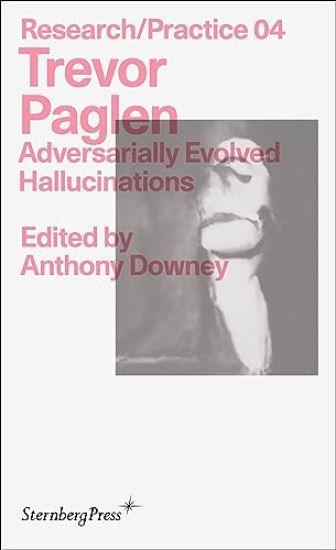
How machine and computer vision produces contemporary images. Although often considered to be a fault or a glitch in the system, the event of hallucination is central to the models of image production generated by artificial intelligence (AI). Through mining the latent space of computer vision, Trevor Paglen's series Adversarially Evolved Hallucinations (2017-ongoing) reveals this phantasmal and hallucinatory domain. In the conversation included in this volume, he discusses how we can think from within these opaque structures and, in turn, questions the frequently inflated claims made on behalf of automated image-production systems. In an accompanying essay, Anthony Downey explores the uncanny realm of algorithmically induced images and proposes that AI, through its generative modeling of the world, invariably estranges us from the present and the future. Trevor Paglen is a multidisciplinary artist known for blending image-making, sculpture, journalism, and engineering into his work. His art, which explores themes like state secrecy and artificial intelligence, has been exhibited globally, including at the Smithsonian Museum of American Art and the Barbican Centre. Notably, Paglen launched an artwork into orbit and contributed to the Oscar-winning film Citizenfour. He has also created public art for Fukushima's exclusion zone. An acclaimed author, Paglen's contributions to investigative journalism and art have been recognized with awards like the Electronic Frontier Foundation's Pioneer Award and the MacArthur Fellowship. He holds degrees from UC Berkeley and the Art Institute of Chicago, underscoring his diverse expertise across art, geography, and technology.
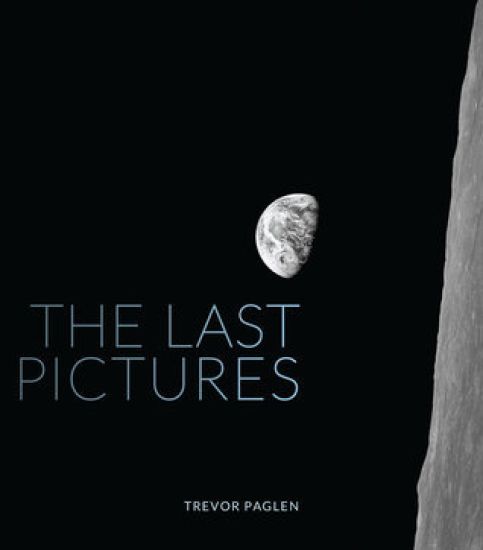
The Last Pictures

The Last Pictures

Trevor Paglen

University of California Press
2012
sidottu
Human civilizations' longest lasting artifacts are not the great Pyramids of Giza, nor the cave paintings at Lascaux, but the communications satellites that circle our planet. In a stationary orbit above the equator, the satellites that broadcast our TV signals, route our phone calls, and process our credit card transactions experience no atmospheric drag. Their inert hulls will continue to drift around Earth until the Sun expands into a red giant and engulfs them about 4.5 billion years from now. The Last Pictures, co-published by Creative Time Books, is rooted in the premise that these communications satellites will ultimately become the cultural and material ruins of the late 20th and early 21st centuries, far outlasting anything else humans have created. Inspired in part by ancient cave paintings, nuclear waste warning signs, and Carl Sagan's Golden Records of the 1970s, artist/geographer Trevor Paglen has developed a collection of one hundred images that will be etched onto an ultra-archival, golden silicon disc. The disc, commissioned by Creative Time, will then be sent into orbit onboard the Echostar XVI satellite in September 2012, as both a time capsule and a message to the future. The selection of 100 images, which are the centerpiece of the book, was influenced by four years of interviews with leading scientists, philosophers, anthropologists, and artists about the contradictions that characterize contemporary civilizations. Consequently, The Last Pictures engages some of the most profound questions of the human experience, provoking discourse about communication, deep time, and the economic, environmental, and social uncertainties that define our historical moment. Copub: Creative Time Books
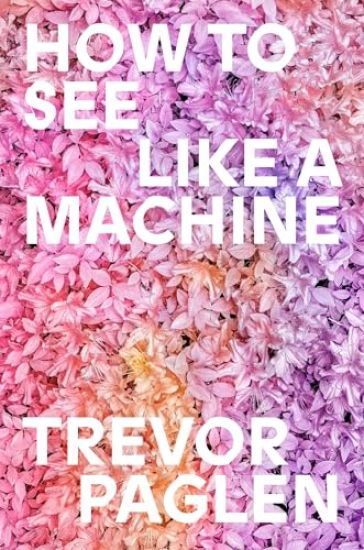
How to See Like a Machine

How to See Like a Machine

Trevor Paglen

Verso Books
2026
sidottu
We once looked at pictures. Then, with the advent of computer vision and machine learning, pictures started looking back at us. Now, something even stranger is happening.Generative AI, adtech, recommendation algorithms, engagement economies, personalized search, and machine learning are inaugurating a new relationship between humans and media. Pictures are now looking at us looking at them, eliciting feedback and evolving. We've entered a protean, targeted visual culture that shows us what it believes we want to see, measures our reactions, then morphs itself to optimize for the reactions and actions it wants. New forms of media prod and persuade, modulate and manipulate, shaping worldviews and actions to induce us into believing what they want us to believe, and to extract value and exert influence.How did we get here?