Kirjojen hintavertailu. Mukana 12 016 292 kirjaa ja 12 kauppaa.

Kirjahaku

Etsi kirjoja tekijän nimen, kirjan nimen tai ISBN:n perusteella.

5 kirjaa tekijältä Tricia Starks

The Body Soviet

The Body Soviet

Tricia Starks

University of Wisconsin Press
2008
sidottu
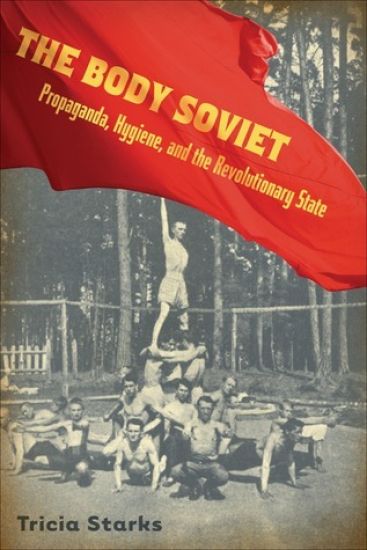
In 1918 the People's Commissariat of Public Health began a quest to protect the health of all Soviet citizens, but health became more than a political platform or a tactical decision. The Soviets defined and categorized the world by interpreting political orthodoxy and citizenship in terms of hygiene. The assumed political, social, and cultural benefits of a regulated, healthy lifestyle informed the construction of Soviet institutions and identity. Cleanliness developed into a political statement that extended from domestic maintenance to leisure choices and revealed gender, ethnic, and class prejudices. Dirt denoted the past and poor politics; health and cleanliness signified mental acuity, political orthodoxy, and modernity.Health, though essential to the revolutionary vision and crucial to Soviet plans for utopia, has been neglected by traditional histories caught up in Cold War debates. ""The Body Soviet"" recovers this significant aspect of Soviet thought by providing a cross-disciplinary, comparative history of Soviet health programs that draws upon rich sources of health care propaganda, including posters, plays, museum displays, films, and mock trials. The analysis of propaganda makes ""The Body Soviet"" more than an institutional history; it is also an insightful critique of the ideologies of the body fabricated by health organizations.
The Body Soviet

The Body Soviet

Tricia Starks

University of Wisconsin Press
2008
nidottu
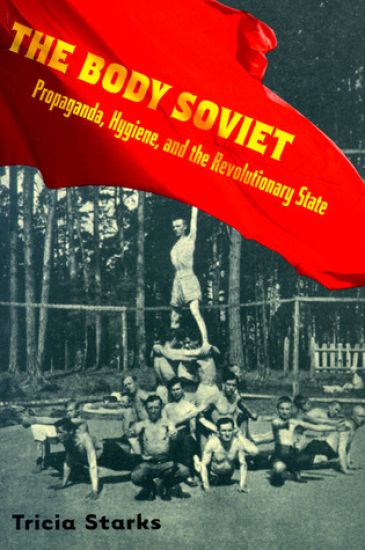
In 1918 the People's Commissariat of Public Health began a quest to protect the health of all Soviet citizens, but health became more than a political platform or a tactical decision. The Soviets defined and categorized the world by interpreting political orthodoxy and citizenship in terms of hygiene. The assumed political, social, and cultural benefits of a regulated, healthy lifestyle informed the construction of Soviet institutions and identity. Cleanliness developed into a political statement that extended from domestic maintenance to leisure choices and revealed gender, ethnic, and class prejudices. Dirt denoted the past and poor politics; health and cleanliness signified mental acuity, political orthodoxy, and modernity.Health, though essential to the revolutionary vision and crucial to Soviet plans for utopia, has been neglected by traditional histories caught up in Cold War debates. ""The Body Soviet"" recovers this significant aspect of Soviet thought by providing a cross-disciplinary, comparative history of Soviet health programs that draws upon rich sources of health care propaganda, including posters, plays, museum displays, films, and mock trials. The analysis of propaganda makes ""The Body Soviet"" more than an institutional history; it is also an insightful critique of the ideologies of the body fabricated by health organizations.
Smoking Under the Tsars

Smoking Under the Tsars

Tricia Starks

Cornell University Press
2018
sidottu
Approaching tobacco from the perspective of users, producers, and objectors, Smoking under the Tsars provides an unparalleled view of Russia's early adoption of smoking. Tricia Starks introduces us to the addictive, nicotine-soaked Russian version of the cigarette—the papirosa—and the sensory, medical, social, cultural, and gendered consequences of this unique style of tobacco use. Starting with the papirosa's introduction in the nineteenth century and its foundation as a cultural and imperial construct, Starks situates the cigarette's emergence as a mass-use product of revolutionary potential. She discusses the papirosa as a moral and medical problem, tracks the ways in which it was marketed as a liberating object, and concludes that it has become a point of increasing conflict for users, reformers, and purveyors. The heavily illustrated Smoking under the Tsars taps into bountiful material in newspapers, industry publications, etiquette manuals, propaganda posters, popular literature, memoirs, cartoons, poetry, and advertising. Starks frames her history within the latest scholarship in imperial and early Soviet history and public health, anthropology and addiction studies. The result is an ambitious social and cultural exploration of the interaction of institutions, ideas, practice, policy, consumption, identity, and the body. Starks has reconstructed how Russian smokers experienced, understood, and presented their habit in all its biological, psychological, social, and sensory inflections, providing the reader with incredible images and a unique application of anthropology and sensory analysis to the experience of tobacco dependency.
Cigarettes and Soviets

Cigarettes and Soviets

Tricia Starks

CORNELL UNIVERSITY PRESS
2022
sidottu
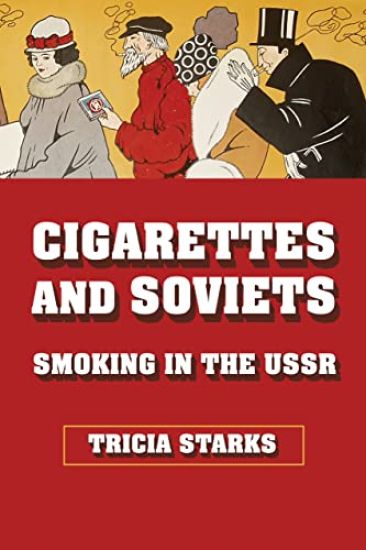
Winner of the Southern Conference on Slavic Studies Book Award Enriched by color reproductions of tobacco advertisements, packs, and anti-smoking propaganda, Cigarettes and Soviets provides a comprehensive study of the Soviet tobacco habit. Tricia Starks examines how the Soviets maintained the first mass smoking society in the world while simultaneously fighting it. The book is at once a study of Soviet tobacco deeply enmeshed in its social, political, and cultural context and an exploration of the global experience of the tobacco epidemic. Starks examines the Soviet antipathy to tobacco yet capitulation to market; the development of innovative cessation techniques and clinics and the late entry into global anti-tobacco work; the seeming lack of cultural stimuli alongside massive use; and the expansion of smoking without the conventional prompts of capitalist markets. She tells the story of Philip Morris's "Mission to Moscow" campaign for the Soviet market, the triumph of the quintessential capitalist product—the cigarette—in a communist system, and the successes and failures of the world's first national antismoking campaign. The interplay of male habits and health against largely female tobacco producers and medical professionals adds a gendered dimension. Smoking developed, continued, and grew in the Soviet Union without mass production, intensive advertising, seductive industrial design, or product ubiquity. The Soviets were early to condemn tobacco, and yet, by the end of the twentieth century Russians smoked more heavily than most most other nations in the world. Cigarettes and Soviets challenges interpretations of how tobacco use rose in the past and what leads to mass use today.
Cigarettes and Soviets

Cigarettes and Soviets

Tricia Starks

CORNELL UNIVERSITY PRESS
2025
pokkari
Winner of the Southern Conference on Slavic Studies Book Award Enriched by color reproductions of tobacco advertisements, packs, and anti-smoking propaganda, Cigarettes and Soviets provides a comprehensive study of the Soviet tobacco habit. Tricia Starks examines how the Soviets maintained the first mass smoking society in the world while simultaneously fighting it. The book is at once a study of Soviet tobacco deeply enmeshed in its social, political, and cultural context and an exploration of the global experience of the tobacco epidemic. Starks examines the Soviet antipathy to tobacco yet capitulation to market; the development of innovative cessation techniques and clinics and the late entry into global anti-tobacco work; the seeming lack of cultural stimuli alongside massive use; and the expansion of smoking without the conventional prompts of capitalist markets. She tells the story of Philip Morris's "Mission to Moscow" campaign for the Soviet market, the triumph of the quintessential capitalist product—the cigarette—in a communist system, and the successes and failures of the world's first national antismoking campaign. The interplay of male habits and health against largely female tobacco producers and medical professionals adds a gendered dimension. Smoking developed, continued, and grew in the Soviet Union without mass production, intensive advertising, seductive industrial design, or product ubiquity. The Soviets were early to condemn tobacco, and yet, by the end of the twentieth century Russians smoked more heavily than most most other nations in the world. Cigarettes and Soviets challenges interpretations of how tobacco use rose in the past and what leads to mass use today.