Kirjojen hintavertailu. Mukana 11 717 486 kirjaa ja 12 kauppaa.

Kirjahaku

Etsi kirjoja tekijän nimen, kirjan nimen tai ISBN:n perusteella.

4 kirjaa tekijältä Troy Rondinone

Friday Night Fighter

Friday Night Fighter

Troy Rondinone

University of Illinois Press
2013
sidottu
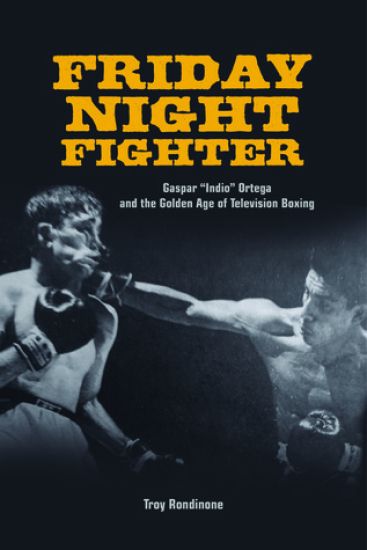
Friday Night Fighter relives a lost moment in American postwar history, when boxing ruled as one of the nation's most widely televised sports. During the 1950s and 1960s, viewers tuned in weekly, sometimes even daily, to watch widely recognized fighters engage in primordial battle; the Gillette Cavalcade of Sports Friday Night Fights was the most popular fight show. Troy Rondinone follows the dual narratives of the Friday Night Fights show and the individual story of Gaspar "Indio" Ortega, a boxer who appeared on prime-time network television more than almost any other boxer in history. From humble beginnings growing up poor in Tijuana, Mexico, Ortega personified the phenomenon of postwar boxing at its greatest, appearing before audiences of millions to battle the biggest names of the time, such as Carmen Basilio, Tony DeMarco, Chico Vejar, Benny "Kid" Paret, Emile Griffith, Kid Gavilan, Florentino Fernández, and Luis Manuel Rodriguez. Rondinone explores the factors contributing to the success of televised boxing, including the rise of television entertainment, the role of a "reality" blood sport, Cold War masculinity, changing attitudes toward race in America, and the influence of organized crime. At times evoking the drama and spectacle of the Friday Night Fights themselves, this volume is a lively examination of a time in history when Americans crowded around their sets to watch the main event.
The Great Industrial War

The Great Industrial War

Troy Rondinone

Rutgers University Press
2009
sidottu
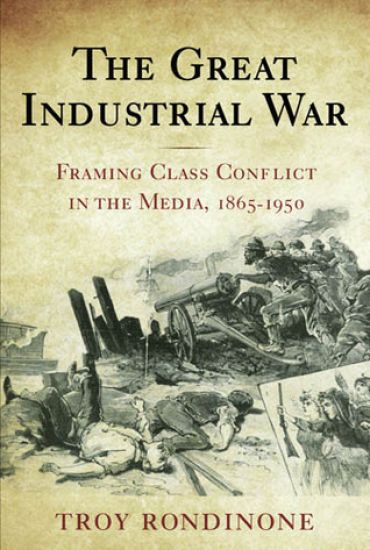
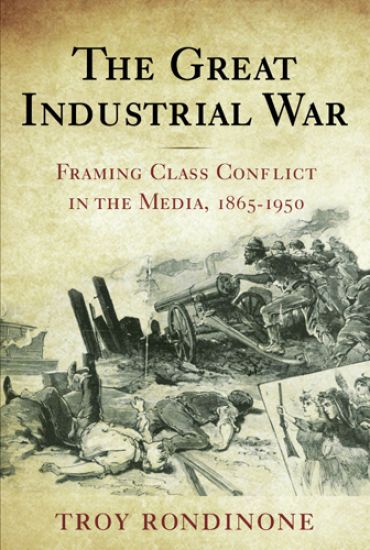
The Great Industrial War, a comprehensive assessment of how class has been interpreted by the media in American history, documents the rise and fall of a frightening concept: industrial war. Moving beyond the standard account of labor conflict as struggles between workers and management, Troy Rondinone asks why Americans viewed big strikes as "battles" in "irrepressible conflict" between the armies of capital and laborùa terrifying clash between workers, strikebreakers, police, and soldiers.Examining how the mainstream press along with the writings of a select group of influential reformers and politicians framed strike news, Rondinone argues that the Civil War, coming on the cusp of a revolution in industrial productivity, offered a gruesome, indelible model for national conflict. He follows the heated discourse on class war through the nineteenth century until its general dissipation in the mid-twentieth century. Incorporating labor history, cultural studies, linguistic anthropology, and sociology, The Great Industrial War explores the influence of historical experience on popular perceptions of social order and class conflict and provides a reinterpretation of the origins and meaning of the Taft-Hartley Act and the industrial relations regime it supported.
The Great Industrial War

The Great Industrial War

Troy Rondinone

Rutgers University Press
2011
nidottu
The Great Industrial War, a comprehensive assessment of how class has been interpreted by the media in American history, documents the rise and fall of a frightening concept: industrial war. Moving beyond the standard account of labor conflict as struggles between workers and management, Troy Rondinone asks why Americans viewed big strikes as "battles" in "irrepressible conflict" between the armies of capital and laborùa terrifying clash between workers, strikebreakers, police, and soldiers.Examining how the mainstream press along with the writings of a select group of influential reformers and politicians framed strike news, Rondinone argues that the Civil War, coming on the cusp of a revolution in industrial productivity, offered a gruesome, indelible model for national conflict. He follows the heated discourse on class war through the nineteenth century until its general dissipation in the mid-twentieth century. Incorporating labor history, cultural studies, linguistic anthropology, and sociology, The Great Industrial War explores the influence of historical experience on popular perceptions of social order and class conflict and provides a reinterpretation of the origins and meaning of the Taft-Hartley Act and the industrial relations regime it supported.
Nightmare Factories

Nightmare Factories

Troy Rondinone

Johns Hopkins University Press
2019
sidottu
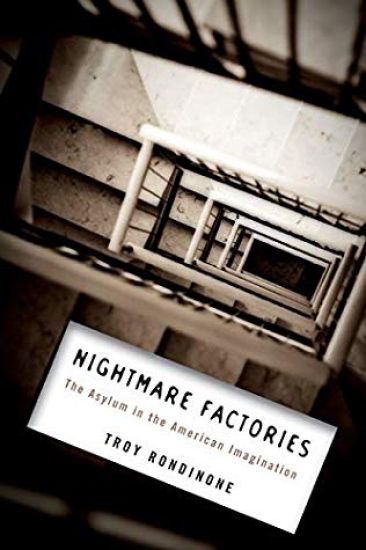
How the insane asylum came to exert such a powerful hold on the American imagination.Madhouse, funny farm, psychiatric hospital, loony bin, nuthouse, mental institution: no matter what you call it, the asylum has a powerful hold on the American imagination. Stark and foreboding, they symbolize mistreatment, fear, and imprisonment, standing as castles of despair and tyranny across the countryside. In the "asylum" of American fiction and film, treatments are torture, attendants are thugs, and psychiatrists are despots. In Nightmare Factories, Troy Rondinone offers the first history of mental hospitals in American popular culture. Beginning with Edgar Allan Poe's 1845 short story "The System of Dr. Tarr and Prof. Fether," Rondinone surveys how American novelists, poets, memoirists, reporters, and filmmakers have portrayed the asylum and how those representations reflect larger social trends in the United States. Asylums, he argues, darkly reflect cultural anxieties and the shortcomings of democracy, as well as the ongoing mistreatment of people suffering from mental illness. Nightmare Factories traces the story of the asylum as the masses have witnessed it. Rondinone shows how works ranging from Moby-Dick and Dracula to One Flew Over the Cuckoo's Nest, Halloween, and American Horror Story have all conversed with the asylum. Drawing from fictional and real accounts, movies, personal interviews, and tours of mental hospitals both active and defunct, Rondinone uncovers a story at once familiar and bizarre, where reality meets fantasy in the foggy landscape of celluloid and pulp.