Kirjojen hintavertailu. Mukana 11 627 362 kirjaa ja 12 kauppaa.

Kirjahaku

Etsi kirjoja tekijän nimen, kirjan nimen tai ISBN:n perusteella.

6 kirjaa tekijältä Tyson E. Lewis

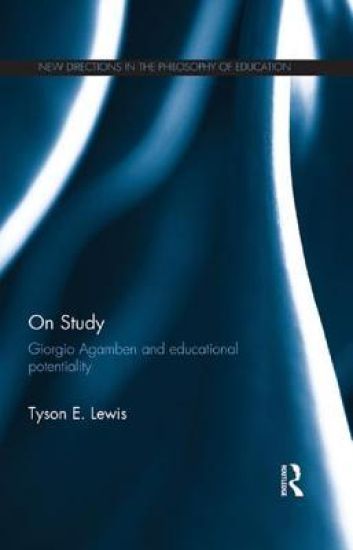
On Study: Giorgio Agamben and educational potentiality
In an educational landscape dominated by discourses and practices of learning, standardized testing, and the pressure to succeed, what space and time remain for studying? In this book, Tyson E. Lewis argues that studying is a distinctive educational experience with its own temporal, spatial, methodological, aesthetic, and phenomenological dimensions. Unlike learning, which presents the actualization of a student’s "potential" in recognizable and measurable forms, study emphasizes the experience of potentiality, freed from predetermined outcomes. Studying suspends and interrupts the conventional logic of learning, opening up a new space and time for educational freedom to emerge. Drawing upon the work of Italian philosopher and critical theorist Giorgio Agamben, Lewis provides a conceptually and poetically rich account of the interconnections between potentiality, freedom, and study. Through a mixture of educational critique, phenomenological description, and ontological analysis, Lewis redeems study as an invaluable and urgent educational experience that provides alternatives to the economization of education and the cooptation of potentiality in the name of efficiency. The resulting discussion uncovers multiple forms of study in a variety of unexpected places: from the political poetry of Adrienne Rich, to tinkering classrooms, to abandoned manifestos, and, finally, to Occupy Wall Street. By reconnecting education with potentiality this book provides an educational philosophy that undermines the logic of learning and assessment, and turns our attention to the interminable paradoxes of studying. The book will be key reading for scholars in the fields of educational philosophy, critical pedagogy, foundations of education, composition and rhetoric, and critical thinking and literacy studies.
On Study: Giorgio Agamben and educational potentiality
In an educational landscape dominated by discourses and practices of learning, standardized testing, and the pressure to succeed, what space and time remain for studying? In this book, Tyson E. Lewis argues that studying is a distinctive educational experience with its own temporal, spatial, methodological, aesthetic, and phenomenological dimensions. Unlike learning, which presents the actualization of a student’s "potential" in recognizable and measurable forms, study emphasizes the experience of potentiality, freed from predetermined outcomes. Studying suspends and interrupts the conventional logic of learning, opening up a new space and time for educational freedom to emerge. Drawing upon the work of Italian philosopher and critical theorist Giorgio Agamben, Lewis provides a conceptually and poetically rich account of the interconnections between potentiality, freedom, and study. Through a mixture of educational critique, phenomenological description, and ontological analysis, Lewis redeems study as an invaluable and urgent educational experience that provides alternatives to the economization of education and the cooptation of potentiality in the name of efficiency. The resulting discussion uncovers multiple forms of study in a variety of unexpected places: from the political poetry of Adrienne Rich, to tinkering classrooms, to abandoned manifestos, and, finally, to Occupy Wall Street. By reconnecting education with potentiality this book provides an educational philosophy that undermines the logic of learning and assessment, and turns our attention to the interminable paradoxes of studying. The book will be key reading for scholars in the fields of educational philosophy, critical pedagogy, foundations of education, composition and rhetoric, and critical thinking and literacy studies.
Walter Benjamin's Antifascist Education

Walter Benjamin's Antifascist Education

Tyson E. Lewis

State University of New York Press
2020
sidottu
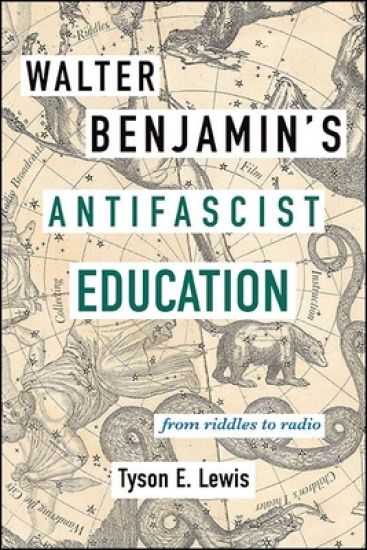
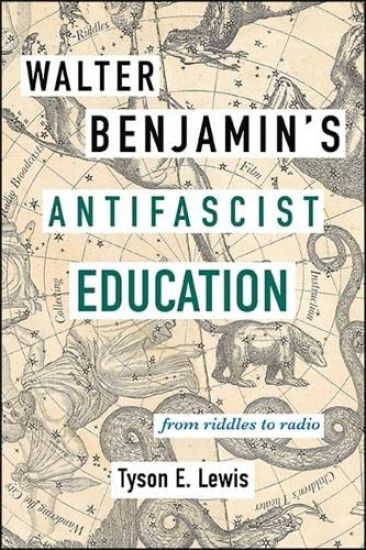
A comprehensive study of education in the writings of Walter Benjamin.Walter Benjamin's Antifascist Education is the first comprehensive analysis of educational themes across the entirety of the critical theorist's diverse writings. Starting with Benjamin's early reflections on teaching and learning, Tyson E. Lewis argues that the aesthetic and cultural forms to which Benjamin so often turned-namely, radio broadcasts, children's theatrical productions, collections, cityscapes, public cinemas, and word games-swell with educational potentialities. What emerges from Lewis's reading is a constellational curriculum composed of minor practices such as poor teaching, absentminded learning, and nondurational studying. This curriculum carries political significance, offering an antidote to past and present forms of fascist manipulation, hardness, and coldness. Walter Benjamin's Antifascist Education is a testimony to Benjamin's belief that "everyone is an educator and everyone needs to be educated and everything is education."
Walter Benjamin's Antifascist Education

Walter Benjamin's Antifascist Education

Tyson E. Lewis

State University of New York Press
2021
pokkari
A comprehensive study of education in the writings of Walter Benjamin.Walter Benjamin's Antifascist Education is the first comprehensive analysis of educational themes across the entirety of the critical theorist's diverse writings. Starting with Benjamin's early reflections on teaching and learning, Tyson E. Lewis argues that the aesthetic and cultural forms to which Benjamin so often turned-namely, radio broadcasts, children's theatrical productions, collections, cityscapes, public cinemas, and word games-swell with educational potentialities. What emerges from Lewis's reading is a constellational curriculum composed of minor practices such as poor teaching, absentminded learning, and nondurational studying. This curriculum carries political significance, offering an antidote to past and present forms of fascist manipulation, hardness, and coldness. Walter Benjamin's Antifascist Education is a testimony to Benjamin's belief that "everyone is an educator and everyone needs to be educated and everything is education."
The Aesthetics of Education

The Aesthetics of Education

Tyson E. Lewis

Continuum Publishing Corporation
2012
sidottu
This innovative book examines the aesthetic event of education. Extending beyond the pedagogy of art or art appreciation, Tyson E. Lewis takes a much broader view of aesthetics and argues that teaching and learning are themselves aesthetic performances. As Jacques Ranciere has recently argued, there is an inherent connection between aesthetics and politics, both of which disrupt conventional distributions of who can speak and think. Here, Lewis extends Ranciere's general thesis to examine how there is not only an aesthetics of politics but also an aesthetics of education. In particular, Lewis' analysis focuses on several questions: What are the possibilities and limitations of building analogies between teachers and artists, education and specific aesthetic forms? What is the relationship between democracy and aesthetic sensibilities? Lewis examines these questions by juxtaposing Ranciere's work on universal teaching, democracy, and aesthetics with Paulo Freire's work on critical pedagogy, freedom, and literacy. The result is an extension and problematization of Ranciere's project as well as a new appreciation for the largely ignored aesthetic dimension of Freire's pedagogy of the oppressed.
The Aesthetics of Education

The Aesthetics of Education

Tyson E. Lewis

Bloomsbury Academic
2014
nidottu
This innovative book examines the aesthetic event of education. Extending beyond the pedagogy of art or art appreciation, Tyson E. Lewis takes a much broader view of aesthetics and argues that teaching and learning are themselves aesthetic performances. As Jacques Ranciere has recently argued, there is an inherent connection between aesthetics and politics, both of which disrupt conventional distributions of who can speak and think. Here, Lewis extends Ranciere's general thesis to examine how there is not only an aesthetics of politics but also an aesthetics of education. In particular, Lewis' analysis focuses on several questions: What are the possibilities and limitations of building analogies between teachers and artists, education and specific aesthetic forms? What is the relationship between democracy and aesthetic sensibilities? Lewis examines these questions by juxtaposing Ranciere's work on universal teaching, democracy, and aesthetics with Paulo Freire's work on critical pedagogy, freedom, and literacy. The result is an extension and problematization of Ranciere's project as well as a new appreciation for the largely ignored aesthetic dimension of Freire's pedagogy of the oppressed.