Volumes 12 and 13 of this highly acclaimed documentary edition cover the first Congress's second session, from January to August 1790. Among other important issues in this critical period, Congress debated Hamilton's report on the public credit, federal assumption of state Revolutionary War debts, and antislavery petitions from Pennsylvania Quakers. The editors once more have assembled the most complete and reliable text of the debates by examining a variety of sources: stenographer Thomas Lloyd's shorthand notes, his 'Congressional Register', and contemporary newspaper accounts. Praise for previous volumes: "A treasure-trove of incomparable knowledge about the beginnings of Congress."--'Presidential Studies Quarterly.' "A window into [the] time...Rich in anecdotes and illuminating detail."--'Washington Post.'
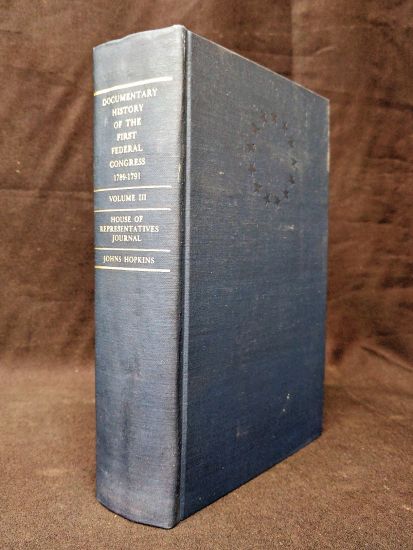
Volumes 12 and 13 of this highly acclaimed documentary edition cover the first Congress's second session, from January to August 1790. Among other important issues in this critical period, Congress debated Hamilton's report on the public credit, federal assumption of state Revolutionary War debts, and antislavery petitions from Pennsylvania Quakers. The editors once more have assembled the most complete and reliable text of the debates by examining a variety of sources: stenographer Thomas Lloyd's shorthand notes, his Congressional Register, and contemporary newspaper accounts.
Volumes 12 and 13 of this highly acclaimed documentary edition cover the first Congress's second session, from January to August 1790. Among other important issues in this critical period, Congress debated Hamilton's report on the public credit, federal assumption of state Revolutionary War debts, and antislavery petitions from Pennsylvania Quakers. The editors once more have assembled the most complete and reliable text of the debates by examining a variety of sources: stenographer Thomas Lloyd's shorthand notes, his Congressional Register, and contemporary newspaper accounts.
Volumes 12 and 13 of this highly acclaimed documentary edition cover the first Congress's second session, from January to August 1790. Among other important issues in this critical period, Congress debated Hamilton's report on the public credit, federal assumption of state Revolutionary War debts, and antislavery petitions from Pennsylvania Quakers. The editors once more have assembled the most complete and reliable text of the debates by examining a variety of sources: stenographer Thomas Lloyd's shorthand notes, his Congressional Register, and contemporary newspaper accounts.
Volumes 12 and 13 of this highly acclaimed documentary edition cover the first Congress's second session, from January to August 1790. Among other important issues in this critical period, Congress debated Hamilton's report on the public credit, federal assumption of state Revolutionary War debts, and antislavery petitions from Pennsylvania Quakers. The editors once more have assembled the most complete and reliable text of the debates by examining a variety of sources: stenographer Thomas Lloyd's shorthand notes, his Congressional Register, and contemporary newspaper accounts.
Volumes 12 and 13 of this highly acclaimed documentary edition cover the first Congress's second session, from January to August 1790. Among other important issues in this critical period, Congress debated Hamilton's report on the public credit, federal assumption of state Revolutionary War debts, and antislavery petitions from Pennsylvania Quakers. The editors once more have assembled the most complete and reliable text of the debates by examining a variety of sources: stenographer Thomas Lloyd's shorthand notes, his Congressional Register, and contemporary newspaper accounts.
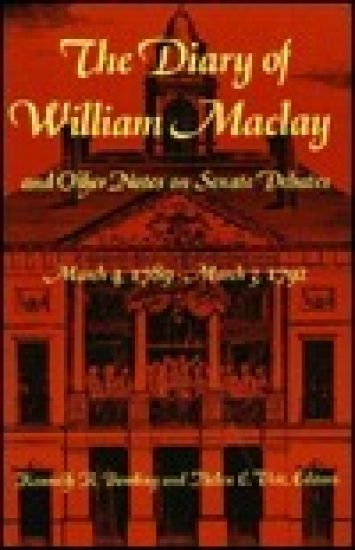
Winner of the Thomas Jefferson Prize from the Society for History of the Federal Government Caustic, witty, and rich in anecdotes and personal observations, the diary of William Maclay is the preeminent unofficial document of the First Federal Congress and, with James Madison's notes from the Federal Convention, one of the two most important journals in American political and constitutional history.The first U.S. Senate met in secret, and much of what is known about its proceedings comes from Pennsylvania senator William Maclay, who kept a diary of what was said on the floor and who seldom failed to make an entry for each day. To this record he added his analysis of the debate, details about behind-the-scenes politicking and social lists in New York and Philadelphia, and comments on the character, motives, and morals of those with whom he associated—including Washington, Adams, Jefferson, Madison, and Hamilton.The diary establishes beyond any doubt that the Founding Fathers practiced legislative politics much as their descendants do today. Rich in both information and opinion, the book makes for engrossing reading.
Winner of the Thomas Jefferson Prize from the Society for History of the Federal Government Caustic, witty, and rich in anecdotes and personal observations, the diary of William Maclay is the preeminent unofficial document of the First Federal Cogress and, whth James Madison's notes from the Federal Convetion, one of the two most important journals in American political and constitutional history.The first U.S. Senate met in secret, and much of what is known about its proceedings comes from Pennsylvania senator William Maclay, who kept a diary of what was said on the floor and who seldom failed to make an entry for each day. To this record he added his analysis of the debate, details about behind-the-scenes pliticking and social list in New York and Philidelphia, and comments on the character, motives, and morals of those with whom he associated-including Washington, Adams, Jefferson, Madison, and Hamilton.The diary establishes beyond any doubt that the Founding Fathers practiced legislative politics much as their descendants do today. Rich in both information and opinion, the book makes an engrossing reading.
Volumes 12 and 13 of this highly acclaimed documentary edition cover the first Congress's second session, from January to August 1790. Among other important issues in this critical period, Congress debated Hamilton's report on the public credit, federal assumption of state Revolutionary War debts, and antislavery petitions from Pennsylvania Quakers. The editors once more have assembled the most complete and reliable text of the debates by examining a variety of sources: stenographer Thomas Lloyd's shorthand notes, his 'Congressional Register', and contemporary newspaper accounts. Praise for previous volumes: "A treasure-trove of incomparable knowledge about the beginnings of Congress."--'Presidential Studies Quarterly.' "A window into [the] time...Rich in anecdotes and illuminating detail."--'Washington Post.'
Volume VII presents the histories and documentary record of over 400 Revolutionary War-related petitions presented to the First Federal Congress. The documents reveal much about the official reaction towards the plight of those who suffered to secure independence, but they also tell the fascinating stories of individual soldiers.
The petition histories in volume VIII throw light on the public's expectations of its new federal government and illustrate how the broad national concerns Americans brought before Congress in its first years of operation continue to resonate in the national political dialogue. The second part of this volume provides a wealth of new source materials on many issues of congressional protocol and procedures, such as rules, printing, staffing, a library for Congress, journal and record keeping, and other precedent-setting matters.
Three new volumes in this acclaimed series present letters written by and to members of the First Federal Congress and communications from other informed individuals at the seat of government in New York City by 1789. The letters bring the official record to life by providing details about the political process through which Congress began to accomplish its daunting agenda by establishing the first federal revenue system, fleshing out the executive and judicial branches outlined in the Constitution, drafting the Bill of Rights, and beginning to tackle the divisive issue of locating the permanent federal capital. The documents supply a rich source of information about the members' opinions on issues, lives in New York and concerns about their distant families, and the services they provided for constituents, as well as constituent opinions about issues. They also make available for the first time in English the frank and insightful letters of the French minister on the subject of the new federal government.
"A monument of careful yet easily usable scholarship. The formal legislative record always needs to be supplemented by the evidence of personal correspondence. This correspondence is in its own important way a memorial to a crucial moment in the translation of the constitution from founding text into functioning document, because it helped to establish the links necessary to maintain loyalty to the new government. The completion of the DHFFC will fill in one of the most exciting and momentous chapters in American political history."--Jack Rakove, Stanford University. "One of the most imaginative and valuable editorial projects ever undertaken for any aspect of American history."--John M. Murrin, Princeton University "A wealth of materials. For the first time, a significant part of the early history of Congress will be made accessible to legal scholars, a fact that I believe will significantly inform their discourse."--Christine Desan, Harvard University Law School
Through decades of searching, the First Federal Congress Project has collected primary material documenting the debates, decisions, and thoughts of the members of the First Federal Congress. The volumes of the Documentary History of the First Federal Congress permit Congress and its staff, historians, political scientists, jurists, educators, students, and others to understand the most important and productive Congress in United States history. Three new volumes present letters written by and to members of the First Federal Congress during its Second Session, as well as communications from other informed individuals at the seat of government in New York City during late 1789 and 1790. The correspondence brings the official record to life by providing details about the often informal political means by which Congress accomplished its agenda. During this session, the Congress addressed the two most divisive issues facing the young nation: funding the debts from the Revolutionary War (particularly the debts incurred by the individual states) and determining locations for both the temporary and permanent seats of the federal government. It resolved these difficult issues through the Compromise of 1790, silencing sectional threats of disunion for the immediate future. A rich source of information about the members of Congress, their lives in New York, their concerns about their families, and the services they performed for their constituents, the documents from these three new volumes will also be incorporated into The Early Republic, an innovative online reference hosted by the Johns Hopkins University Press.
Through decades of searching, the First Federal Congress Project has collected primary material documenting the debates, decisions, and thoughts of the members of the First Federal Congress. The volumes of the Documentary History of the First Federal Congress permit Congress and its staff, historians, political scientists, jurists, educators, students, and others to understand the most important and productive Congress in United States history. Three new volumes present letters written by and to members of the First Federal Congress during its Second Session, as well as communications from other informed individuals at the seat of government in New York City during late 1789 and 1790. The correspondence brings the official record to life by providing details about the often informal political means by which Congress accomplished its agenda. During this session, the Congress addressed the two most divisive issues facing the young nation: funding the debts from the Revolutionary War (particularly the debts incurred by the individual states) and determining locations for both the temporary and permanent seats of the federal government. It resolved these difficult issues through the Compromise of 1790, silencing sectional threats of disunion for the immediate future. A rich source of information about the members of Congress, their lives in New York, their concerns about their families, and the services they performed for their constituents, the documents from these three new volumes will also be incorporated into The Early Republic, an innovative online reference hosted by the Johns Hopkins University Press.
Through decades of searching, the First Federal Congress Project has collected primary material documenting the debates, decisions, and thoughts of the members of the First Federal Congress. The volumes of the Documentary History of the First Federal Congress permit Congress and its staff, historians, political scientists, jurists, educators, students, and others to understand the most important and productive Congress in United States history. Three new volumes present letters written by and to members of the First Federal Congress during its Second Session, as well as communications from other informed individuals at the seat of government in New York City during late 1789 and 1790. The correspondence brings the official record to life by providing details about the often informal political means by which Congress accomplished its agenda. During this session, the Congress addressed the two most divisive issues facing the young nation: funding the debts from the Revolutionary War (particularly the debts incurred by the individual states) and determining locations for both the temporary and permanent seats of the federal government. It resolved these difficult issues through the Compromise of 1790, silencing sectional threats of disunion for the immediate future. A rich source of information about the members of Congress, their lives in New York, their concerns about their families, and the services they performed for their constituents, the documents from these three new volumes will also be incorporated into The Early Republic, an innovative online reference hosted by the Johns Hopkins University Press.