Kirjojen hintavertailu. Mukana 11 717 486 kirjaa ja 12 kauppaa.

Kirjahaku

Etsi kirjoja tekijän nimen, kirjan nimen tai ISBN:n perusteella.

5 kirjaa tekijältä Uta Gerhardt

The Social Thought of Talcott Parsons
The Social Thought of Talcott Parsons offers an insightful new reading of the work of Talcott Parsons, keeping in view at once the important influences of Max Weber on his sociology and the central place occupied by methodology - which enables us to better understand the relationship between American and European social theory. Revealing American democracy and its nemesis, National Socialism in Germany as the basis of his theory of society, this book explores the debates in which Parsons was engaged throughout his life, with the Frankfurt School, C. Wright Mills and the young radicals among the "disobedient" student generation, as well as economism and utilitarianism in social theory; the opponents that Parsons confronted in the interests of humanism. In addition to revisiting Parsons' extensive oeuvre, Uta Gerhardt takes up themes in current research and theory - including social inequality, civic culture, and globalization - offering a fascinating demonstration of what the conceptual approaches of Parsons can accomplish today. Revealing methodology and the American ethos to be the cornerstones of Parsons' social thought, this book will appeal not only to those with interests in classical sociology - and who wish to fully understand what this 'classic' has to offer - but also to those who wish to make sociology answer to the problems of the society of the present.
Talcott Parsons

Talcott Parsons

Uta Gerhardt

Cambridge University Press
2011
pokkari
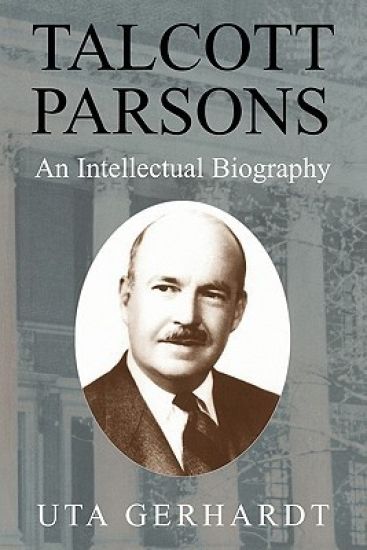
The American sociologist Talcott Parsons was often accused of being an overly abstract, even apolitical thinker, remote in Harvard's ivory tower. The controversial Parsons, in fact, emulated his mentor, the venerable Max Weber, in at least two respects: as a scholar he practised Wertfreiheit (scientific professionalism) and as a political activist he worked for the preservation and expansion of democracy. In this text, Uta Gerhardt traces this double commitment and links Parsons's scholarship to his politics. Utilizing rich archival material, she examines four periods in Parsons's intellectual life in the context of American history and society. From the New Deal and the rise of German fascism to the Second World War, through the McCarthy era and the Civil Rights movement, Parsons's overriding agenda was to develop both a sociological understanding and a defense of the development of modern democracy.
Talcott Parsons

Talcott Parsons

Uta Gerhardt

Cambridge University Press
2002
sidottu
The American sociologist Talcott Parsons was often accused of being an overly abstract, even apolitical thinker, remote in Harvard's ivory tower. The controversial Parsons, in fact, emulated his mentor, the venerable Max Weber, in at least two respects: as a scholar he practised Wertfreiheit (scientific professionalism) and as a political activist he worked for the preservation and expansion of democracy. In this text, Uta Gerhardt traces this double commitment and links Parsons's scholarship to his politics. Utilizing rich archival material, she examines four periods in Parsons's intellectual life in the context of American history and society. From the New Deal and the rise of German fascism to the Second World War, through the McCarthy era and the Civil Rights movement, Parsons's overriding agenda was to develop both a sociological understanding and a defense of the development of modern democracy.
The Social Thought of Talcott Parsons

The Social Thought of Talcott Parsons

Uta Gerhardt

Ashgate Publishing Limited
2011
sidottu
The Social Thought of Talcott Parsons offers an insightful new reading of the work of Talcott Parsons, keeping in view at once the important influences of Max Weber on his sociology and the central place occupied by methodology - which enables us to better understand the relationship between American and European social theory. Revealing American democracy and its nemesis, National Socialism in Germany as the basis of his theory of society, this book explores the debates in which Parsons was engaged throughout his life, with the Frankfurt School, C. Wright Mills and the young radicals among the "disobedient" student generation, as well as economism and utilitarianism in social theory; the opponents that Parsons confronted in the interests of humanism. In addition to revisiting Parsons' extensive oeuvre, Uta Gerhardt takes up themes in current research and theory - including social inequality, civic culture, and globalization - offering a fascinating demonstration of what the conceptual approaches of Parsons can accomplish today. Revealing methodology and the American ethos to be the cornerstones of Parsons' social thought, this book will appeal not only to those with interests in classical sociology - and who wish to fully understand what this 'classic' has to offer - but also to those who wish to make sociology answer to the problems of the society of the present.
Soziologie Im Zwanzigsten Jahrhundert: Studien Zu Ihrer Geschichte in Deutschland
Fur das Verstandnis der Geschichte der Soziologie im zwanzigsten Jahrhundert ist es unabdingbar, die Debatten und institutionellen Strukturen zu rekonstruieren, die das Fach gepragt haben. Fur Deutschland, das in diesem "langen Jahrhundert" sechs Herrschaftssysteme erlebt hat, gilt dies ganz besonders. Uta Gerhardt zeigt eindrucksvoll, wie man eine Geschichte der Soziologie als Gesellschaftsgeschichte schreiben muss. In sechs chronologisch geordneten Studien werden Bruchlinien, Anschlussstellen und Widerspruche der Fachgeschichte beleuchtet. Zunachst die Abkehr vom Sozialdarwinismus, die Wilhelm Dilthey initiierte und die den Welterfolg der WeberschenTheorie erst ermoglichte. Im Fokus steht dann das Fortleben der Soziologie in der Emigration. Als wichtigsten Impulsgeber in der Stunde Null wurdigtdie Autorin Edward Y. Hartshorne, bevor sie den Neubeginn der empirischen Sozialforschung analysiert. In den kontroversen 1960er Jahren folgt Gerhardt dem langen Schatten des Positivismus, um abschliessend die Herausforderungen der Wiedervereinigung fur die Soziologie zu analysieren. Eine einzigartige, uberzeugende Diskursgeschichte der Soziologie im zwanzigsten Jahrhundert.