Kirjojen hintavertailu. Mukana 11 244 527 kirjaa ja 12 kauppaa.

Kirjahaku

Etsi kirjoja tekijän nimen, kirjan nimen tai ISBN:n perusteella.

6 kirjaa tekijältä Utz McKnight

Everyday Practice of Race in America
An original contribution to political theory and cultural studies this work argues for a reinterpretation of how race is described in US society. McKnight develops a line of reasoning to explain how we accommodate racial categories in a period when it has become important to adopt anti-racist formal instruments in much of our daily lives. The discussion ranges over a wide theoretical landscape, bringing to bear the insights of Wittgenstein, Stanley Cavell, Michel Foucault, Cornel West and others to the dilemmas represented by the continuing social practice of race. The book lays the theoretical foundation for a politics of critical race practice, it provides insight into why we have sought the legal and formal institutional solutions to racism that have developed since the 1960s, and then describes why these are inadequate to addressing the new practices of racism in society. The work seeks to leave the reader with a sense of possibility, not pessimism; and demonstrates how specific arguments about racial subjection may allow for changing how we live and thereby improve the impact race continues to have in our lives.By developing a new way to critically study how race persists in dominating society, the book provides readers with an understanding of how race is socially constructed today, and will be of great interest to students and scholars of political theory, American politics and race & ethnic politics

Everyday Practice of Race in America
An original contribution to political theory and cultural studies this work argues for a reinterpretation of how race is described in US society. McKnight develops a line of reasoning to explain how we accommodate racial categories in a period when it has become important to adopt anti-racist formal instruments in much of our daily lives. The discussion ranges over a wide theoretical landscape, bringing to bear the insights of Wittgenstein, Stanley Cavell, Michel Foucault, Cornel West and others to the dilemmas represented by the continuing social practice of race. The book lays the theoretical foundation for a politics of critical race practice, it provides insight into why we have sought the legal and formal institutional solutions to racism that have developed since the 1960s, and then describes why these are inadequate to addressing the new practices of racism in society. The work seeks to leave the reader with a sense of possibility, not pessimism; and demonstrates how specific arguments about racial subjection may allow for changing how we live and thereby improve the impact race continues to have in our lives.By developing a new way to critically study how race persists in dominating society, the book provides readers with an understanding of how race is socially constructed today, and will be of great interest to students and scholars of political theory, American politics and race & ethnic politics
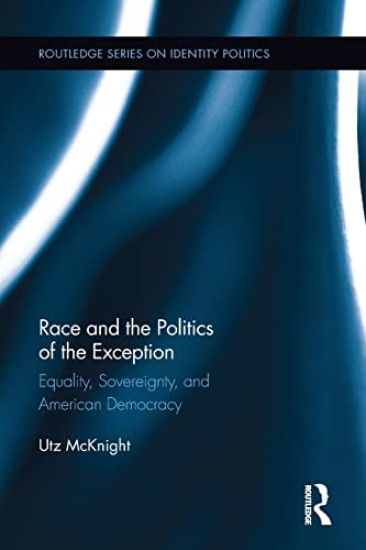
Race and the Politics of the Exception
The traditional assumption today about race is that it is not political; that it has no political content and is a matter of individual beliefs and attitudes. In Race and the Politics of the Exception, Utz McKnight argues that race is in fact political and defines how it functions as a politics in the United States. McKnight organizes his book into three sections, beginning with a theoretical section about racial politics in the United States. Using theorists such as Benjamin, Agamben, and Schmitt, McKnight discusses how the idea of racial communities went from being constituted through the idea of racial sovereignty and a politics of the exception that defined blacks as the internal enemy, to being constitutionally defined through the institutions of racial equal opportunity. In the second section, McKnight further develops his critical race theory by exploring in more detail the social use of race today. The election of President Obama has brought the politics of racial equality to a critical point. In spite of a very powerful set of political tools to define it as a thing of the past, race matters. In the final section, McKnight engages with important African American fiction from each of the three major periods of racial politics in the US. Earlier descriptions of political theory are used throughout these analyses to refine the argument for a new critical politics of race. Scholars of political theory, identity politics, African American studies, and American Studies will find this work ground-breaking and relevant.
Race and the Politics of the Exception
The traditional assumption today about race is that it is not political; that it has no political content and is a matter of individual beliefs and attitudes. In Race and the Politics of the Exception, Utz McKnight argues that race is in fact political and defines how it functions as a politics in the United States. McKnight organizes his book into three sections, beginning with a theoretical section about racial politics in the United States. Using theorists such as Benjamin, Agamben, and Schmitt, McKnight discusses how the idea of racial communities went from being constituted through the idea of racial sovereignty and a politics of the exception that defined blacks as the internal enemy, to being constitutionally defined through the institutions of racial equal opportunity. In the second section, McKnight further develops his critical race theory by exploring in more detail the social use of race today. The election of President Obama has brought the politics of racial equality to a critical point. In spite of a very powerful set of political tools to define it as a thing of the past, race matters. In the final section, McKnight engages with important African American fiction from each of the three major periods of racial politics in the US. Earlier descriptions of political theory are used throughout these analyses to refine the argument for a new critical politics of race. Scholars of political theory, identity politics, African American studies, and American Studies will find this work ground-breaking and relevant.
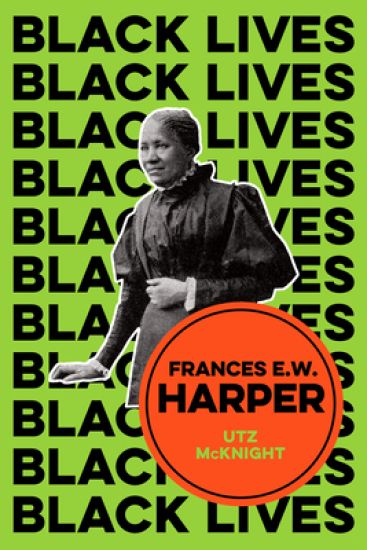
Frances E. W. Harper

Frances E. W. Harper

Utz McKnight

Polity Press
2020
sidottu
Free Black woman, poet, novelist, essayist, speaker, and activist, Frances Watkins Harper was one of the nineteenth century’s most important advocates of Abolitionism and female suffrage, and her pioneering work still has profound lessons for us today. In this new book, Utz McKnight shows how Harper’s life and work inspired her contemporaries to imagine a better America. He seeks to recover her importance by examining not only her vision of the possibilities of Emancipation, but also her subsequent role in challenging Jim Crow. He argues that engaging with her ideas and writings is vital in understanding not only our historical inheritance, but also contemporary issues ranging from racial violence to the role of Christianity. This lucid book is essential reading not only for students of African American history, but also for all progressives interested in issues of race, politics, and society.
Frances E. W. Harper

Frances E. W. Harper

Utz McKnight

Polity Press
2020
nidottu
Free Black woman, poet, novelist, essayist, speaker, and activist, Frances Watkins Harper was one of the nineteenth century’s most important advocates of Abolitionism and female suffrage, and her pioneering work still has profound lessons for us today. In this new book, Utz McKnight shows how Harper’s life and work inspired her contemporaries to imagine a better America. He seeks to recover her importance by examining not only her vision of the possibilities of Emancipation, but also her subsequent role in challenging Jim Crow. He argues that engaging with her ideas and writings is vital in understanding not only our historical inheritance, but also contemporary issues ranging from racial violence to the role of Christianity. This lucid book is essential reading not only for students of African American history, but also for all progressives interested in issues of race, politics, and society.