Kirjojen hintavertailu. Mukana 11 717 486 kirjaa ja 12 kauppaa.

Kirjahaku

Etsi kirjoja tekijän nimen, kirjan nimen tai ISBN:n perusteella.

3 kirjaa tekijältä V. Markham Lester

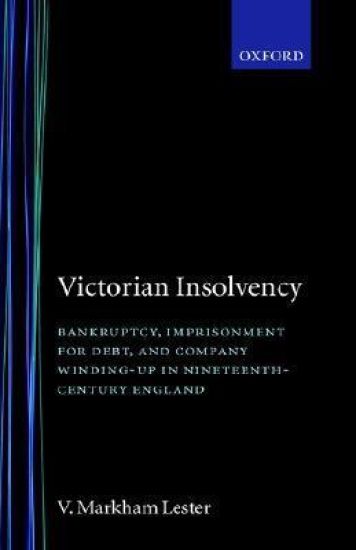
Victorian Insolvency

Victorian Insolvency

V. Markham Lester

Clarendon Press
1995
sidottu
This is the first legal and financial history of bankruptcy in nineteenth-century England. V. Markham Lester offers a full statistical analysis and detailed account of bankruptcy, imprisonment for debt, and company winding-up, and traces the decline in the level of insolvency towards the end of the century. His scholarly and detailed analysis demonstrates the validity of the Victorians' notion that financial failure was a significant problem for English society. Dr Lester shows that random factors may have played as great a role as cyclical fluctuations in bankruptcy levels. Victorian Insolvency also adds a new and significant dimension to the debate on government growth by analysing for the first time the part the English legal system played in the growth of British government. By the end of the nineteenth century, the administration of bankrupt estates was one of the largest items of government expenditure. Dr Lester sets Victorian management of insolvency in the context of other nineteenth-century legal and financial reforms and assesses its role in the development of the modern British state.
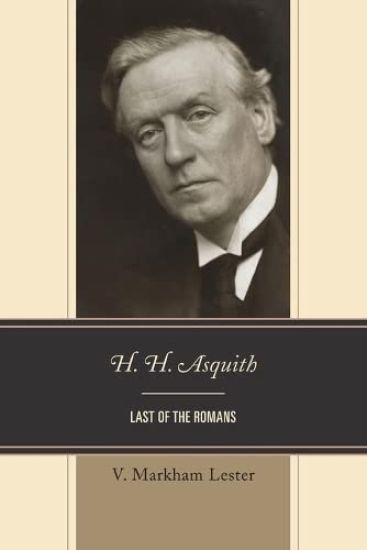
H. H. Asquith

H. H. Asquith

V. Markham Lester

Lexington Books
2019
sidottu
H. H. Asquith: Last of the Romans chronicles the life of H. H. Asquith (1852–1928), the longest-serving British prime minister between Lord Liverpool and Margaret Thatcher. In this study, V. Markham Lester argues that the key to understanding Asquith is to recognize the classical virtues he acquired early in his education. Employing unpublished sources and documents made public since the last full-scale biography of Asquith was published more than forty years ago, Lester challenges many interpretations in earlier biographies. Previous studies of Asquith have often glossed over his education and early years, contending that his development did not contribute materially to his mature outlook. On the contrary, by examining thoroughly Asquith’s early career—particularly his tenure as home secretary and his time as a barrister—this book offers unappreciated insights into Asquith’s character and development as a political leader. Lester further challenges the previous conclusions that Asquith failed as a war leader, demonstrating that Asquith succeeded in meeting the novel challenges of World War I and that his accomplishments have been insufficiently understood. He explains how Asquith’s lifelong reliance on rational thought, eloquence, and self-control produced the impressive leadership required to hold the fragile government together as it struggled to handle the unexpected and unprecedented challenges of world war and to lay the foundation for ultimate victory in the Great War.
H. H. Asquith

H. H. Asquith

V. Markham Lester

BLOOMSBURY PUBLISHING PLC
2023
nidottu
H. H. Asquith: Last of the Romans chronicles the life of H. H. Asquith (1852–1928), the longest-serving British prime minister between Lord Liverpool and Margaret Thatcher. In this study, V. Markham Lester argues that the key to understanding Asquith is to recognize the classical virtues he acquired early in his education.Employing unpublished sources and documents made public since the last full-scale biography of Asquith was published more than forty years ago, Lester challenges many interpretations in earlier biographies. Previous studies of Asquith have often glossed over his education and early years, contending that his development did not contribute materially to his mature outlook. On the contrary, by examining thoroughly Asquith’s early career—particularly his tenure as home secretary and his time as a barrister—this book offers unappreciated insights into Asquith’s character and development as a political leader. Lester further challenges the previous conclusions that Asquith failed as a war leader, demonstrating that Asquith succeeded in meeting the novel challenges of World War I and that his accomplishments have been insufficiently understood. He explains how Asquith’s lifelong reliance on rational thought, eloquence, and self-control produced the impressive leadership required to hold the fragile government together as it struggled to handle the unexpected and unprecedented challenges of world war and to lay the foundation for ultimate victory in the Great War.