Kirjojen hintavertailu. Mukana 11 699 587 kirjaa ja 12 kauppaa.

Kirjahaku

Etsi kirjoja tekijän nimen, kirjan nimen tai ISBN:n perusteella.

40 kirjaa tekijältä V. S. Naipaul

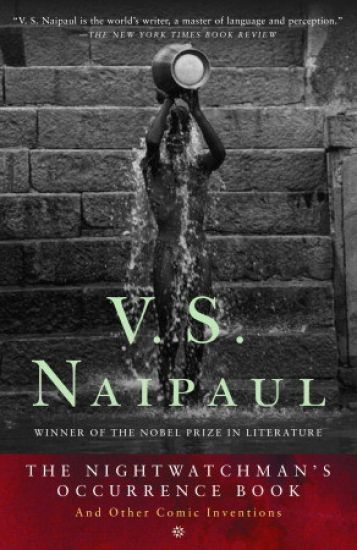
The Nightwatchman's Occurrence Book, and Other Comic Inventions
V. S. Naipaul's legendary command of broad comedy and acute social observation is on abundant display in these classic works of fiction-two novels and a collection of stories-that capture the rhythms of life in the Caribbean and England with impressive subtlety and humor.The Suffrage of Elvira is Naipaul's hilarious take on an electoral campaign in the back country of Trinidad, where the candidates' tactics include blatant vote-buying and supernatural sabotage. The eponymous protagonist of Mr. Stone and the Knights Companion is an aging Englishman of ponderously regular habits whose life is thrown into upheaval by a sudden marriage and unanticipated professional advancement. And the stories in A Flag on the Island take us from a Chinese bakery in Trinidad-whose black proprietor faces bankruptcy until he takes a Chinese name-to a rooming house in London-where the genteel landlady plays a nasty Darwinian game with her budgerigars.Unfailingly stylish, filled with intelligence and feeling, here is the work of a writer who can do just about anything that can be done with language.
India: A Million Mutinies Now

India: A Million Mutinies Now

V. S. Naipaul

VINTAGE
2011
nidottu
The Nobel Prize-winning author delivers an impassioned and prescient travelogue of his journeys through his ancestral homeland. - "An intricate, splendid, and utterly memorable book." --The New York Times Book Review Arising out of Naipaul's lifelong obsession and passion for a country that is at once his and totally alien, India: A Million Mutinies Now relates the stories of many of the people he met traveling there more than fifty years ago. He explores how they have been steered by the innumerable frictions present in Indian society--the contradictions and compromises of religious faith, the whim and chaos of random political forces. This book represents Naipaul's last word on his homeland, complementing his two other India travelogues, An Area of Darkness and India: A Wounded Civilization.
The Masque of Africa

The Masque of Africa

V. S. Naipaul

Picador
2011
pokkari
Moving beyond travelogue, V. S. Naipaul's The Masque of Africa considers the effects of belief (in indigenous animisms, the foreign religions of Christianity and Islam, the cults of leaders and mythical history) upon the progress of African civilization. Beginning in Uganda, at the centre of the continent, Naipaul’s journey takes in Ghana and Nigeria, the Ivory Coast and Gabon, and ends, as the country does, in South Africa. Focusing upon the theme of belief – though sometimes the political or economical realities are so overwhelming that they have to be taken into account – Naipaul examines the fragile but enduring quality of the old world of magic. To witness the ubiquity of such ancient ritual, to be given some idea of its power, was to be taken far back to the beginning of things. To reach that beginning was the purpose of this book. ‘The quality of Naipaul’s writing – simple, concise, engaging – rarely varies . . . Above all, Naipaul’s latest African journey is eyewitness reporting at its best’ Time
Magic Seeds

Magic Seeds

V. S. Naipaul

Picador
2011
pokkari
In V. S. Naipaul's Magic Seeds we follow Willie Chandran, a man who has allowed one identity after another to be thrust upon him. In his early forties, after a peripatetic life, he succumbs to the encouragement of his sister – and his own listlessness – and joins an underground movement in India. But years of revolutionary campaigns and then prison convince him that the revolution ‘had nothing to do with what we were fighting for’, and he feels himself further than ever ‘from his own history’. When he returns to Britain where, thirty years before, his wanderings began, Willie encounters a country that has turned its back on its past and, like him, has become detached from its own history. He endures the indignities of a culture dissipated by reform and compromise until, in a moment of grotesque revelation – a tour de force of parodic savagery from our most visionary of writers – Willie comes to an understanding that might finally allow him to release his true self. ‘A radical further step in one of the great imaginative careers of our time . . . Magic Seeds demands our attention, and nothing more authoritative will be published this year’ Philip Hensher, Daily Telegraph
In a Free State

In a Free State

V. S. Naipaul

Picador
2011
pokkari
The central novel from V.S. Naipaul’s Booker Prize-winning narrative of displacement, published for the first time in a stand-alone edition.‘In a Free State was conceived in 1969 as a sequence about displacement. There was to be a central novel, set in Africa, with shorter surrounding matter from other places. The shorter pieces from these varied places were intended to throw a universal light on the African material. But then, as the years passed and the world changed, and I felt myself less of an oddity as a writer, I grew to feel that the central novel was muffled and diminished by the surrounding material and I began to think that the novel should be published on its own. This is what, many years after its first publication, my publisher is doing in this edition.’ - V. S. Naipaul. In a Free State is set in Africa, in a place like Uganda or Rwanda, and its two main characters are English. They had once found liberation in Africa. But now Africa is going sour on them. The land is no longer safe, and at a time of tribal conflict they have to make a long drive to the safety of their compound. At the end of this drive – the narrative tight, wonderfully constructed, the formal and precise language always instilled with violence and rage – we know everything about the English characters, the African country, and the Idi Amin-like future awaiting it.
The Middle Passage

The Middle Passage

V. S. Naipaul

Picador
2011
pokkari
V. S. Naipaul’s first travel book, The Middle Passage, takes us on a rich and emotional journey to a place of the greatest interest – his birthplace.In 1960, Dr Eric Williams, the first Prime Minister of independent Trinidad, invited V. S. Naipaul to revisit his native country and record his impressions. In this classic of modern travel writing he created a deft and remarkably prescient portrait of Trinidad and the Caribbean societies of four adjacent countries, Guyana, Surinam, Martinique and Jamaica. Haunted by the legacies of slavery and colonialism, and so thoroughly defined by the norms of Empire that it can scarcely comprehend its end, Naipaul catches this poor, topsy-turvy world at a critical moment, a time when racial and political assertion had yet to catch up – a perfect subject for the acute understanding and dazzling prose of this great writer. ‘Naipaul travels with the artist’s eye and ear and his observations are sharply discerning.’ Evelyn Waugh ‘Belongs in the same category of travel writing as Lawrence’s books on Italy, Greene’s on West Africa and Pritchett’s on Spain’ New Statesman
Miguel Street

Miguel Street

V. S. Naipaul

Picador
2011
pokkari
Miguel Street, V. S. Naipaul’s first written work of fiction, is set in a derelict corner of Port of Spain, Trinidad, during World War Two and is narrated by an unnamed, precociously observant neighbourhood boy. We are introduced to a galaxy of characters, from Popo the carpenter, who neglects his livelihood to build ‘the wild thing without a name’, to Man-man, who goes from running for public office to staging his own crucifixion, and the dreaded Big-Foot, the bully with glass tear ducts. As well as the lovely Mrs Hereira, in thrall to her monstrous husband. V. S. Naipaul writes with prescient wisdom and crackling wit about the lives and legends that make up Miguel Street: a living theatre, a world in microcosm, a cacophony of sights, sounds and smells – all seen through the eyes of a fatherless boy. The language, the idioms and the observations are priceless and timeless and Miguel Street overflows with life on every page. This is an astonishing novel about hope, despair, poverty and laughter; and an enchanting and exuberant tribute to V. S. Naipaul’s childhood home.
Beyond Belief: Islamic Excursions Among the Converted Peoples
The Nobel Prize-winning author offers an insightful follow-up to his landmark travelogue Among the Believers a "brilliant ... powerfully observed, stylistically elegant exploration" (The New York Times) that's the result of a five-month journey through Indonesia, Iran, Pakistan, and Malaysia, countries where dreams of Islamic purity clash with economic and political realities. Fourteen years after the publication of his landmark travel narrative Among the Believers, V. S. Naipaul returned to the four non-Arab Islamic countries he reported on so vividly at the time of Ayatollah Khomeini's triumph in Iran. Beyond Belief is the result of his five-month journey in 1995 through lands where descendants of Muslim converts live at odds with indigenous traditions. In extended conversations with a vast number of people--a rare survivor of the martyr brigades of the Iran-Iraq war, a young intellectual training as a Marxist guerilla in Baluchistan, an impoverished elderly couple in Teheran whose dusty Baccarat chandeliers preserve the memory of vanished wealth, and countless others--V. S. Naipaul deliberately effaces himself to let the voices of his subjects come through. Yet the result is a collection of stories that has the author's unmistakable stamp. With its incisive observation and brilliant cultural analysis, Beyond Belief is a startling and revelatory addition to the Naipaul canon.
The Mystic Masseur

The Mystic Masseur

V. S. Naipaul

VINTAGE
2002
nidottu
The Nobel Prize-winning author delivers a Dickensian novel that traces the unlikely career of a failed schoolteacher and village masseur who becomes a revered mystic, a thriving entrepreneur, and the most beloved politician in Trinidad. "No one else ... seems able to employ prose fiction so deeply as the very voice of exile." --The New York Review of Books In this slyly funny and lavishly inventive novel--his first--V. S. Naipaul chronicles the ascent of the impecunious village masseur Ganesh Ramsumair. To understand a little better, one has to realize that in the 1940s masseurs were the island's medical practitioners of choice. As one character observes, "I know the sort of doctors they have in Trinidad. They think nothing of killing two, three people before breakfast." Ganesh's journey is variously aided and impeded by a Dickensian cast of rogues and eccentrics. There's his skeptical wife, Leela, whose schooling has made her excessively, fond. of; punctuation: marks ; and Leela's father, Ramlogan, a man of startling mood changes and an ever-ready cutlass. There's the aunt known as The Great Belcher. There are patients pursued by malign clouds or afflicted with an amorous fascination with bicycles. Witty, tender, filled with the sights, sounds, and smells of Trinidad's dusty Indian villages, The Mystic Masseur is Naipaul at his most expansive and evocative.
A House for Mr. Biswas

A House for Mr. Biswas

V. S. Naipaul

VINTAGE
2001
nidottu
From the Nobel Prize-winning author: an unforgettable comedy of manners inspired by the author's father that has been hailed as one of the twentieth century's finest novels. "A marvelous prose epic that matches the best nineteenth-century novels for richness of comic insight and final, tragic power." --Newsweek In his forty-six short years, Mr. Mohun Biswas has been fighting against destiny to achieve some semblance of independence, only to face a lifetime of calamity. Shuttled from one residence to another after the drowning death of his father, for which he is inadvertently responsible, Mr. Biswas yearns for a place he can call home. But when he marries into the domineering Tulsi family on whom he indignantly becomes dependent, Mr. Biswas embarks on an arduous--and endless--struggle to weaken their hold over him and purchase a house of his own. A heartrending, dark yet comedic novel, A House for Mr. Biswas masterfully evokes a man's quest for autonomy against an emblematic post-colonial canvas.
Magic Seeds

Magic Seeds

V. S. Naipaul

VINTAGE
2005
nidottu
The Nobel Prize-winning author continues the story of Willie Chandran, the perennially dissatisfied and self-destructively naive protagonist of his bestselling Half a Life."The most essential English-language novelist of our time." --New YorkHaving left a wife and a livelihood in Africa, Willie is persuaded to return to his native India to join an underground movement on behalf of its oppressed lower castes. Instead he finds himself in the company of dilettantes and psychopaths, relentlessly hunted by police and spurned by the people he means to liberate. But this is only one stop in a quest for authenticity that takes in all the fanaticism and folly of the postmodern era. Moving with dreamlike swiftness from guerrilla encampment to prison cell, from the squalor of rural India to the glut and moral desolation of 1980s London, Magic Seeds is a novel of oracular power, dazzling in its economy and unblinking in its observations.
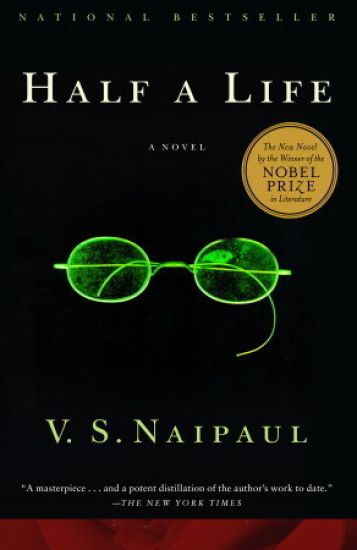
Half a Life

Half a Life

V. S. Naipaul

VINTAGE
2002
nidottu
NATIONAL BESTSELLER - In a narrative that moves with dreamlike swiftness from India to England to Africa, the Nobel Prize-winning author produced his finest novel, a bleakly resonant study of the fraudulent bargains that make up an identity. "A masterpiece." --Los Angeles Times Book ReviewThe son of a Brahmin ascetic and his lower-caste wife, Willie Chandran grows up sensing the hollowness at the core of his father's self-denial and vowing to live more authentically. That search takes him to the immigrant and literary bohemias of 1950s London, to a facile and unsatisfying career as a writer, and at last to a decaying Portugese colony in East Africa, where he finds a happiness he will then be compelled to betray. Brilliantly orchestrated, at once elegiac and devastating in its portraits of colonial grandeur and pretension, Half a Life represents the pinnacle of Naipaul's career.
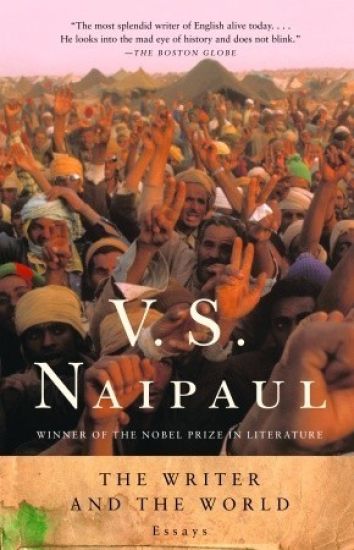
The Writer and the World: Essays
Spanning four decades and four continents, this magisterial volume brings together the essential shorter works of reflection and reportage by the Nobel Prize-winning author. "The most splendid writer.... He looks into the mad eye of history and does not blink." --The Boston Globe V.S. Naipaul is our most sensitive, literate, and undeceivable observer of the post-colonial world. In these pages, he trains his relentless moral intelligence on societies from India to the United States and sees how each deals with the challenges of modernity and the seductions of both the real and mythical past. Whether he is writing about a string of racial murders in Trinidad; the mad, corrupt reign of Mobutu in Zaire; Argentina under the generals; or Dallas during the 1984 Republican Convention, Naipaul combines intellectual playfulness with sorrow, indignation, and analysis so far-reaching that it approaches prophecy. The Writer and the World reminds us that he is in a class by himself.
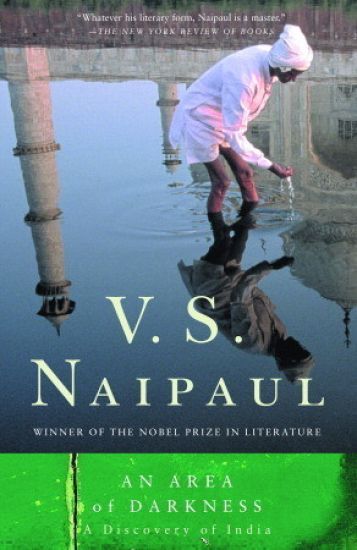
An Area of Darkness: A Discovery of India
The Nobel Prize-winning author's profound reckoning with his ancestral homeland and an extraordinarily perceptive chronicle of his first encounter with India. "Whatever his literary form, Naipaul is a master." --The New York Review of Books Traveling from the bureaucratic morass of Bombay to the ethereal beauty of Kashmir, from a sacred ice cave in the Himalayas to an abandoned temple near Madras, Naipaul encounters a dizzying cross-section of humanity: browbeaten government workers and imperious servants, a suavely self-serving holy man and a deluded American religious seeker. An Area of Darkness also abounds with Naipaul's strikingly original responses to India's paralyzing caste system, its apparently serene acceptance of poverty and squalor, and the conflict between its desire for self-determination and its nostalgia for the British raj. The result may be the most elegant and passionate book ever written about the subcontinent.
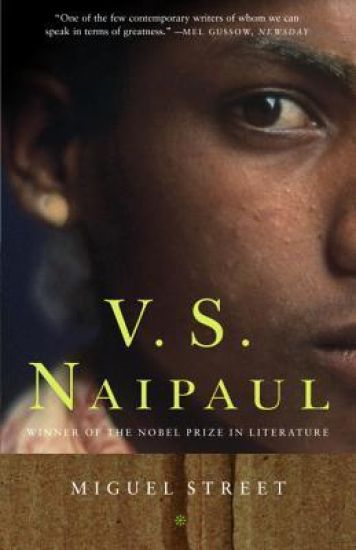
Miguel Street

Miguel Street

V. S. Naipaul

VINTAGE
2002
nidottu
Bogart the bigamist, B. Wordsworth the poet, and Morgan the pyrotechnist are among the poor inhabitants of Miguel Street seen through the eyes of a fatherless boy growing up in Port of Spain, Trinidad, during World War II. Reprint. 12,500 first printing.
The Enigma of Arrival

The Enigma of Arrival

V. S. Naipaul

VINTAGE
1988
nidottu
The Nobel Prize-winning author distills his wide experience of countries and peoples into a moving account of the rites of passage endured by all people and all communities undergoing change or decay. - "Naipaul's finest work." --Chicago Tribune"A subtly incisive self-reckoning." --The Washington Post Book World The story of a writer's singular journey - from one place to another, and from one state of mind to another. At the midpoint of the century, the narrator leaves the British colony of Trinidad and comes to the ancient countryside of England. And from within the story of this journey - of departure and arrival, alienation and familiarity, home and homelessness - the writer reveals how, cut off from his "first" life in Trinidad, he enters a "second childhood of seeing and learning." Clearly autobiographical, yet woven through with remarkable invention, The Enigma of Arrival is as rich and complex as any novel we have had from this exceptional writer. "The conclusion is both heart-breaking and bracing: the only antidote to destruction--of dreams, of reality--is remembering. As eloquently as anyone now writing, Naipaul remembers." --Time "Far and away the most curious novel I've read in a long time, and maybe the most hypnotic book I've ever read." --St. Petersburg Times
A Turn in the South

A Turn in the South

V. S. Naipaul

VINTAGE
1990
nidottu
The Nobel Prize-winning author delivers a revealing and disturbing book about the American South--from Atlanta to Charleston, Tallahassee to Tuskegee, Nashville to Chapel Hill. - "His comprehension is astute and penetrating.... The book he has written brings new understanding of] the subject." --The New York Times Book Review In the tradition of political and cultural revelation V.S. Naipaul so brilliantly made his own in Among The Believers, A Turn In The South is his first book about the United States. "Naipaul's chapters honor the diversity that marks the South.... Conservatives and liberals, whites and blacks, men and women speak for themselves, and reveal the dark side of the story in their own ways ... fascinating and revealing." --The New Republic "Mr. Naipaul travels with the artist's eye and ear and his observations are sharply discerning." --Evelyn Waugh "A master of English prose." --Nobel Prize Winner J. M. Coetzee, The New York Review of Books "His writing is clean and beautiful, and he has a great eye for nuance.... No American writer could achieve his] kind of evenhandedness, and it gives Naipaul's perceptions an almost built-in originality." --Atlantic Monthly
A Way in the World

A Way in the World

V. S. Naipaul

VINTAGE
1995
nidottu
The Nobel Prize-winning author--and "one of literature's great travelers" (Los Angeles Times)--spans continents and centuries to create what is at once an autobiography and a fictional archaeology of colonialism. "Dickensian ... a brilliant new prism through which to view (Naipaul's) life and work."--The New York Times "Most of us know the parents or grandparents we come from. But we go back and back, forever: we go back all of us to the very beginning: in our blood and bone and brain we carry the memories of thousands of beings."So observes the opening narrator of A Way in the World, and it is this conundrum--that the bulk of our inheritance must remain beyond our grasp--which suffuses this extraordinary work of fiction. Returning to the autobiographical mode he so brilliantly explored in The Enigma of Arrival, and writing here in the classic form of linked narrations, Naipaul constructs a story of remarkable resonance and power, remembrance and invention.It is the story of a writer's lifelong journey towards an understanding of both the simple stuff of inheritance -- language, character, family history -- and the long interwoven strands of a deeply complicated historical past: "things barely remembered, things released only by the act of writing." What he writes -- and what his release of memory enables us to see -- is a series of extended, illuminated moments in the history of Spanish and British imperialism in the Caribbean: Raleigh's final, shameful expedition to the New World; Francisco Miranda's disastrous invasion of South America in the eighteenth century; the more subtle aggressions of the mid-twentieth-century English writer Foster Morris; the transforming and distorting peregrinations of Blair, the black Trinidadian revolutionary. Each episode is viewed through the clarifying lens of the narrator's own post-colonial experience as a Trinidadian of Indian descent who, during the twilight of the Empire, immigrates to England, reinventing himself in order to escape the very history he is intent upon telling.