Kirjojen hintavertailu. Mukana 11 244 527 kirjaa ja 12 kauppaa.

Kirjahaku

Etsi kirjoja tekijän nimen, kirjan nimen tai ISBN:n perusteella.

4 kirjaa tekijältä Val Holley

Mike Connolly and the Manly Art of Hollywood Gossip
In 1954, Mike Connolly, the gay gossip columnist for the Hollywood Reporter from 1951 to 1966, was described by Newsweek as "probably the most influential columnist inside the movie colony," the one writer "who gets the pick of trade items, the industry rumors, the policy and casting switches." He was indeed one of the most talented and influential members of the Hollywood press of his time, and his column, for those who could read between the lines, was a daily chronicle of gay goings-on. Fifty years later, his cumulative output is a virtually untapped lode of gay Hollywood history. Mike Connolly's life and work are the focus of this book. It considers his formative years, his pre-World War II life at the University of Illinois and in Chicago, and the ways in which the homosexual community in Hollywood lived lives both secretive and open in the forties, fifties and sixties. It also examines the literary merit, power and newsworthiness of Connolly's "Rambling Reporter" column in the Hollywood Reporter and its significance as a chronicle of gay Hollywood life; the previously unexplored role of Connolly's column in the Hollywood blacklist and how his anti-Communist crusade was rooted in his earlier campaign to close down the brothels in his college town; and how his life informed his column and his column shaped his life.
25th Street Confidential

25th Street Confidential

Val Holley

University of Utah Press,U.S.
2013
nidottu
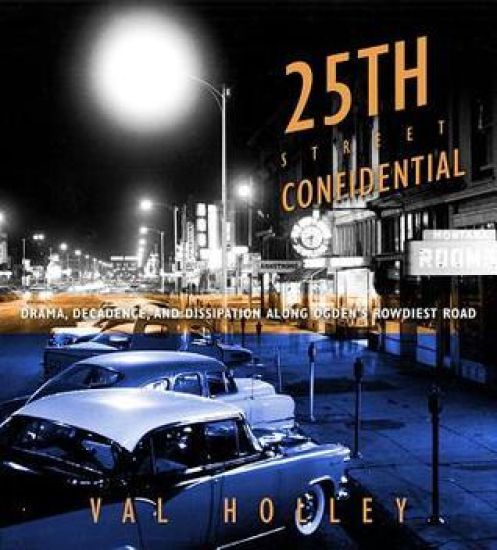
Generations of Ogdenites have grown up absorbing 25th Street’s legends of corruption, menace, and depravity. The rest of Utah has tended to judge Ogden—known in its first century as a “gambling hell” and tenderloin, and in recent years as a degraded skid row—by the street’s gaudy reputation. Present-day Ogden embraces the afterglow of 25th Street’s decadence and successfully promotes it to tourists. In the same preservationist spirit as Denver’s Larimer Square, today’s 25th Street is home to art galleries, fine dining, live theatre, street festivals, mixed-use condominiums, and the Utah State Railroad Museum.25th Street Confidential traces Ogden’s transformation from quiet hamlet to chaotic transcontinental railroad junction as waves of non-Mormon fortune seekers swelled the city’s population. The street’s outsized role in Ogden annals illuminates larger themes in Utah and U.S. history. Most significantly, 25th Street was a crucible of Mormon-Gentile conflict, especially after the non-Mormon Liberal Party deprived its rival, the People’s Party, of long-standing control of Ogden’s municipal government in 1889. In the early twentieth-century the street was targeted in state wide Progressive Era reform efforts, and during Prohibition it would come to epitomize the futility of liquor abatement programmes. This first full-length treatment of Ogden’s rowdiest road spotlights larger-than-life figures whose careers were entwined with the street: Mayor Harman Ward Peery, who unabashedly filled the city treasury with fees and fines from vicious establishments; Belle London, the most successful madam in Utah history; and Rosetta Ducinnie Davie, the heiress to London’s legacy who became a celebrity on the street, in the courts, and in the press. Material from previously unexploited archives and more than one hundred historic photos enrich this narrative of a turbulent but unforgettable street.
Frank J. Cannon

Frank J. Cannon

Val Holley

University of Utah Press,U.S.
2020
sidottu
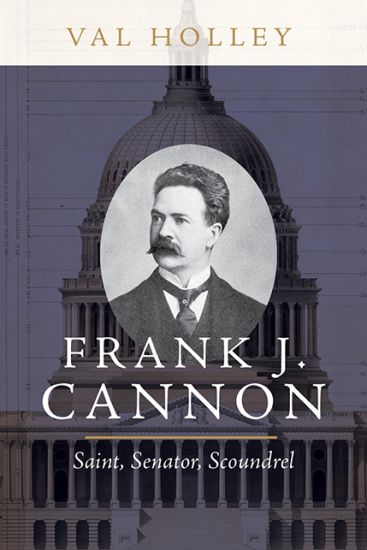
Utah's path to statehood was the most tortuous in U.S. history, due in no small part to the Mormon practice of polygamy. Frank J. Cannon, newspaperman, Congressional delegate, and senator, guided Utah toward becoming the forty-fifth state in the Union in 1896. But when he lost favor with the LDS Church, his contributions fell into obscurity. In the 1880s, Congress dealt with the intransigence of the Church of Jesus Christ of Latter-day Saints over polygamy by enacting punitive new laws. Mormon lobbyists who pleaded for relief in Washington came home empty-handed before Cannon finally broke the logjam. He persuaded President Grover Cleveland to appoint judges who would deal mercifully with convicted polygamists and dissuaded Congress from disenfranchising all members by pledging that the church would abandon polygamy. But when Utah elected Mormon apostle Reed Smoot to the U.S. Senate in 1903, Cannon condemned what he called the reneging of LDS Church pledges to stay out of politics. He wrote scathing denunciations of Smoot and Mormon president Joseph F. Smith, co-authored the exposÉ Under the Prophet in Utah, and spearheaded the National Reform Association's anti-Mormon crusade. Utah's subsequent displeasure with Cannon ensured that his critical role in its statehood would be buried by omission.
Frank J. Cannon

Frank J. Cannon

Val Holley

University of Utah Press,U.S.
2020
nidottu
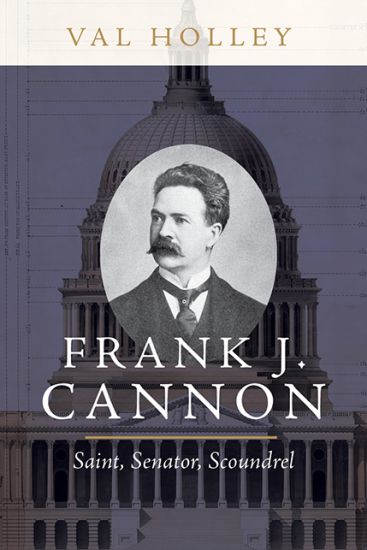
Utah's path to statehood was the most tortuous in U.S. history, due in no small part to the Mormon practice of polygamy. Frank J. Cannon, newspaperman, Congressional delegate, and senator, guided Utah toward becoming the forty-fifth state in the Union in 1896. But when he lost favor with the LDS Church, his contributions fell into obscurity. In the 1880s, Congress dealt with the intransigence of the Church of Jesus Christ of Latter-day Saints over polygamy by enacting punitive new laws. Mormon lobbyists who pleaded for relief in Washington came home empty-handed before Cannon finally broke the logjam. He persuaded President Grover Cleveland to appoint judges who would deal mercifully with convicted polygamists and dissuaded Congress from disenfranchising all members by pledging that the church would abandon polygamy. But when Utah elected Mormon apostle Reed Smoot to the U.S. Senate in 1903, Cannon condemned what he called the reneging of LDS Church pledges to stay out of politics. He wrote scathing denunciations of Smoot and Mormon president Joseph F. Smith, co-authored the exposÉ Under the Prophet in Utah, and spearheaded the National Reform Association's anti-Mormon crusade. Utah's subsequent displeasure with Cannon ensured that his critical role in its statehood would be buried by omission.