Kirjojen hintavertailu. Mukana 11 699 587 kirjaa ja 12 kauppaa.

Kirjahaku

Etsi kirjoja tekijän nimen, kirjan nimen tai ISBN:n perusteella.

3 kirjaa tekijältä Valerie Lambert

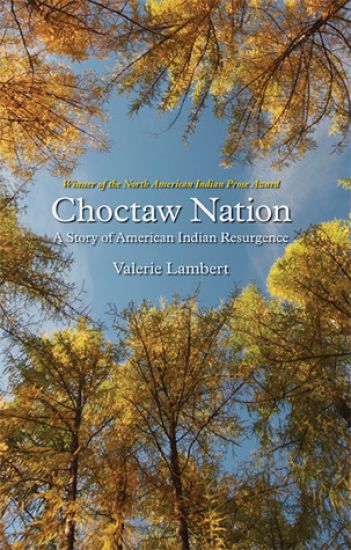
Choctaw Nation

Choctaw Nation

Valerie Lambert

University of Nebraska Press
2009
pokkari
Choctaw Nation is a story of tribal nation building in the modern era. Valerie Lambert treats nation-building projects as nothing new to the Choctaws of southeastern Oklahoma, who have responded to a number of hard-hitting assaults on Choctaw sovereignty and nationhood by rebuilding their tribal nation. Drawing on field research, oral histories, and archival sources, Lambert explores the struggles and triumphs of a tribe building a new government and launching an ambitious program of economic development in the late twentieth century, achieving a partial restoration of the tribe's former glory as a significant political and economic presence in what is now the United States. An enrolled citizen of the Choctaw Nation who was reared in Oklahoma, Lambert describes in vivid detail what this nation building has meant for the Choctaw people and for non-Indians. Choctaw nation building has strengthened the tribe's ongoing efforts to defend their sovereignty and protect their rights to land, water, and other natural resources. It has also helped produce new ways of imagining, constructing, and expressing Choctaw identity. Yet, as Choctaw Nation also shows, Choctaw sovereignty—the bedrock of Choctaw empowerment—remains under threat, as tribal sovereignty is not only a bundle of inherent rights but also an ongoing, complex consequence of Native initiatives and negotiations on local, state, and national levels. In addition to wrestling with the topics of sovereignty, identity, tribal nationalism, and contemporary tribal governance, this book gives considerable ethnographic attention to tribal elections, non-Indians, urban Indians, economic development, and tribal water rights.

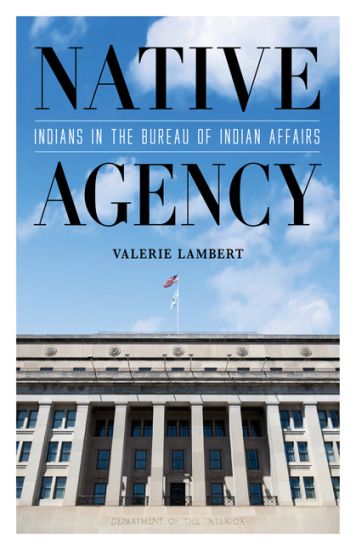
Native Agency

Native Agency

Valerie Lambert

UNIVERSITY OF MINNESOTA PRESS
2023
sidottu
What happens when American Indians take over an institution designed to eliminate them? The Bureau of Indian Affairs was hatched in the U.S. Department of War to subjugate and eliminate American Indians. Yet beginning in the 1970s, American Indians and Alaska Natives took over and now run the agency. Choctaw anthropologist Valerie Lambert argues that, instead of fulfilling settler-colonial goals, the Indians in the BIA have been leveraging federal power to fight settler colonialism, battle white supremacy, and serve the interests of their people. Although the missteps and occasional blunders of the Indians in the BIA have at times damaged the federal–Indian relationship and fueled the ire of their people, and although the BIA is massively underfunded, Indians began crafting the BIA into a Native agency by reformulating the meanings of concepts that lay at its heart-concepts such as tribal sovereignty, treaties, the trust responsibility, and Indian land. At the same time, they pursued actions to strengthen and bolster tribes, to foster healing, to fight the many injustices Indians face, and to restore the Indian land base.This work provides an essential national-level look at an intriguing and impactful form of Indigenous resistance. It describes, in great detail, the continuing assaults made on Native peoples and tribal sovereignty in the United States during the twenty-first century, and it sketches the visions of the future that Indians at the BIA and in Indian Country have been crafting for themselves.
Native Agency

Native Agency

Valerie Lambert

UNIVERSITY OF MINNESOTA PRESS
2023
nidottu
What happens when American Indians take over an institution designed to eliminate them? The Bureau of Indian Affairs was hatched in the U.S. Department of War to subjugate and eliminate American Indians. Yet beginning in the 1970s, American Indians and Alaska Natives took over and now run the agency. Choctaw anthropologist Valerie Lambert argues that, instead of fulfilling settler-colonial goals, the Indians in the BIA have been leveraging federal power to fight settler colonialism, battle white supremacy, and serve the interests of their people. Although the missteps and occasional blunders of the Indians in the BIA have at times damaged the federal–Indian relationship and fueled the ire of their people, and although the BIA is massively underfunded, Indians began crafting the BIA into a Native agency by reformulating the meanings of concepts that lay at its heart-concepts such as tribal sovereignty, treaties, the trust responsibility, and Indian land. At the same time, they pursued actions to strengthen and bolster tribes, to foster healing, to fight the many injustices Indians face, and to restore the Indian land base.This work provides an essential national-level look at an intriguing and impactful form of Indigenous resistance. It describes, in great detail, the continuing assaults made on Native peoples and tribal sovereignty in the United States during the twenty-first century, and it sketches the visions of the future that Indians at the BIA and in Indian Country have been crafting for themselves.