Kirjojen hintavertailu. Mukana 11 446 711 kirjaa ja 12 kauppaa.

Kirjahaku

Etsi kirjoja tekijän nimen, kirjan nimen tai ISBN:n perusteella.

5 kirjaa tekijältä Vaughan Hart

Nicholas Hawksmoor

Nicholas Hawksmoor

Vaughan Hart

Yale University Press
2008
pokkari
The diverse works of architect Nicholas Hawksmoor (?1661–1736) ranged from small architectural details to ambitious urban plans, from new parish churches to work on the monument of his age, St. Paul’s Cathedral. As a young man Hawksmoor assisted Christopher Wren and John Vanbrugh, emerging from these formidable apprenticeships to design some of the most vigorous and dramatic buildings in England. In this engaging book, architectural historian Vaughan Hart presents a fresh view of Hawksmoor’s built and planned work. In addition, Hart offers the first coherent explanation of Hawksmoor’s theory of architecture.The book explains why Hawksmoor’s buildings look the way they do, what contemporary events influenced his work, and how such ancient buildings as Solomon’s temple and Mausolus’s tomb inspired him. Underscoring the unique qualities of the architect’s accomplishments and aspirations, Hart establishes with new clarity Hawksmoor’s vital role in the development of English architecture.
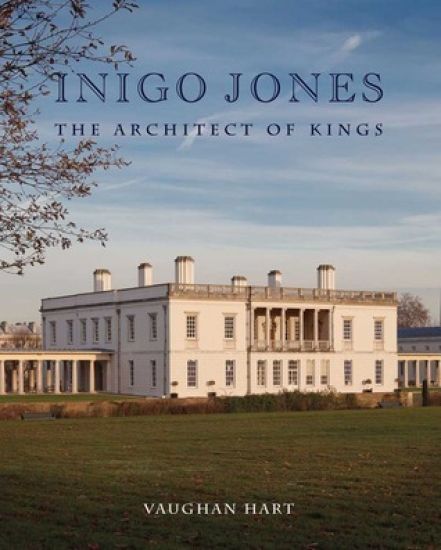
Inigo Jones

Inigo Jones

Vaughan Hart

Yale University Press
2011
sidottu
Inigo Jones (1573-1652) is widely acknowledged to have been England's most important architect. As court designer to the Stuart kings James I and Charles I, he is credited with introducing the classical language of architecture to the country. He famously traveled to Italy and studied firsthand the buildings of the Italian masters, particularly admiring those by Andrea Palladio. Much less well known is the profound influence of native British arts and crafts on Jones's architecture. Likewise, his hostility to the more opulent forms of Italian architecture he saw on his travels has largely gone unnoted. This book examines both of these overlooked issues. Vaughan Hart identifies well-established links between the classical column and the crown prior to Jones, in early Stuart masques, processions, heraldry, paintings, and poems. He goes on to discuss Jones's preference for a "masculine and unaffected" architecture, demonstrating that this plain style was consistent with the Puritan artistic sensitivities of Stuart England. For the first time, the work of Inigo Jones is understood in its national religious and political context.Published for the Paul Mellon Centre for Studies in British Art
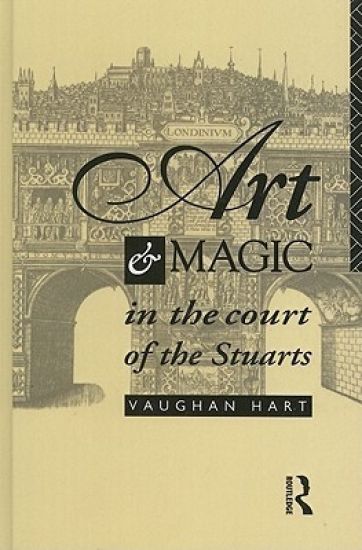
Art and Magic in the Court of the Stuarts
Spanning from the inauguration of James I in 1603 to the execution of Charles I in 1649, the Stuart court saw the emergence of a full expression of Renaissance culture in Britain. Hart examines the influence of magic on Renaissance art and how in its role as an element of royal propaganda, art was used to represent the power of the monarch and reflect his apparent command over the hidden forces of nature. Court artists sought to represent magic as an expression of the Stuart Kings' divine right, and later of their policy of Absolutism, through masques, sermons, heraldry, gardens, architecture and processions. As such, magic of the kind enshrined in Neoplatonic philosophy and the court art which expressed its cosmology, played their part in the complex causes of the Civil War and the destruction of the Stuart image which followed in its wake.
Art and Magic in the Court of the Stuarts
Spanning from the inauguration of James I in 1603 to the execution of Charles I in 1649, the Stuart court saw the emergence of a full expression of Renaissance culture in Britain. Hart examines the influence of magic on Renaissance art and how in its role as an element of royal propaganda, art was used to represent the power of the monarch and reflect his apparent command over the hidden forces of nature. Court artists sought to represent magic as an expression of the Stuart Kings' divine right, and later of their policy of Absolutism, through masques, sermons, heraldry, gardens, architecture and processions. As such, magic of the kind enshrined in Neoplatonic philosophy and the court art which expressed its cosmology, played their part in the complex causes of the Civil War and the destruction of the Stuart image which followed in its wake.
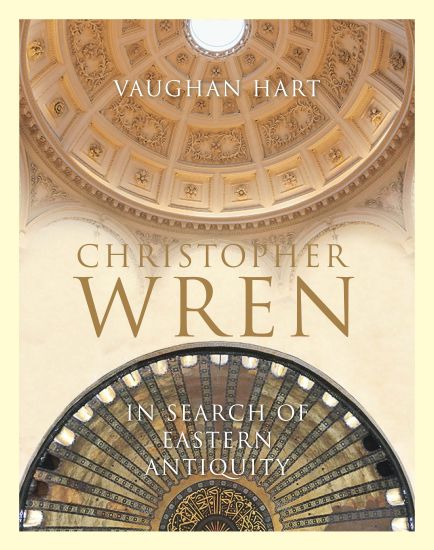
Christopher Wren

Christopher Wren

Vaughan Hart

Paul Mellon Centre for Studies in British Art
2020
sidottu
A fresh look at the Eastern origins of Christopher Wren’s architecture In this revelatory study of one of the great architects in British history, Vaughan Hart considers Christopher Wren’s (1632–1723) interest in Eastern antiquity and Ottoman architecture, an interest that would animate much of his theory and practice. As the early modern understanding of antiquity broadened to include new discoveries at Palmyra and Persepolis, Wren disputed common assumptions about the European origins of Classical and Gothic architecture, tracing these building traditions not to the Greeks or Germans but to the stonemasons of the biblical East. In a deft analysis, Hart contextualizes Wren’s use of classical elements—columns, domes, and cross plans—within his enthusiasm for the East and the broader Anglican interest in the Eastern church. A careful study of diary records reappraises Wren’s working relationship with Robert Hooke (1635–1703), who shared in many of Wren’s theoretical commitments. The result is a new, deepened understanding of Wren’s work.Distributed for the Paul Mellon Centre for Studies in British Art