Kirjojen hintavertailu. Mukana 11 717 486 kirjaa ja 12 kauppaa.

Kirjahaku

Etsi kirjoja tekijän nimen, kirjan nimen tai ISBN:n perusteella.

4 kirjaa tekijältä Vicky Duckworth

How to be a Brilliant FE Teacher

How to be a Brilliant FE Teacher

Vicky Duckworth

Routledge
2013
sidottu
How to be a Brilliant FE Teacher is a straightforward, friendly guide to being an effective and innovative teacher in post-compulsory education. Focussing on practical advice drawn from the author’s extensive and successful personal experience of both teaching and training teachers, it offers sound guidance, underpinned by the latest research, theory and policy in the field.Structured around the questions that all new teachers and lecturers ask in their first teaching post, it is an introduction to both essential teaching skills and what to expect from working in this exciting, fast-paced sector. Key chapters cover: The learners – who they are, diversity and motivation;What will actually happen – organising teaching, technology and resources;How to keep your students’ interest – understanding and responding to learning styles;How will I know if they’ve learned it? – assessment and feedback;Making sure it’s working – student evaluation, reflecting on and improving practice.Packed throughout with information about where to find the best materials and resources to support your teaching, this book also offers sensible advice on balancing home and life, working effectively with your colleagues and progressing in your career.How to be a Brilliant FE Teacher will be a source of support and inspiration for all those embarking on their initial training and first post in the sector, as well as qualified professionals looking for reassuring, fresh ideas.
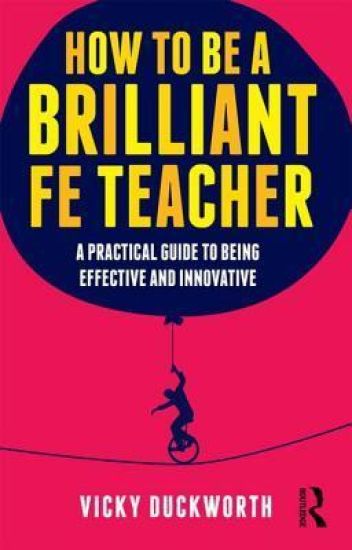
How to be a Brilliant FE Teacher

How to be a Brilliant FE Teacher

Vicky Duckworth

Routledge
2013
nidottu
How to be a Brilliant FE Teacher is a straightforward, friendly guide to being an effective and innovative teacher in post-compulsory education. Focussing on practical advice drawn from the author’s extensive and successful personal experience of both teaching and training teachers, it offers sound guidance, underpinned by the latest research, theory and policy in the field.Structured around the questions that all new teachers and lecturers ask in their first teaching post, it is an introduction to both essential teaching skills and what to expect from working in this exciting, fast-paced sector. Key chapters cover: The learners – who they are, diversity and motivation;What will actually happen – organising teaching, technology and resources;How to keep your students’ interest – understanding and responding to learning styles;How will I know if they’ve learned it? – assessment and feedback;Making sure it’s working – student evaluation, reflecting on and improving practice.Packed throughout with information about where to find the best materials and resources to support your teaching, this book also offers sensible advice on balancing home and life, working effectively with your colleagues and progressing in your career.How to be a Brilliant FE Teacher will be a source of support and inspiration for all those embarking on their initial training and first post in the sector, as well as qualified professionals looking for reassuring, fresh ideas.
Learning Trajectories, Violence and Empowerment amongst Adult Basic Skills Learners
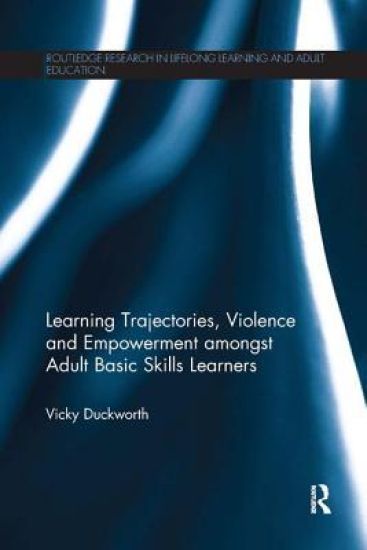
Learning Trajectories, Violence and Empowerment amongst Adult Basic Skills Learners offers deep insights into the lives of marginalised communities and the link between learning, literacy and violence, not previously carried out in-depth in a small scale study. It breaks the negative stereo-types of adults who struggle to read and write, who are often labelled and stigmatised by dominant discourses, and in doing so exposes why and how Basic Skills Learners often find themselves in marginal positions. The structural inequalities many face from childhood to adulthood across the private and public domains of their lives are revealed and probed, thus challenging neo-liberalism claims of an apparently egalitarian social field. The learners’ narratives expose the contradiction, complexities and ambivalences they experience in their daily lives, and how they try to make sense of them from their structural positioning as basic skills learners in a society based on inequality of opportunity and choice. Applying a feminist, qualitative, longitudinal, ethnographic and participatory approach, the book offers a critical perspective, drawing on Bourdieu’s work as the theoretical framework, as well as using a range of feminist, sociologists of education, literature on the ethics of care and critical literacy pedagogy, including the New Literacy Studies. The author’s personal position as an ’insider’ with ‘insider knowledge’ of marginalised communities is also woven throughout the chapters and offers insights into the struggles, conformity and resistance faced by the participants in the study. The book contributes to the debate on the impact of violence on learning and its link to class, gender and basic skills as well opening up a discussion on the power of a critical curriculum to empower people across the domains of their lives. It will be valuable reading for trainee teachers, teachers, education and sociology students, postgraduate students, as well as literacy specialists, researchers, academics, policy makers and managers of public services.
Learning Trajectories, Violence and Empowerment amongst Adult Basic Skills Learners
Learning Trajectories, Violence and Empowerment amongst Adult Basic Skills Learners offers deep insights into the lives of marginalised communities and the link between learning, literacy and violence, not previously carried out in-depth in a small scale study. It breaks the negative stereo-types of adults who struggle to read and write, who are often labelled and stigmatised by dominant discourses, and in doing so exposes why and how Basic Skills Learners often find themselves in marginal positions. The structural inequalities many face from childhood to adulthood across the private and public domains of their lives are revealed and probed, thus challenging neo-liberalism claims of an apparently egalitarian social field. The learners’ narratives expose the contradiction, complexities and ambivalences they experience in their daily lives, and how they try to make sense of them from their structural positioning as basic skills learners in a society based on inequality of opportunity and choice. Applying a feminist, qualitative, longitudinal, ethnographic and participatory approach, the book offers a critical perspective, drawing on Bourdieu’s work as the theoretical framework, as well as using a range of feminist, sociologists of education, literature on the ethics of care and critical literacy pedagogy, including the New Literacy Studies. The author’s personal position as an ’insider’ with ‘insider knowledge’ of marginalised communities is also woven throughout the chapters and offers insights into the struggles, conformity and resistance faced by the participants in the study. The book contributes to the debate on the impact of violence on learning and its link to class, gender and basic skills as well opening up a discussion on the power of a critical curriculum to empower people across the domains of their lives. It will be valuable reading for trainee teachers, teachers, education and sociology students, postgraduate students, as well as literacy specialists, researchers, academics, policy makers and managers of public services.