Kirjojen hintavertailu. Mukana 11 244 527 kirjaa ja 12 kauppaa.

Kirjahaku

Etsi kirjoja tekijän nimen, kirjan nimen tai ISBN:n perusteella.

7 kirjaa tekijältä Victor Bailey

The Rise and Fall of the Rehabilitative Ideal, 1895-1970
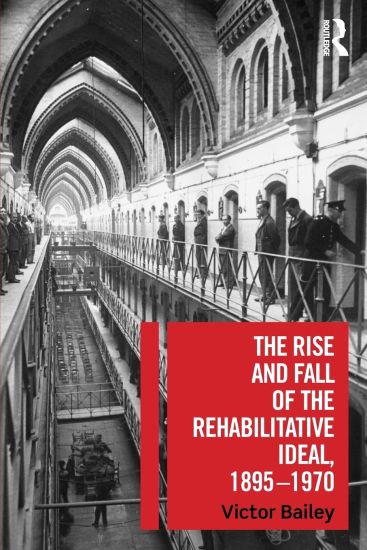
Spanning almost a century of penal policy and practice in England and Wales, this book is a study of the long arc of the rehabilitative ideal, beginning in 1895, the year of the Gladstone Committee on Prisons, and ending in 1970, when the policy of treating and training criminals was very much on the defensive. Drawing on a plethora of source material, such as the official papers of mandarins, ministers, and magistrates, measures of public opinion, prisoner memoirs, publications of penal reform groups and prison officers, the reports of Royal Commissions and Departmental Committees, political opinion in both Houses of Parliament and the research of the first cadre of criminologists, this book comprehensively examines a number of aspects of the British penal system, including judicial sentencing, law-making, and the administration of legal penalties. In doing so, Victor Bailey expertly weaves a complex and nuanced picture of punishment in twentieth-century England and Wales, one that incorporates the enduring influence of the death penalty, and will force historians to revise their interpretation of twentieth-century social and penal policy. This detailed and ground-breaking account of the rise and fall of the rehabilitative ideal will be essential reading for scholars and students of the history of crime and justice and historical criminology, as well as those interested in social and legal history.
The Rise and Fall of the Rehabilitative Ideal, 1895-1970
Spanning almost a century of penal policy and practice in England and Wales, this book is a study of the long arc of the rehabilitative ideal, beginning in 1895, the year of the Gladstone Committee on Prisons, and ending in 1970, when the policy of treating and training criminals was very much on the defensive. Drawing on a plethora of source material, such as the official papers of mandarins, ministers, and magistrates, measures of public opinion, prisoner memoirs, publications of penal reform groups and prison officers, the reports of Royal Commissions and Departmental Committees, political opinion in both Houses of Parliament and the research of the first cadre of criminologists, this book comprehensively examines a number of aspects of the British penal system, including judicial sentencing, law-making, and the administration of legal penalties. In doing so, Victor Bailey expertly weaves a complex and nuanced picture of punishment in twentieth-century England and Wales, one that incorporates the enduring influence of the death penalty, and will force historians to revise their interpretation of twentieth-century social and penal policy. This detailed and ground-breaking account of the rise and fall of the rehabilitative ideal will be essential reading for scholars and students of the history of crime and justice and historical criminology, as well as those interested in social and legal history.
'This Rash Act'

'This Rash Act'

Victor Bailey

Stanford University Press
1998
sidottu
What made some 700 men and women in the Yorkshire town of Kingston-upon-Hull, in the years 1837 to 1900, decide to suffer no longer "the slings and arrows of outrageous fortune" and take their own lives? In this study, the author seeks to uncover the experiences that drove people to suicide; to analyze how suicide was understood by victims, by their families and friends, and by legal and medical authorities; to study how the presumed causes of suicide and the meanings of suicide changed over time and in response to changed social circumstances; and to see what "suicide narratives" elicited by coroners' inquests can tell us about Victorian life, beliefs, and values in general. The book is based on an unprecedentedly complete and comprehensive collection of inquest files covering the entire Victorian era in Hull (most coroners' files have not survived or exist only in fragmentary form). Hitherto, suicide in the Victorian period has been examined only on a national basis; where local evidence has been used, it has come chiefly from London. Through the testimony of relatives, neighbors, friends, and even the deceased (by means of suicide notes), the author has been able to get closer to the experience of suicide and its social construction than has been possible in any previous study. The framework within which the author evaluates the paths to suicide is the life cycle. By placing each suicide in its local socioeconomic context, and by examining each stage in the life course for each sex and for different social levels, the author has been able to assess causation factors with great confidence. He establishes arguments (such as the importance of declining wages and job security for older men and the loss of a marital partner for either sex) more securely than have earlier studies, and puts some new arguments on the agenda (such as the importance of the presence or absence of interpersonal ties and the influence of Poor Law policy).
Judges and Convicts

Judges and Convicts

Victor Bailey

TAYLOR FRANCIS LTD
2025
nidottu
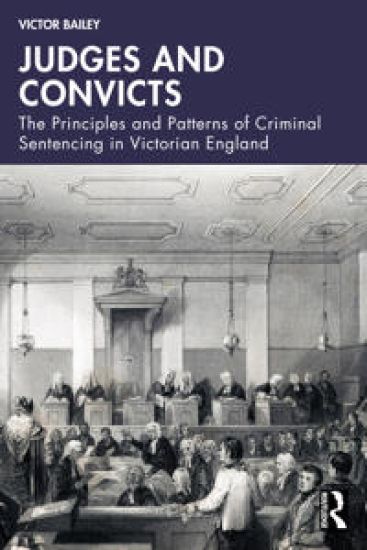
Uncovering the origins of the new sentencing structure that emerged in the course of the nineteenth century, this book travels from the demise of the "Bloody Code" in the 1830s, through the mid-century transition from convict transportation to home-based penal servitude, and on to the remarkable and unprecedented mitigation of sentencing severity in the final two decades of the century.By providing such an extended span of analysis, this book reveals the discrete stages of development in sentencing policy and practice, and particularly the contribution of the small coterie of professional judges at the county Assizes, the Old Bailey (or Central Criminal Court), and the Middlesex Sessions, around whose sentencing decisions the study revolves. In consequence, readers are offered an overarching survey of the nineteenth-century trends in sentencing, including an account of the struggle between politicians, mandarins, and judges for supremacy in sentencing, along with a detailed explanation of that remarkable mitigation of sentencing severity that ultimately defined a new equation between crime and punishment, or the modern sentencing tariff.Judges and Convicts: The Principles and Patterns of Criminal Sentencing in Victorian England will be of great appeal to students and scholars of history, law, criminology, and sociology, particularly to those with an interest in the history of the criminal trial, the judiciary, punishment, and sentencing.
Judges and Convicts

Judges and Convicts

Victor Bailey

TAYLOR FRANCIS LTD
2025
sidottu
Uncovering the origins of the new sentencing structure that emerged in the course of the nineteenth century, this book travels from the demise of the "Bloody Code" in the 1830s, through the mid-century transition from convict transportation to home-based penal servitude, and on to the remarkable and unprecedented mitigation of sentencing severity in the final two decades of the century.By providing such an extended span of analysis, this book reveals the discrete stages of development in sentencing policy and practice, and particularly the contribution of the small coterie of professional judges at the county Assizes, the Old Bailey (or Central Criminal Court), and the Middlesex Sessions, around whose sentencing decisions the study revolves. In consequence, readers are offered an overarching survey of the nineteenth-century trends in sentencing, including an account of the struggle between politicians, mandarins, and judges for supremacy in sentencing, along with a detailed explanation of that remarkable mitigation of sentencing severity that ultimately defined a new equation between crime and punishment, or the modern sentencing tariff.Judges and Convicts: The Principles and Patterns of Criminal Sentencing in Victorian England will be of great appeal to students and scholars of history, law, criminology, and sociology, particularly to those with an interest in the history of the criminal trial, the judiciary, punishment, and sentencing.