Kirjojen hintavertailu. Mukana 11 342 296 kirjaa ja 12 kauppaa.

Kirjahaku

Etsi kirjoja tekijän nimen, kirjan nimen tai ISBN:n perusteella.

4 kirjaa tekijältä Victor D. Cha

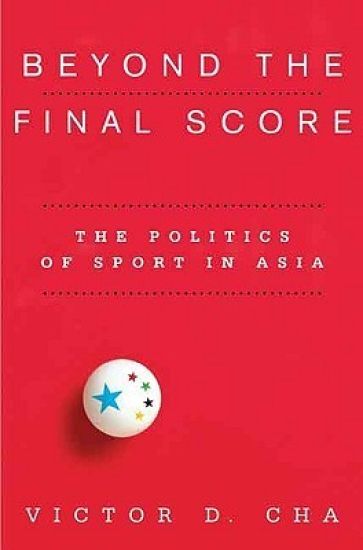
Beyond the Final Score

Beyond the Final Score

Victor D. Cha

Columbia University Press
2008
sidottu
The Beijing Olympics will be remembered as the largest, most expensive, and most widely watched event of the modern Olympic era. But did China present itself as a responsible host and an emergent international power, much like Japan during the 1964 Tokyo Games and South Korea during the 1988 Seoul Games? Or was Beijing in 2008 more like Berlin in 1936, when Germany took advantage of the global spotlight to promote its political ideology at home and abroad? Beyond the Final Score takes an original look at the 2008 Beijing games within the context of the politics of sport in Asia. Asian athletics are bound up with notions of national identity and nationalism, refracting political intent and the processes of globalization. Sporting events can generate diplomatic breakthroughs (as with the results of Nixon and Mao's "ping-pong diplomacy") or breakdowns (as when an athlete defects to another country). For China, the Beijing Games introduced a liberalizing ethos that its authoritative regime could ignore only at its peril. Victor D. Cha--former director of Asian affairs for the White House--evaluates Beijing's contention with this pressure considering the intense scrutiny China already faced on issues of counterproliferation, global warming, and free trade. He begins with the arguments that tie Asian sport to international affairs and follows with an explanation of athletics as they relate to identity, diplomacy, and transformation. Enhanced by Cha's remarkable facility with the history and politics of sport, Beyond the Final Score is the definitive examination of the events--both good and bad--that took place during the Beijing Olympics.
Beyond the Final Score

Beyond the Final Score

Victor D. Cha

Columbia University Press
2011
pokkari
The Beijing Olympics will be remembered as the largest, most expensive, and most widely watched event of the modern Olympic era. But did China present itself as a responsible host and an emergent international power, much like Japan during the 1964 Tokyo Games and South Korea during the 1988 Seoul Games? Or was Beijing in 2008 more like Berlin in 1936, when Germany took advantage of the global spotlight to promote its political ideology at home and abroad? Beyond the Final Score takes an original look at the 2008 Beijing games within the context of the politics of sport in Asia. Asian athletics are bound up with notions of national identity and nationalism, refracting political intent and the processes of globalization. Sporting events can generate diplomatic breakthroughs (as with the results of Nixon and Mao's "ping-pong diplomacy") or breakdowns (as when an athlete defects to another country). For China, the Beijing Games introduced a liberalizing ethos that its authoritative regime could ignore only at its peril. Victor D. Cha--former director of Asian affairs for the White House--evaluates Beijing's contention with this pressure considering the intense scrutiny China already faced on issues of counterproliferation, global warming, and free trade. He begins with the arguments that tie Asian sport to international affairs and follows with an explanation of athletics as they relate to identity, diplomacy, and transformation. Enhanced by Cha's remarkable facility with the history and politics of sport, Beyond the Final Score is the definitive examination of the events--both good and bad--that took place during the Beijing Olympics.

Alignment Despite Antagonism

Alignment Despite Antagonism

Victor D. Cha

Stanford University Press
2000
pokkari
Japan and the Republic of Korea (ROK) have been two of the most critical pillars of peace, stability, and prosperity in the Asia-Pacific region for the past thirty years. At the same time, their relationship has fluctuated markedly and unpredictably. Despite the existence of a common ally in the United States and common security threats from the former Soviet Union, China, and North Korea, bilateral relations between Japan and South Korea have been persistently marred by friction. In the first in-depth study of this puzzling relationship in over fifteen years, the author compares the commonly accepted explanation for this relationship—historical enmity—with one that focuses on policies of the United States as the key driver of Japan-ROK relations. He finds that while history and emotion certainly affect the ways in which Japanese and Koreans regard each other, cooperation and dissension in the relationship are better understood through what he calls a "quasi-alliance" model: two states that remain unallied but have a third party as a common ally. This model finds that the "normal" state of Japan-ROK relations is characterized by friction that stems not only from history, but also from fundamental asymmetries in Japanese and Korean expectations of support from each other. The author shows, however, that in periods when the American defense commitment to the region is weak, Japan-ROK relations exhibit significantly less contention over bilateral issues. Without the prop of U.S. assistance, the two countries are seemingly willing to overlook the usual causes of friction and to adopt a more pragmatic approach. The author discusses the effects of democratization and the post-Cold War era on the triangular relationship, and addresses the prospects of a united Korea and its future relations with Japan, the United States, and China. The book covers the period from 1965 to 1998 and draws on recently declassified U.S. documents, internal Korean government documents, and interviews with former policy makers in the United States, Japan, and Korea.