

Kirjahaku
Etsi kirjoja tekijän nimen, kirjan nimen tai ISBN:n perusteella.
23 kirjaa tekijältä Victor Klemperer


The publication of Victor Klemperer's secret diaries brings to light one of the most extraordinary documents of the Nazi period. "In its cool, lucid style and power of observation," said The New York Times, "it is the best written, most evocative, most observant record of daily life in the Third Reich." I Will Bear Witness is a work of literature as well as a revelation of the day-by-day horror of the Nazi years. A Dresden Jew, a veteran of World War I, a man of letters and historian of great sophistication, Klemperer recognized the danger of Hitler as early as 1933. His diaries, written in secrecy, provide a vivid account of everyday life in Hitler's Germany. What makes this book so remarkable, aside from its literary distinction, is Klemperer's preoccupation with the thoughts and actions of ordinary Germans: Berger the greengrocer, who was given Klemperer's house ("anti-Hitlerist, but of course pleased at the good exchange"), the fishmonger, the baker, the much-visited dentist. All offer their thoughts and theories on the progress of the war: Will England hold out? Who listens to Goebbels? How much longer will it last? This symphony of voices is ordered by the brilliant, grumbling Klemperer, struggling to complete his work on eighteenth-century France while documenting the ever- tightening Nazi grip. He loses first his professorship and then his car, his phone, his house, even his typewriter, and is forced to move into a Jews' House (the last step before the camps), put his cat to death (Jews may not own pets), and suffer countless other indignities. Despite the danger his diaries would pose if discovered, Klemperer sees it as his duty to record events. "I continue to write," he notes in 1941 after a terrifying run-in with the police. "This is my heroics. I want to bear witness, precise witness, until the very end." When a neighbor remarks that, in his isolation, Klemperer will not be able to cover the main events of the war, he writes: "It's not the big things that are important, but the everyday life of tyranny, which may be forgotten. A thousand mosquito bites are worse than a blow on the head. I observe, I note, the mosquito bites." This book covers the years from 1933 to 1941. Volume Two, from 1941 to 1945, will be published in 1999. "One of the great testimonies of our century. . . . Klemperer's ability to grasp moods and attitudes has a truly Dickensian quality." --Los Angeles Times"What has been called one of the most remarkable documents to come out of the Second World War turns out to be one of the most compulsively readable books of the year." --The San Diego Union Tribune"For the next generation of historians, Klemperer's diaries will be required reading." --Gordon Craig, The New York Review of Books"To read his almost day-by-day account is a hypnotic experience; the whole, hard to put down, is a true murder mystery--from the perspective of the victim."--Peter Gay, The New York Times Book Review

I Will Bear Witness, Volume 2: A Diary of the Nazi Years: 1942-1945
Victor Klemperer
Modern Library
2001
nidottu
Destined to take its place alongside The Diary of Anne Frank and Elie Wiesel's Night as one of the great classics of the Holocaust, I Will Bear Witness is a timeless work of literature, the most eloquent and acute testament to have emerged from Hitler's Germany. Volume Two begins in 1942, the year the Final Solution was formally proposed, and carries us through to the Allied bombing of Dresden and Germany's defeat.

A labourer, journalist and a professor who lived through four successive periods of German political history – from the German Empire, through the Weimar Republic and the Nazi state through to the German Democratic Republic – Victor Klemperer is regarded as one of the most vivid witnesses to a tumultuous century of European history. First published in 1957, The Language of the Third Reich arose from Klemperer's conviction that the language of the Third Reich helped to create its culture. As Klemperer writes: 'It isn't only Nazi actions that have to vanish, but also the Nazi cast of mind, the typical Nazi way of thinking, and its breeding ground: the language of Nazism.'
A publishing sensation, the publication of Victor Klemperer's diaries brings to light one of the most extraordinary documents of the Nazi period.'A classic ... Klemperer's diary deserves to rank alongside that of Anne Frank's' SUNDAY TIMES'I can't remember when I read a more engrossing book' Antonia Fraser'Not dissimilar in its cumulative power to Primo Levi's, is a devastating account of man's inhumanity to man' LITERARY REVIEWThe son of a rabbi, Klemperer was by 1933 a professor of languages at Dresden. Over the next decade he, like other German Jews, lost his job, his house and many of his friends.Klemperer remained loyal to his country, determined not to emigrate, and convinced that each successive Nazi act against the Jews must be the last. Saved for much of the war from the Holocaust by his marriage to a gentile, he was able to escape in the aftermath of the Allied bombing of Dresden and survived the remaining months of the war in hiding. Throughout, Klemperer kept a diary. Shocking and moving by turns, it is a remarkable and important account.
The international bestselling record of a German Jew in Nazi Germany.'Deserves to stand beside the diary of Anne Frank as a day-to-day description of the sufferings of the victims of Hitler's evil regime' EVENING STANDARD'Few English readers will fail to be moved as I was - ultimately to the point of tears' SUNDAY TELEGRAPH'Packed with vivid observation, profound reflection ... they find hope, dignity and even tart humour in the jaws of hell' INDEPENDENT ON SUNDAYA sensation when first published, this is one of the most extraordinary documents of the Nazi period. The son of a rabbi, Klemperer was by 1933 a professor of languages in Dresden. Over the next decade he lost his job, his house and many of his friends, even his cat, as Jews were not allowed to own pets. Saved for much of the war from the Holocaust by his marriage to a gentile, he was able to escape in the aftermath of the Allied bombing of Dresden and survived the remaining months of the war in hiding. Throughout, Klemperer kept a diary, for a Jew in Nazi Germany a daring act in itself. This volume covers the period from the beginnings of the Holocaust to the end of the war, telling the story of Klemperer's increasing isolation, his near miraculous survival, his awareness of the development of the growing Holocaust as friends and associates disappeared, and his narrow escapes from deportation and the Dresden firebombing in 1945.Shocking and moving by turns, it is a remarkable and important document, as powerful and astonishing in its way as Anne Frank's classic.
The superb, bestselling diaries of Victor Klemperer, a Jew in Dresden who survived the war - hailed as one of the 20th century's most important chronicles.'Compulsive reading' LITERARY REVIEW 'Deeply engrossing' SPECTATOR'Klemperer's diary deserves to rank alongside that of Anne Frank' SUNDAY TIMES'A vivid and powerful account of a remarkable life' SCOTLAND ON SUNDAYJune 1945. The immediate postwar period produces many shocks and revelations - some people have behaved better than Klemperer had believed, others much worse. His sharp observations are now turned on the East German Communist Party, which he himself joins, and he notes many similarities between Nazi and Communist behaviour. Politics, he comes to believe, is above all the choice of the "lesser evil". He serves in the GDR's People's Chamber and represents East German scholarship abroad. But it is the details of everyday life, and the honesty and directness, that make these bestselling diaries so fascinating.

Munich 1919 is a vivid portrayal of the chaos that followed World War I and the collapse of the Munich Council Republic by one of the most perceptive chroniclers of German history. Victor Klemperer provides a moving and thrilling account of what turned out to be a decisive turning point in the fate of a nation, for the revolution of 1918-9 not only produced the first German democracy, it also heralded the horrors to come. With the directness of an educated and independent young man, Klemperer turned his hand to political journalism, writing astute, clever and linguistically brilliant reports in the beleaguered Munich of 1919. He sketched intimate portraits of the people of the hour, including Erich Mühsam, Max Levien and Kurt Eisner, and took the measure of the events around him with a keen eye. These observations are made ever more poignant by the inclusion of passages from his later memoirs. In the midst of increasing persecution under the Nazis he reflected on the fateful year 1919, the growing threat of antisemitism, and the acquaintances he made in the period, some of whom would later abandon him, while others remained loyal. Klemperer's account once again reveals him to be a fearless and deeply humane recorder of German history. Munich 1919 will be essential reading for all those interested in 20th century history, constituting a unique witness to events of the period.

Munich 1919 is a vivid portrayal of the chaos that followed World War I and the collapse of the Munich Council Republic by one of the most perceptive chroniclers of German history. Victor Klemperer provides a moving and thrilling account of what turned out to be a decisive turning point in the fate of a nation, for the revolution of 1918-9 not only produced the first German democracy, it also heralded the horrors to come. With the directness of an educated and independent young man, Klemperer turned his hand to political journalism, writing astute, clever and linguistically brilliant reports in the beleaguered Munich of 1919. He sketched intimate portraits of the people of the hour, including Erich Mühsam, Max Levien and Kurt Eisner, and took the measure of the events around him with a keen eye. These observations are made ever more poignant by the inclusion of passages from his later memoirs. In the midst of increasing persecution under the Nazis he reflected on the fateful year 1919, the growing threat of antisemitism, and the acquaintances he made in the period, some of whom would later abandon him, while others remained loyal. Klemperer's account once again reveals him to be a fearless and deeply humane recorder of German history. Munich 1919 will be essential reading for all those interested in 20th century history, constituting a unique witness to events of the period.

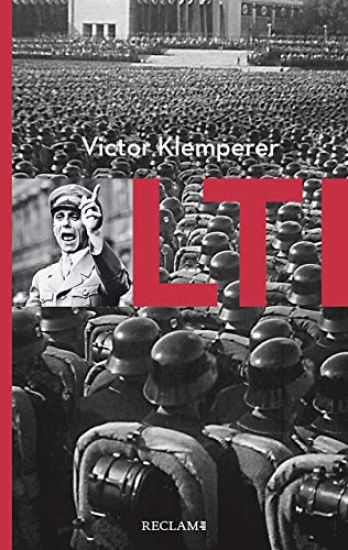
Die Sprache des Dritten Reiches. Beobachtungen und Reflexionen aus LTI
Victor Klemperer
Reclam Philipp Jun.
2020
pokkari
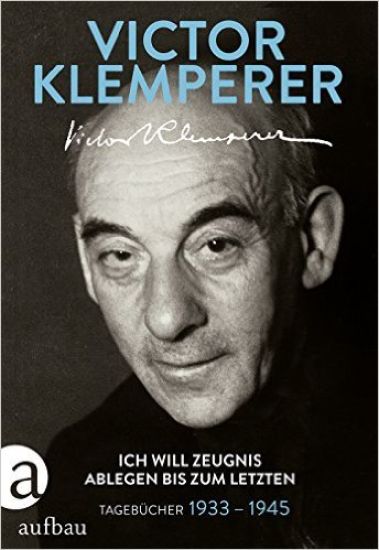



Zwangsweise emeritiert, durch vielerlei Verbote in seiner wissenschaftlichen Arbeit gehindert, begann der Dresdner Romanist Victor Klemperer 1939 mit der Niederschrift seiner Autobiographie. "Mit dem Bibliotheksverbot bin ich nun buchstäblich arbeitslos geworden. Ich habe mir vorgenommen, nun wirklich einen Vita-Versuch zu wagen." So hatte er es in seinen kürzlich erschienenen Tagebüchern notiert, die mit dem Alltag der Judenverfolgung auch die entwürdigenden Umstände festhielten, unter denen die "Vita" entstand: jenes geschliffene Zeit- und Sittenbild des deutschen Mittelstandes vor und nach der Jahrhundertwende von höchster Genauigkeit, ohne Sentimentalität oder Bitterkeit.
Als zeithistorisches Dokument sind Klemperers Journale einzigartig und wahrhaftig unverzichtbar: Man wird sich künftig keinBildmehr machenkönnenvon der tagtäglichen Realität des Nationalsozialismus, ohne diese Tagebücher zu kennen. Die Weltwoche Klemperers Tagebücher gehören fortan zu den bleibenden Zeugnissen deutscher Geschichte und Kultur. Spiegel Spezial Hier hat die Geschichte selbst gewissermaßen mitgeschrieben und dem Geschriebenen etwas von ihrer Übermacht mitgeteilt. Nicht zuletzt darauf beruht die unerwartete Wirkung, die seit dem Erscheinen dieser Aufzeichnungen festzustellen ist. Frankfurter Allgemeine Zeitung Es ist ein ganz außergewöhnliches Werk, wahrscheinlich, neben dem Tagebuch der Anne Frank, das bedeutendste, das sich aus jener finsteren Epoche erhalten hat. (...) Die Tagebücher, in denen genaueste Beobachtungsgabe, sprachliche Meisterschaft und menschliche Größe sich aufs glücklichste vereinen, stellen alles in den Schatten, was jemals über die Zeit des Nationalsozialismus geschrieben wurde. Die Zeit Klemperers unter Todesgefahr geschriebene Notizen besitzen eine Authentizität, eine dramatische Nähe zum Zerfall der deutschen Gesellschaft, wie sie auch bedeutende Geschichtswerke nur selten erreichen. Diese Tagesberichte über die Hölle eines Terrorstaates legen in der Tat "Zeugnis ab" vom Leben der Opfer. Frankfurter Rundschau Wie erlebten die Zeitgenossen den Holocaust? Was konnten sie wissen, sehen, hören? Klemperers Tagebuch beantwortet solche Fragen, die von jeder Generation neu gestellt werden. Er, der als Jude geborene, zwangsemeritierte Professor, löste mit seinen täglichen Notizen, deren Entdeckungen den sicheren Tod bedeutet hätte, eine selbstgesetzte Chronistenpflicht ein: Er wollte der Geschichtsschreiber der Katastrophe sein und Zeugnis ablegen für die Zeit danach. Tag für Tag hielt er im "Judenhaus" fest, was er beobachtete und erlebte: den täglichen Terror mit Razzien, ständig neuen Verboten und Schikanen, gelegentlich auch Gesten der Solidarität von Unbekannten, und er schrieb auf, was ihm zugetragen wurde: Gerüchte, politische Witze, Berichte von Frontsoldaten. Sein minutiöser Bericht ist ein einmaliges Dokument über den Alltag der Judenverfolgung - mitten in einer deutschen Großstadt. Die Texte des Bandes werden ergänzt durch Vorschläge für die Unterrichtsgestaltung.