Kirjojen hintavertailu. Mukana 11 627 381 kirjaa ja 12 kauppaa.

Kirjahaku

Etsi kirjoja tekijän nimen, kirjan nimen tai ISBN:n perusteella.

11 kirjaa tekijältä Vijay Mishra

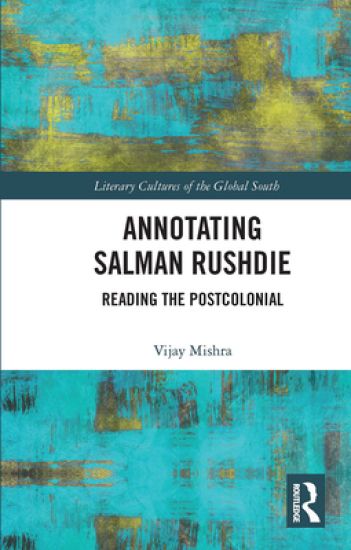
Annotating Salman Rushdie

Annotating Salman Rushdie

Vijay Mishra

Routledge India
2020
nidottu
How does one read a foundational postcolonial writer in English with declared Indian subcontinent roots? This book looks at ways of reading, and uncovering and recovering meanings, in postcolonial writing in English through the works of Salman Rushdie. It uses textual criticism and applied literary theory to resurrect the underlying literary architecture of one of the world’s most controversial, celebrated and enigmatic authors. It sheds light upon key aspects of Rushdie’s craft and the literary influences that contribute to his celebrated hybridity. It analyses how Rushdie uses his exceptional mastery of European, Anglo-American, Indian, Arabic and Persian literary and cultural forms to cultivate a fresh register of English that expands Western literary traditions. It also investigates an archival modernism that characterizes the writings of Rushdie.Drawing on the hitherto unexplored Rushdie Emory Archive, this book will be essential reading for students of literature, especially South Asian writing, postcolonial studies, cultural studies, linguistics and history.
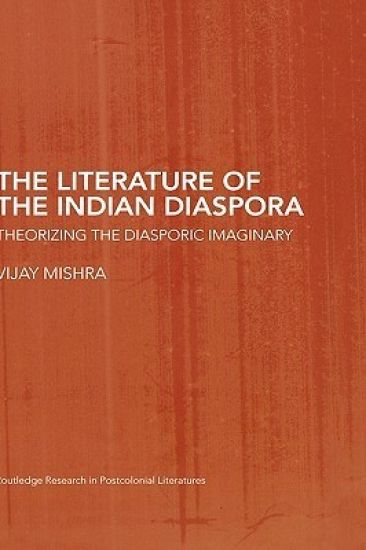
The Literature of the Indian Diaspora
The Literature of the Indian Diaspora constitutes a major study of the literature and other cultural texts of the Indian diaspora. It is also an important contribution to diaspora theory in general. Examining both the ‘old’ Indian diaspora of early capitalism, following the abolition of slavery, and the ‘new’ diaspora linked to movements of late capital, Mishra argues that a full understanding of the Indian diaspora can only be achieved if attention is paid to the particular locations of both the ‘old’ and the ‘new’ in nation states. Applying a theoretical framework based on trauma, mourning/impossible mourning, spectres, identity, travel, translation, and recognition, Mishra uses the term ‘imaginary’ to refer to any ethnic enclave in a nation-state that defines itself, consciously or unconsciously, as a group in displacement. He examines the works of key writers, many now based across the globe in Canada, Australia, America and the UK, – V.S. Naipaul, Salman Rushdie, M.G. Vassanji, Shani Mootoo, Bharati Mukherjee, David Dabydeen, Rohinton Mistry and Hanif Kureishi, among them – to show how they exemplify both the diasporic imaginary and the respective traumas of the ‘old’ and ‘new’ Indian diasporas.
The Literature of the Indian Diaspora
The Literature of the Indian Diaspora constitutes a major study of the literature and other cultural texts of the Indian diaspora. It is also an important contribution to diaspora theory in general. Examining both the ‘old’ Indian diaspora of early capitalism, following the abolition of slavery, and the ‘new’ diaspora linked to movements of late capital, Mishra argues that a full understanding of the Indian diaspora can only be achieved if attention is paid to the particular locations of both the ‘old’ and the ‘new’ in nation states. Applying a theoretical framework based on trauma, mourning/impossible mourning, spectres, identity, travel, translation, and recognition, Mishra uses the term ‘imaginary’ to refer to any ethnic enclave in a nation-state that defines itself, consciously or unconsciously, as a group in displacement. He examines the works of key writers, many now based across the globe in Canada, Australia, America and the UK, – V.S. Naipaul, Salman Rushdie, M.G. Vassanji, Shani Mootoo, Bharati Mukherjee, David Dabydeen, Rohinton Mistry and Hanif Kureishi, among them – to show how they exemplify both the diasporic imaginary and the respective traumas of the ‘old’ and ‘new’ Indian diasporas.
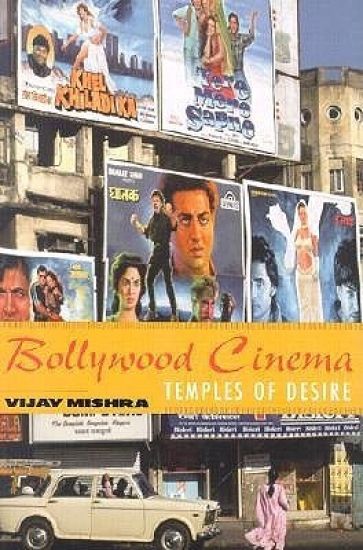
Bollywood Cinema

Bollywood Cinema

Vijay Mishra

Routledge
2001
sidottu
India is home to Bollywood - the largest film industry in the world. Movie theaters are said to be the "temples of modern India," with Bombay producing nearly 800 films per year that are viewed by roughly 11 million people per day. In Bollywood Cinema, Vijay Mishra argues that Indian film production and reception is shaped by the desire for national community and a pan-Indian popular culture. Seeking to understand Bollywood according to its own narrative and aesthetic principles and in relation to a global film industry, he views Indian cinema through the dual methodologies of postcolonial studies and film theory. Mishra discusses classics such as Mother India (1957) and Devdas (1935) and recent films including Ram Lakhan (1989) and Khalnayak (1993), linking their form and content to broader issues of national identity, epic tradition, popular culture, history, and the implications of diaspora.
Bollywood Cinema

Bollywood Cinema

Vijay Mishra

Routledge
2001
nidottu
India is home to Bollywood - the largest film industry in the world. Movie theaters are said to be the "temples of modern India," with Bombay producing nearly 800 films per year that are viewed by roughly 11 million people per day. In Bollywood Cinema, Vijay Mishra argues that Indian film production and reception is shaped by the desire for national community and a pan-Indian popular culture. Seeking to understand Bollywood according to its own narrative and aesthetic principles and in relation to a global film industry, he views Indian cinema through the dual methodologies of postcolonial studies and film theory. Mishra discusses classics such as Mother India (1957) and Devdas (1935) and recent films including Ram Lakhan (1989) and Khalnayak (1993), linking their form and content to broader issues of national identity, epic tradition, popular culture, history, and the implications of diaspora.
What Was Multiculturalism?

What Was Multiculturalism?

Vijay Mishra

Melbourne University Press
2012
nidottu
What was Multiculturalism? is a timely account of a socio-political theory that has featured in public debate in the West for the past forty years. Vijay Mishra offers both a compendium as well as a critique of multicultural theory in its diverse forms—from the politics of recognition, consensus, tolerance and the need for an inclusive community, to questions about the moral order, the invasive force of religious absolutism and the spectres of racism, injustice and scapegoating. Through a series of critical reflections, Mishra offers a detached, honest bold and uncompromised reading of some of the most influential texts on multiculturalism, with a view to establishing the historical moments in the field.
Annotating Salman Rushdie

Annotating Salman Rushdie

Vijay Mishra

CRC Press Inc
2018
sidottu
How does one read a foundational postcolonial writer in English with declared Indian subcontinent roots? This book looks at ways of reading, and uncovering and recovering meanings, in postcolonial writing in English through the works of Salman Rushdie. It uses textual criticism and applied literary theory to resurrect the underlying literary architecture of one of the world’s most controversial, celebrated and enigmatic authors. It sheds light upon key aspects of Rushdie’s craft and the literary influences that contribute to his celebrated hybridity. It analyses how Rushdie uses his exceptional mastery of European, Anglo-American, Indian, Arabic and Persian literary and cultural forms to cultivate a fresh register of English that expands Western literary traditions. It also investigates an archival modernism that characterizes the writings of Rushdie.Drawing on the hitherto unexplored Rushdie Emory Archive, this book will be essential reading for students of literature, especially South Asian writing, postcolonial studies, cultural studies, linguistics and history.
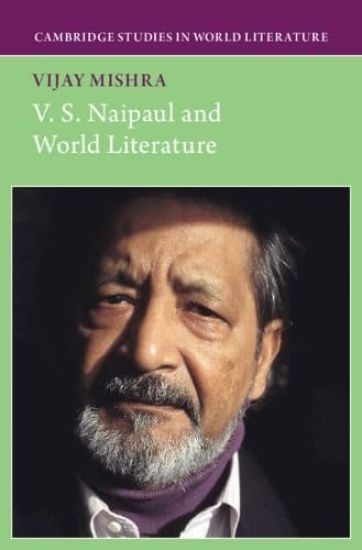
V. S. Naipaul and World Literature

V. S. Naipaul and World Literature

Vijay Mishra

Cambridge University Press
2024
sidottu
V. S. Naipaul is a major and controversial figure in postcolonial and world literature. This book provides a challenging and uncompromisingly honest study that engages with history, genre theory, aesthetics, and global literary culture, with close reference to Naipaul's published and archival material. In his fiction and creative histories, the definition of the modern idea of world literature is informed by the importance of an artistic ordering of perception. Although often expressing ideas that are prejudicial and morally repugnant, there is an honesty in his writings where one finds extraordinary insights into how life is experienced within colonial structures of power. These colonial structures provided no abstract unity to the field of literary expression and ignored vernacular cultures. The book argues that a universal ideology of the aesthetic, transcending time, regions, and languages, provides world literature with a unity which is possible only within a critical universal humanism attuned to heroic readings of texts and cultures.
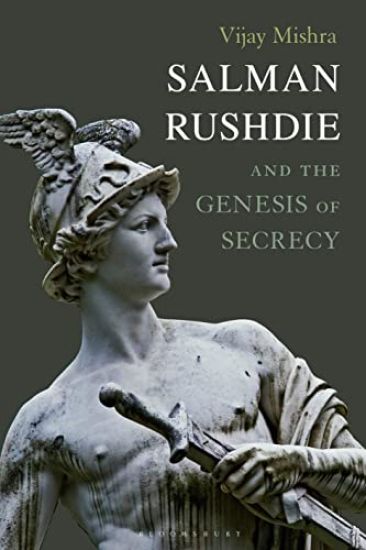
Salman Rushdie and the Genesis of Secrecy

Salman Rushdie and the Genesis of Secrecy

Vijay Mishra

Bloomsbury Academic
2019
sidottu
Salman Rushdie and the Genesis of Secrecy is the first book to draw extensively from material in the Salman Rushdie archive at Emory University to uncover the makings of the British-Indian writer’s modernist poetics. Simultaneously connecting Rushdie with radical non-Western humanism and an essentially English-European sensibility, and therefore questions about world literature, this book argues that a true understanding of the writer lies in uncovering his ‘genesis of secrecy’ through a close reading of his archive. Topics and materials explored include unpublished novels, plays and screenplays; the earlier versions and drafts of Midnight’s Children and its adaptations; understanding Islam and The Satanic Verses; the influence of cinema; and Rushdie’s turn to earlier archives as the secret codes of modernism. Through careful examination of Rushdie’s archive, Vijay Mishra demonstrates how Rushdie combines a radically new form of English with a familiarity with the generic registers of Indian, Arabic and Persian literary forms. Together, these present a contradictory orientalism that defines Rushdie’s own humanism within the parameters of world literature.
Salman Rushdie and the Genesis of Secrecy

Salman Rushdie and the Genesis of Secrecy

Vijay Mishra

Bloomsbury Academic
2020
nidottu
Salman Rushdie and the Genesis of Secrecy is the first book to draw extensively from material in the Salman Rushdie archive at Emory University to uncover the makings of the British-Indian writer’s modernist poetics. Simultaneously connecting Rushdie with radical non-Western humanism and an essentially English-European sensibility, and therefore questions about world literature, this book argues that a true understanding of the writer lies in uncovering his ‘genesis of secrecy’ through a close reading of his archive. Topics and materials explored include unpublished novels, plays and screenplays; the earlier versions and drafts of Midnight’s Children and its adaptations; understanding Islam and The Satanic Verses; the influence of cinema; and Rushdie’s turn to earlier archives as the secret codes of modernism. Through careful examination of Rushdie’s archive, Vijay Mishra demonstrates how Rushdie combines a radically new form of English with a familiarity with the generic registers of Indian, Arabic and Persian literary forms. Together, these present a contradictory orientalism that defines Rushdie’s own humanism within the parameters of world literature.
Subaltern Narratives in Fiji Hindi Literature
Subaltern Narratives in Fiji Hindi Literature is the first comprehensive study of fiction written in Fiji Hindi that moves beyond the hegemonic and colonially-implicated perspectives that have necessarily informed top-down historical accounts. Mishra makes this case using two extraordinary novels ?auka Puran [‘A Subaltern Tale’] (2001]) and Fiji Maa [‘Mother of a Thousand’] (2018) by the Fiji Indian writer Subramani. They are massive novels (respectively 500 and 1,000 pages long) written in the devanagari (Sanskrit) script. They are examples of subaltern writing that do not exist, as a legitimation of the subaltern voice, anywhere else in the world. The novels constitute the silent underside of world literature, whose canon they silently challenge. For postcolonial, diaspora and subaltern scholars, they are defining (indeed definitive) texts without which their theories remain incomplete. Theories require mastery of primary texts and these subaltern novels, ‘heroic’ compositions as they are in the vernacular, offer a challenge to the theorist.