Kirjojen hintavertailu. Mukana 11 699 587 kirjaa ja 12 kauppaa.

Kirjahaku

Etsi kirjoja tekijän nimen, kirjan nimen tai ISBN:n perusteella.

23 kirjaa tekijältä Vijay Prashad

The Death of the Nation and the Future of the Arab Revolution

The Death of the Nation and the Future of the Arab Revolution

Vijay Prashad

University of California Press
2016
pokkari
This fast-paced and timely book from Vijay Prashad is the best critical primer to the Middle East conflicts today, from Syria and Saudi Arabia to the chaos in Turkey. Mixing thrilling anecdotes from street-level reporting that give readers a sense of what is at stake with a bird's-eye view of the geopolitics of the region and the globe, Prashad guides us through the dramatic changes in players, politics, and economics in the Middle East over the last five years. "The Arab Spring was defeated neither in the byways of Tahrir Square nor in the souk of Aleppo," he explains. "It was defeated roundly in the palaces of Riyadh and Ankara as well as in Washington, DC and Paris." The heart of this book explores the turmoil in Iraq, Syria, and Lebanon-countries where ISIS emerged and is thriving. It is here that the story of the region rests. What would a post-ISIS Middle East look like? Who will listen to the grievances of the people? Can there be another future for the region that is not the return of the security state or the continuation of monarchies? Placing developments in the Middle East in the broader context of revolutionary history, The Death of the Nation tackles these critical questions.
Red Star Over the Third World

Red Star Over the Third World

Vijay Prashad

Pluto Press
2019
pokkari
From Cuba to Vietnam, from China to South Africa, the October Revolution inspired millions of people beyond the territory of Russia. The Revolution proved that the masses could not only overthrow autocratic governments, but also form an opposing government in their own image. The new idea that the working class and the peasantry could be allied, combined with the clear strength and necessity of a vanguard party, guided multiplying revolutions across the globe. This book explains the ideological power of the October Revolution in the Global South. From Ho Chí Minh to Fidel Castro, to reflections on polycentric Communism and collective memories of Communism, it shows how, for a brief moment, another world was possible. It is not a comprehensive study, but a small book with a large hope – that a new generation will come to see the importance of this revolutionary spirit for the working class and peasantry in the parts of the world that suffered under the heel of colonial domination for centuries.
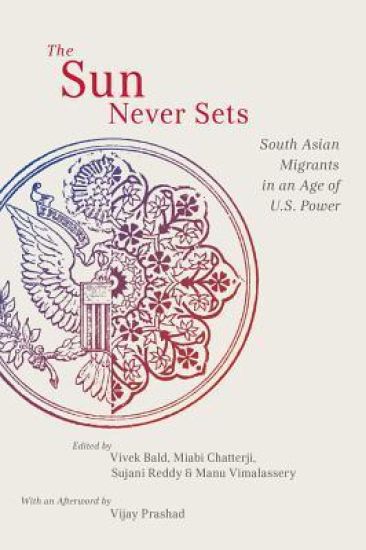
The Sun Never Sets

The Sun Never Sets

Vijay Prashad

New York University Press
2013
sidottu
The Sun Never Sets collects the work of a generation of scholars who are enacting a shift in the orientation of the field of South Asian American studies. By focusing upon the lives, work, and activism of specific, often unacknowledged, migrant populations, the contributors present a more comprehensive vision of the South Asian presence in the United States. Tracking the changes in global power that have influenced the paths and experiences of migrants, from expatriate Indian maritime workers at the turn of the century, to Indian nurses during the Cold War, to post-9/11 detainees and deportees caught in the crossfire of the "War on Terror," these essays reveal how the South Asian diaspora has been shaped by the contours of U.S. imperialism. Driven by a shared sense of responsibility among the contributing scholars to alter the profile of South Asian migrants in the American public imagination, they address the key issues that impact these migrants in the U.S., on the subcontinent, and in circuits of the transnational economy. Taken together, these essays provide tools with which to understand the contemporary political and economic conjuncture and the place of South Asian migrants within it.
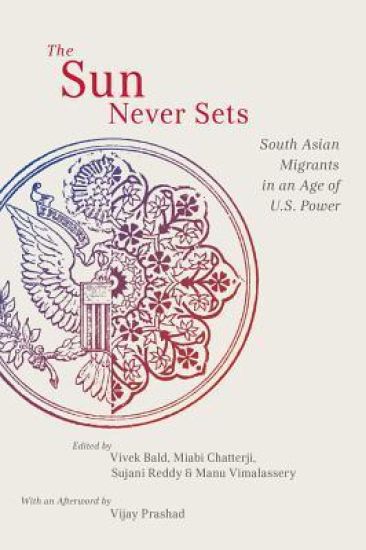
The Sun Never Sets

The Sun Never Sets

Vijay Prashad

New York University Press
2013
pokkari
The Sun Never Sets collects the work of a generation of scholars who are enacting a shift in the orientation of the field of South Asian American studies. By focusing upon the lives, work, and activism of specific, often unacknowledged, migrant populations, the contributors present a more comprehensive vision of the South Asian presence in the United States. Tracking the changes in global power that have influenced the paths and experiences of migrants, from expatriate Indian maritime workers at the turn of the century, to Indian nurses during the Cold War, to post-9/11 detainees and deportees caught in the crossfire of the "War on Terror," these essays reveal how the South Asian diaspora has been shaped by the contours of U.S. imperialism. Driven by a shared sense of responsibility among the contributing scholars to alter the profile of South Asian migrants in the American public imagination, they address the key issues that impact these migrants in the U.S., on the subcontinent, and in circuits of the transnational economy. Taken together, these essays provide tools with which to understand the contemporary political and economic conjuncture and the place of South Asian migrants within it.
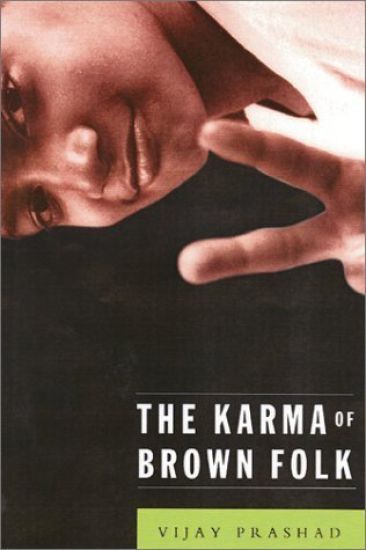
Karma Of Brown Folk

Karma Of Brown Folk

Vijay Prashad

University of Minnesota Press
2001
nidottu
Village Voice Favorite Books of 2000 The popular book challenging the idea of a model minority, now in paperback!“How does it feel to be a problem?” asked W. E. B. Du Bois of black Americans in his classic The Souls of Black Folk. A hundred years later, Vijay Prashad asks South Asians “How does it feel to be a solution?” In this kaleidoscopic critique, Prashad looks into the complexities faced by the members of a “model minority”-one, he claims, that is consistently deployed as "a weapon in the war against black America."On a vast canvas, The Karma of Brown Folk attacks the two pillars of the “model minority” image, that South Asians are both inherently successful and pliant, and analyzes the ways in which U.S. immigration policy and American Orientalism have perpetuated these stereotypes. Prashad uses irony, humor, razor-sharp criticism, personal reflections, and historical research to challenge the arguments made by Dinesh D’Souza, who heralds South Asian success in the U.S., and to question the quiet accommodation to racism made by many South Asians. A look at Deepak Chopra and others whom Prashad terms “Godmen” shows us how some South Asians exploit the stereotype of inherent spirituality, much to the chagrin of other South Asians. Following the long engagement of American culture with South Asia, Prashad traces India’s effect on thinkers like Cotton Mather and Henry David Thoreau, Ravi Shankar’s influence on John Coltrane, and such essential issues as race versus caste and the connection between antiracism activism and anticolonial resistance.The Karma of Brown Folk locates the birth of the “model minority” myth, placing it firmly in the context of reaction to the struggle for Black Liberation. Prashad reclaims the long history of black and South Asian solidarity, discussing joint struggles in the U.S., the Caribbean, South Africa, and elsewhere, and exposes how these powerful moments of alliance faded from historical memory and were replaced by Indian support for antiblack racism. Ultimately, Prashad writes not just about South Asians in America but about America itself, in the tradition of Tocqueville, Du Bois, Richard Wright, and others. He explores the place of collective struggle and multiracial alliances in the transformation of self and community-in short, how Americans define themselves.
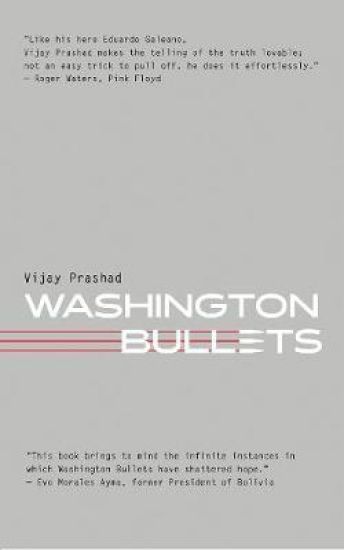
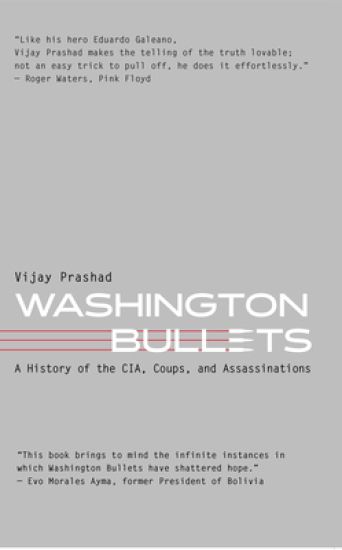
Washington Bullets

Washington Bullets

Vijay Prashad

Monthly Review Press,U.S.
2020
nidottu
Washington Bullets is written in the best traditions of Marxist journalism and history-writing. It is a book of fluent and readable stories, full of detail about U.S. imperialism, but never letting the minutiae obscure the larger political point. It is a book that could easily have been a song of despair—a lament of lost causes; it is, after all, a roll call of butchers and assassins; of plots against people’s movements and governments; of the assassinations of socialists, Marxists, communists all over the Third World by the country where liberty is a statue. Despite all this, Washington Bullets is a book about possibilities, about hope, about genuine heroes. One such is Thomas Sankara of Burkina Faso—also assassinated—who said: “You cannot carry out fundamental change without a certain amount of madness. In this case, it comes from nonconformity, the courage to turn your back on the old formulas, the courage to invent the future. It took the madmen of yesterday for us to be able to act with extreme clarity today. I want to be one of those madmen. We must dare to invent the future.” Washington Bullets is a book infused with this madness, the madness that dares to invent the future.
Washington Bullets

Washington Bullets

Vijay Prashad

Monthly Review Press,U.S.
2020
sidottu
Washington Bullets is written in the best traditions of Marxist journalism and history-writing. It is a book of fluent and readable stories, full of detail about U.S. imperialism, but never letting the minutiae obscure the larger political point. It is a book that could easily have been a song of despair—a lament of lost causes; it is, after all, a roll call of butchers and assassins; of plots against people’s movements and governments; of the assassinations of socialists, Marxists, communists all over the Third World by the country where liberty is a statue. Despite all this, Washington Bullets is a book about possibilities, about hope, about genuine heroes. One such is Thomas Sankara of Burkina Faso—also assassinated—who said: “You cannot carry out fundamental change without a certain amount of madness. In this case, it comes from nonconformity, the courage to turn your back on the old formulas, the courage to invent the future. It took the madmen of yesterday for us to be able to act with extreme clarity today. I want to be one of those madmen. We must dare to invent the future.” Washington Bullets is a book infused with this madness, the madness that dares to invent the future.
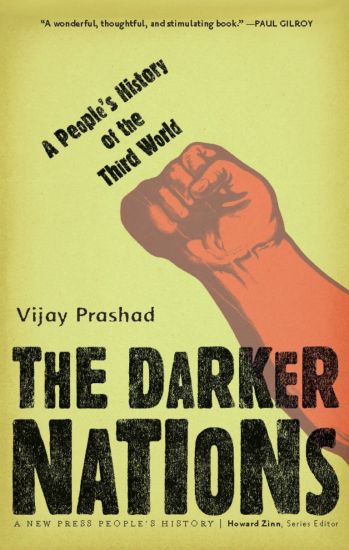
The Darker Nations

The Darker Nations

Vijay Prashad

The New Press
2008
nidottu
A landmark work, The Darker Nations chronicles the rise and fall of the Third World. Vijay Prashad reconstructs the fascinating history of the Third World, recalling the now-forgotten Brussels conclave of the League Against Imperialism - an international effort that brought Albert Einstein together with Jawaharlal Nehru, Madame Sun Yat-Sen and hundreds of other far-flung revolutionaries. Also includes a striking new analysis of the 1955 conference in Bandung, Indonesia, where 29 African and Asian countries launched the Third World Project.
The Darker Nations

The Darker Nations

Vijay Prashad

THE NEW PRESS
2022
pokkari
The landmark alternative history of the Cold War from the perspective of the Global South, reissued in paperback with a new introduction by the authorIn this award-winning investigation into the overlooked history of the Third World—with a new preface by the author for its fifteenth anniversary—internationally renowned historian Vijay Prashad conjures what Publishers Weekly calls “a vital assertion of an alternative future.” The Darker Nations, praised by critics as a welcome antidote to apologists for empire, has defined for a generation of scholars, activists, and dreamers what it is to imagine a more just international order and continues to offer lessons for the radical political projects of today. With the disastrous U.S. withdrawal from Afghanistan and the rise of India and China on the global scene, this paradigm-shifting book of groundbreaking scholarship helps us envision the future of the Global South by restoring to memory the vibrant though flawed idea of the Third World whose demise, Prashad ultimately argues, has produced an impoverished and asymmetrical international political arena. No other book on the Third World—as a utopian idea and a global movement—can speak so effectively and engagingly to our troubled times.
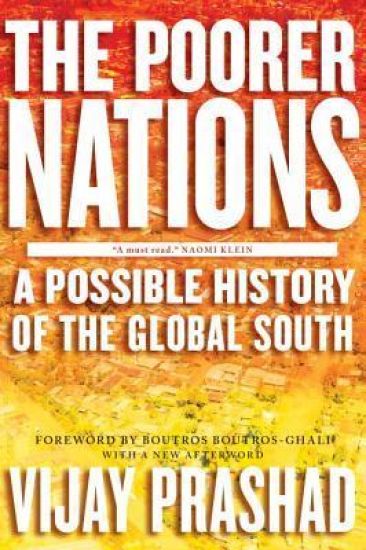
The Poorer Nations

The Poorer Nations

Vijay Prashad

Verso Books
2014
nidottu
In The Darker Nations, Vijay Prashad provided an intellectual history of the Third World and traced the rise and fall of the Non-Aligned Movement. With The Poorer Nations, Prashad takes up the story where he left off.Since the '70s, the countries of the Global South have struggled to build political movements. Prashad analyzes the failures of neoliberalism, as well as the rise of the BRICS countries, the World Social Forum, issue-based movements like Via Campesina, the Latin American revolutionary revival-in short, efforts to create alternatives to the neoliberal project advanced militarily by the US and its allies and economically by the IMF, the World Bank, the WTO, and other instruments of the powerful. Just as The Darker Nations asserted that the Third World was a project, not a place, The Poorer Nations sees the Global South as a term that properly refers not to geographical space but to a concatenation of protests against neoliberalism.In his foreword to the book, former Secretary-General of the United Nations Boutros Boutros-Ghali writes that Prashad "has helped open the vista on complex events that preceded today's global situation and standoff." The Poorer Nations looks to the future while revising our sense of the past.
Arab Spring, Libyan Winter

Arab Spring, Libyan Winter

Vijay Prashad

AK Press
2012
nidottu
The Arab Spring captivated the planet. Mass action overthrew Tunisia's Ben Ali and Egypt's Hosni Mubarak. The revolutionary wave spread to the far corners of the Arab world, from Morocco to Bahrain. It seemed as if all the authoritarian states would finally be freed, even those of the Arabian Peninsula. People's power had produced this wave, and continued to ride it out.In Libya, though, the new world order had different ideas. Social forces opposed to Muammar Qaddafi had begun to rebel, but they were weak. In came the French and the United States, with promises of glory. A deal followed with the Saudis, who then sent in their own forces to cut down the Bahraini revolution, and NATO began its assault, ushering in a Libyan Winter that cast its shadow over the Arab Spring.This brief, timely analysis situates the assault on Libya in the context of the winds of revolt that swept through the Middle East in the Spring of 2011. Vijay Prashad explores the recent history of the Qaddafi regime, the social forces who opposed him, and the role of the United Nations, NATO, and the rest of the world's superpowers in the bloody civil war that ensued.Vijay Prashad is the George and Martha Kellner Chair of South Asian History, and professor and director of international studies at Trinity College in Hartford, Connecticut. He is the author or editor of over a dozen books, including "Karma of Brown Folk" and, most recently, "The Darker Nations: A People's History of the Third World."
Namaste Sharon

Namaste Sharon

Vijay Prashad

Leftword Books
2020
nidottu
In September 2003, Ariel Sharon became the first Israeli Prime Minister to step on Indian soil. Hindutva and Sharonism embraced each other, and these two Asian right-wing ideologies hoped to form some sort of entente against Islamic terrorism with the blessings of George W. Bush's evangelical imperialism. Namaste Sharon, said India's Prime Minister, but what does the rest of the country say? In Namaste Sharon, political commentator Vijay Prasad unmasks the nefarious agenda whereby the evangelical imperialism of the Bush administration, the predatory agenda of the Sharonites and the vainglory of Hindutva come together.
The East Was Read

The East Was Read

Vijay Prashad

LeftWord Books
2020
muu
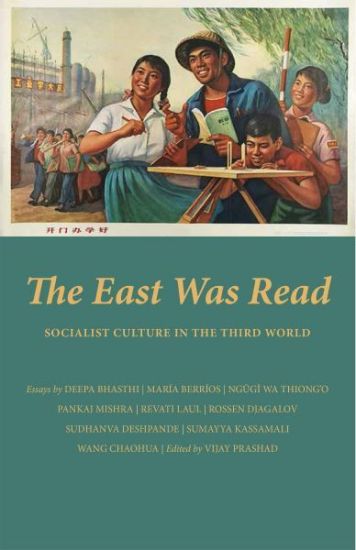
Across the Third World, people grew up reading inexpensive, beautifully-produced books from the Soviet Union - children's books, classics of world literature, books on science and mathematics, and works of Marxist theory. The first half of The East Was Read is an homage to the lost world of Soviet books. Wang Chaohua and Pankaj Mishra recall with fondness the meaning of these books for their very different lives in China and in India respectively. Deepa Bhasthi goes on an emotional journey into the library of her grandfather, a communist intellectual. Rossen Djagalov writes a short history of Progress Publishers. Ngũgĩ wa Thiong'o talks about how he wrote Petals of Blood in Yalta on the sidelines of the Afro-Asian Writers' Conference in 1973. Sumayya Kassamali writes about Faiz in Beirut, giving us a sense of the cultural worlds that drew in both the Soviet Union and the Third World Project. The second half of the book pivots from the page to the stage. Maria Berrios brings an artist's eye to the cultural world of socialist Cuba. Sudhanva Deshpande identifies a momentum in socialist cinema, from the early Soviet period to the early Cuban period. Revati Laul reminds us that watching a Soviet ballet or reading a Soviet book can have an impact in other times and other histories. The East Was Read is a treasure trove of sparkling essays on the impacts of socialist culture in various parts of the Third World. This is a must-have book for bibliophiles, cinephiles, for lovers of reading, watching, listening.//Contributors: DEEPA BHASTHI MARIA BERRIOS NGŨGĨ WA THIONG'O PANKAJ MISHRA REVATI LAUL ROSSEN DJAGALOV SUDHANVA DESHPANDE SUMAYYA KASSAMALI WANG CHAOHUA
Washington Bullets

Washington Bullets

Vijay Prashad

LeftWord Books
2020
sidottu
Essays on acts of US imperialism, from the 1953 Iran coup to the 2019 ouster of Evo Morales Washington Bullets is written in the best traditions of Marxist journalism and history-writing. It is a book of fluent and readable stories, full of detail about US imperialism, but never letting the minutiae obscure the larger political point. It is a book that could easily have been a song of despair--a lament of lost causes; it is, after all, a roll call of butchers and assassins; of plots against people's movements and governments; of the assassinations of socialists, Marxists, communists all over the Third World by the country where liberty is a statue. Despite all this, Washington Bullets is a book about possibilities, about hope, about genuine heroes. One such is Thomas Sankara of Burkina Faso--also assassinated--who said: 'You cannot carry out fundamental change without a certain amount of madness. In this case, it comes from nonconformity, the courage to turn your back on the old formulas, the courage to invent the future. It took the madmen of yesterday for us to be able to act with extreme clarity today. I want to be one of those madmen. We must dare to invent the future.' Washington Bullets is a book infused with this madness, the madness that dares to invent the future.
Communist Histories

Communist Histories

Vijay Prashad

Leftword Books
2022
nidottu
The contemporary world cannot be fully understood without the struggles of the Communists over the past century. Rooted in South Asia, Communist Histories has a global sweep, with essays examining Communist praxis from Bengal to Maharashtra, from Cuba to China. This volume - the first in a series - looks closely at the Communist international with an emphasis on how the core idea of internationalism impacted the campaigns of Communists. Deeply researched and richly written, these essays are a counterpoint to the erasure of Communist movements in bourgeois historiography.
तख़्तापलट
'अपने हीरो एदुआर्दो गालेआनो की तरह विजय प्रशाद ने सच के बयान को भी मनभावन बना दिया है। यह काम आसान नहीं है पर वे उसे सहजता से कर ले जाते हैं।' - रोजर वॉटर्स, पिंक फ्लॉयड/'इस किताब को पढ़ते हुए अमेरिकी दादागिरी द्वारा उम्मीदों पर कुठाराघात की अनगिनत घटनाएं दिमाग में कौंध जाती हैं।' - इवो मोरालेस आइमा, बोलीविया के पूर्व राष्ट्रपति/तख़्तापलट मार्क्सवादी पत्रकारिता और इतिहास लेखन की शानदार परंपरा में लिखी गई है। इसमें बेहद पठनीय और सहज कहानियां हैं, जो अमेरिकी साम्राज्यवाद के बारे में खुलकर बताती हैं लेकिन व्यापक राजनीतिक मुद्दों के बारीक पहलुओं को भी छोड़ती नहीं। वैसे एक तरह से यह किताब निराशा से भरी है और महान लक्ष्यों की पराजय का शोकगीत प्रस्तुत करती है। इसमें आपको कसाई मिलेंगे और भाड़े के हत्यारे भी। इसमें जनांदोलनों और लोकप्रिय सरकारों के ख़िलाफ़ साज़िश रचे जाने तथा तीसरी दुनिया के समाजवादियों, मार्क्सवादियों और कम्युनिस्टों की उस देश द्वारा हत्या करवाए जाने के वृत्तांत हैं, जहां स्वतंत्रता महज एक मूर्ति है। लेकिन इन सबके बावजूद तख़्तापलट संभावनाओं, उम्मीदों और सच्चे नायकों की किताब है। इनमें से एक हैं बुरकीना फासो के थॉमस संकारा, जिनकी हत्या कर दी गई थी। उन्होंने कहा था, 'अगर आप बुनियादी बदलाव लाना चाहते हैं तो उसके लिए एक हद तक पागलपन की ज़रूरत है। इस मामले में यह नाफ़रमानी से आता है, पुराने सूत्रों को धता बताने और नए भविष्य के निर्माण के साहस से आता है। ऐसे ही पागल लोगों ने हमें वह नज़रिया दिया है, जिससे हम आज पूरे सूझबूझ के साथ काम कर रहे हैं। आज हमें वैसे ही दीवानों की ज़रूरत है। हमें भविष्य के निर्माण का साहस दिखाना होगा।' तख़्तापलट कुछ ऐसे ही पागलपन और भविष्य रचने के साहस से भरी एक किताब है।
No Free Left

No Free Left

Vijay Prashad

Leftword Books
2020
pokkari
Do the Lok Sabha elections of 2014 signal the end of the road for the Left? Over the past twenty years, the Indian political climate has shifted decidedly to the Right - with the BJP and the Congress dragging India into a growth trajectory that squanders the hopes of working people. The old consensus on Indian socialism is threadbare, and socialist parties in disarray.//The future of Indian communism is rooted in the popular hopes for a better tomorrow and in the popular discontent with the bitter present. No Free Left is a critical examination of the past of Indian Communism and an assessment of its future.//Most literature on Indian communism feels claustrophobic. It assumes that the communist movement lives on a detached landscape - its programme and political judgments are adjudged against a divine standard. A history of communism cannot be written, Gramsci said, without writing a "general history of a country." Vijay Prashad does exactly that.//No Free Left stays alive to the details of the present while drawing out the long term dynamic, combining a rich historical survey with acute political analysis of the present. It is a compelling work for students of Indian politics. For activists of the Left, it is indispensable reading. Above all, it is a live work, an invitation to debate and discussion.