
Kirjahaku
Etsi kirjoja tekijän nimen, kirjan nimen tai ISBN:n perusteella.
8 kirjaa tekijältä Vincent Cronin
Florence in the fifteenth century was the undisputed centre of the Italian Renaissance. In this brilliant and absorbing book Vincent Cronin brings vividly to life the people and myriad achievements of this astonishingly fruitful epoch in human history.
Following the collapse of Medici rule in fifteenth-century Florence, the centre of Renaissance activity moved first to Rome and finally to Venice.
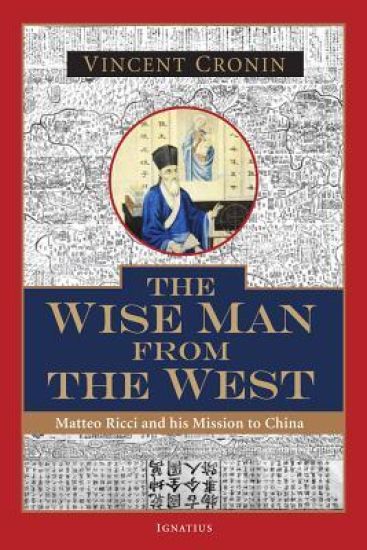
This is the amazing story of the famous Jesuit missionary priest to China, Fr. Matteo Ricci, revered as a "Wise Man" by the Chinese. He arrived in China in 1582 and died there twenty-eight years later, having developing a deep knowledge of and love for the country, the culture and the people. Before Ricci's heroic mission, China was an unexplored land bordering on the vague, mysterious Cathay, and the West was no more than a rumor to the learned Mandarins, a distant unknown region lying beyond the bounds of geography. In the person of Father Ricci these two worlds met, and Vincent Cronin dramatically recreates the romance, the crossed purposes, the potential tragedy of that meeting. He shows us ancient China, the timeless state, with a civilization older than that wherein Christianity first found expression. Because Ricci loved this civilization and honored it, he was able to teach his strange new Christian doctrine with tact and sympathy. He carried much of the technological and philosophical wisdom of the late Renaissance Europe, and thus found favor among the Mandarins, the men of learning who enjoyed high status at the Imperial Court. He learned Chinese to discuss with them the problems in science and technology, and also questions of religion and the hereafter. He lived as a great scholar among great scholars and left behind him a memory worthy of the Christian faith he served. Well researched and written with an enchanting style, Cronin relied almost entirely on contemporary material only recently assembled, including Father Ricci's own letters and reports, and his account of China written in Peking before his death. The seed of Faith was sown and the crop, even after a century of atheistic communism, continues to grow in present-day China.
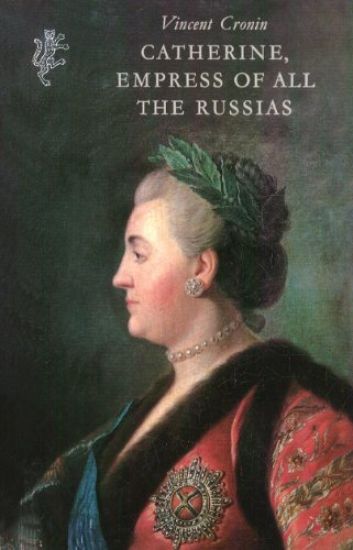
Catherine II, Empress of all the Russias, was the archetypal Enlightenment monarch. She reigned for more than 30 years, and during that time, as politician, diplomat, commander-in-chief, educator, builder, picture-collector, lover, mother, playwright, writer of fairy stories, autobiographer and indefatigable correspondent, she reformed and developed her largely unenlightened and backward country. Yet this woman, who at the age of 33, after 17 years of unhappy marriage, placed her deposed and murdered husband's crown on her own head, had begun life as an insignificant German princess. Catherine is interesting today not only as one of the most effective sovereigns of the late eighteenth century, but also as a determined career woman and head of government who dominated a vast empire as easily as she did her lovers and her court.
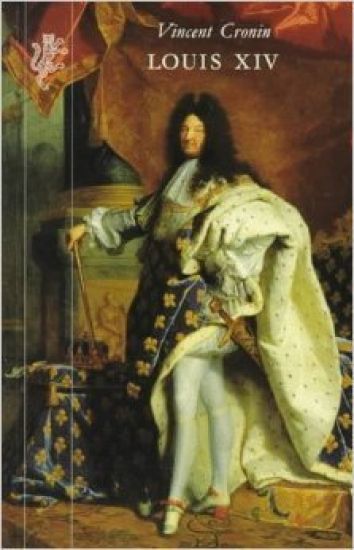
First published 25 years ago, this biography of the Sun King uses contemporary sources to examine what sort of monarch Louis XIV really was. The author's researches reveal a portrait of the man and an account of the principal events of his long reign (1642-1715). The book provides an overview of the entire civilization inspired by and reflecting the glory of the Sun King. Thus, while Louis occupies the foreground, artists like Racine, Moliere, Lully and Mansart, the architect of Versailles, share the middleground with politicians such as Cardinal Mazarin and Nicolas Fouquet and courtiers such as the king's mistress, Louise de La Valliere.
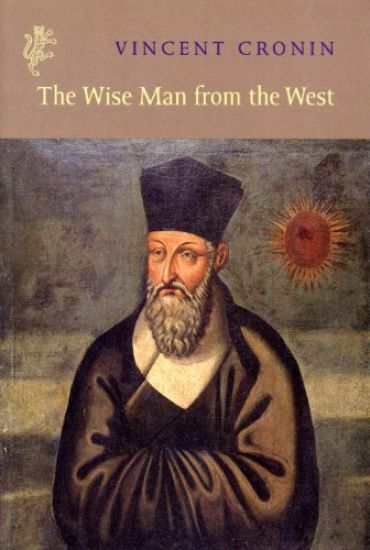
But the seed was sown and the crop, even after almost a century of atheistic communism, continues to grow in present-day China. This story of the first fully documented contact between West and East offers a fascinating insight into the history of ideas during one of the most fertile eras in European and Chinese history.
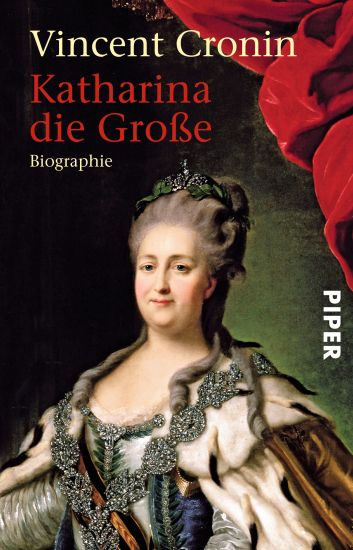
Sie wurde als Tochter eines deutschen Fürsten geboren und mit 33 Jahren Herrscherin des russischen Reiches - Katharina II. (1729-1776). Die Geschichte verlieh ihr den Beinamen >>die Große