Kirjojen hintavertailu. Mukana 12 016 292 kirjaa ja 12 kauppaa.

Kirjahaku

Etsi kirjoja tekijän nimen, kirjan nimen tai ISBN:n perusteella.

6 kirjaa tekijältä Vincent Goossaert

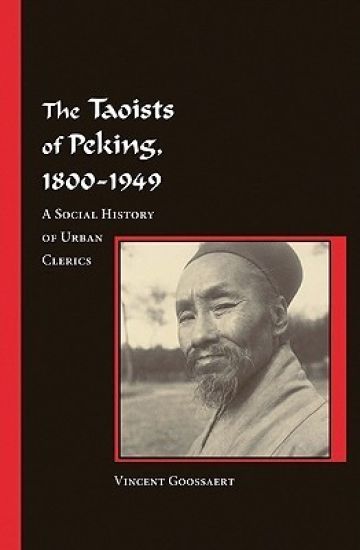
The Taoists of Peking, 1800-1949

The Taoists of Peking, 1800-1949

Vincent Goossaert

Harvard University, Asia Center
2007
sidottu
By looking at the activities of Taoist clerics in Peking, this book explores the workings of religion as a profession in one Chinese city during a period of dramatic modernization. The author focuses on ordinary religious professionals, most of whom remained obscure temple employees. Although almost forgotten, they were all major actors in urban religious and cultural life.The clerics at the heart of this study spent their time training disciples, practicing and teaching self-cultivation, performing rituals, and managing temples. Vincent Goossaert shows that these Taoists were neither the socially despised illiterates dismissed in so many studies, nor otherworldly ascetics, but active participants in the religious economy of the city. In exploring exactly what their crucial role was, he addresses the day-to-day life of modern Chinese religion from the perspective of ordinary religious specialists. This approach highlights the social processes, institutions, and networks that transmit religious knowledge and mediate between prestigious religious traditions and the people in the street. In modern Chinese religion, the Taoists are such key actors. Without them, "Taoist ritual" and "Taoist self-cultivation" are just empty words.
Making the Gods Speak

Making the Gods Speak

Vincent Goossaert

HARVARD UNIVERSITY PRESS
2022
sidottu
For two millennia, Chinese society has been producing divine revelations on an unparalleled scale, in multifarious genres and formats. This book is the first comprehensive attempt at accounting for the processes of such production. It builds a typology of the various ritual techniques used to make gods present and allow them to speak or write, and it follows the historical development of these types and the revealed teachings they made possible. Within the large array of visionary, mediumistic, and mystical techniques, Vincent Goossaert devotes the bulk of his analysis to spirit-writing, a family of rites that appeared around the eleventh century and gradually came to account for the largest numbers of books and tracts ascribed to the gods. In doing so, he shows that the practice of spirit-writing must be placed within the framework of techniques used by ritual specialists to control human communications with gods and spirits for healing, divining, and self-divinization, among other purposes. Making the Gods Speak thus offers a ritual-centered framework to study revelation in Chinese cultural history and comparatively with the revelatory practices of other religious traditions.
Heavenly Masters

Heavenly Masters

Vincent Goossaert

University of Hawai'i Press
2021
sidottu
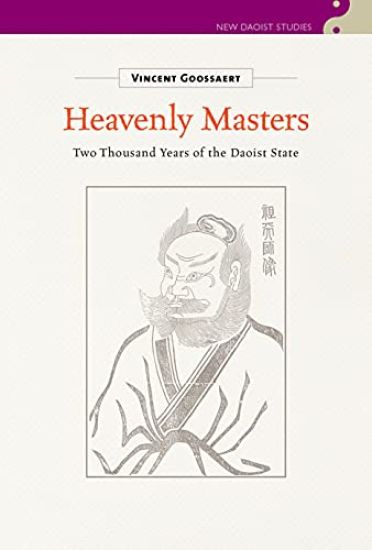
The origins of modern Daoism can be traced to the Church of the Heavenly Master (Tianshidao), reputedly established by the formidable Zhang Daoling. In 142 CE, according to Daoist tradition, Zhang was visited by the Lord on High, who named him his vicar on Earth with the title Heavenly Master. The dispensation articulated an eschatological vision of saving initiates—the pure, those destined to become immortals—by enforcing a strict moral code. Under evolving forms, Tianshidao has remained central to Chinese society, and Daoist priests have upheld their spiritual allegiance to Zhang, their now divinized founder. This book tells the story of the longue durée evolution of the Heavenly Master leadership and institution. Later hagiography credits Zhang Daoling’s great-grandson, putatively the fourth Heavenly Master, with settling the family at Longhushan (Dragon and Tiger Mountain); in time his descendants—down to the present contested sixty-fifth Heavenly Master living in Taiwan—made the extraordinary claim of being able to transmit hereditarily the function of the Heavenly Master and the power to grant salvation. Over the next twelve centuries, the Zhangs turned Longhushan into a major holy site and a household name in the Chinese world, and constructed a large administrative center for the bureaucratic management of Chinese society. They gradually built the Heavenly Master institution, which included a sacred site; a patriarchal line of successive Heavenly Masters wielding vast monopolistic powers to ordain humans and gods; a Zhang lineage that nurtured talent and accumulated wealth; and a bureaucratic apparatus comprised of temples, training centers, and a clerical hierarchy. So well-designed was this institution that it remained stable for more than a millennium, far outlasting the longest dynasties, and had ramifications for every city and village in imperial China. In this ambitious work, Vincent Goossaert traces the Heavenly Master bureaucracy from medieval times to the modern Chinese nation-state as well as its expansion. His in-depth portraits of influential Heavenly Masters are skillfully embedded in a large-scale analysis of the institution and its rules, ideology, and vision of society.
The Beef Taboo in China

The Beef Taboo in China

Vincent Goossaert

UNIVERSITY OF HAWAI'I PRESS
2025
sidottu
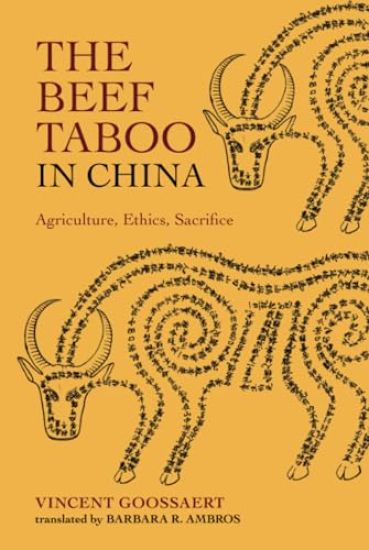
The Beef Taboo in China explains how and why, around the turn of the second millennium, the Chinese determined that cattle should not be slaughtered or eaten. This taboo remained prevalent until the beginning of the twentieth century and is still observed by some today. Goossaert situates this prohibition within evolving Chinese attitudes toward animals and meat and juxtaposes the taboo with vegetarianism and other forms of meat ethics. He argues that the emergence of this specific practice must be understood in several contexts, notably a new agricultural economy and ecology in early modern times that protected plow cattle and marginalized pastures; a sacrificial reform that eliminated beef as the standard offering to gods and spirits; and the development of Daoist rituals, cults, and moral theology that tabooed beef and made this observance a linchpin of Chinese civilization.
Heavenly Masters

Heavenly Masters

Vincent Goossaert

THE CHINESE UNIVERSITY PRESS
2022
sidottu
The origins of modern Daoism can be traced to the Church of the Heavenly Master (Tianshidao), reputedly established by the formidable Zhang Daoling. In 142 CE, according to Daoist tradition, Zhang was visited by the Lord on High, who named him his vicar on Earth with the title Heavenly Master. The dispensation articulated an eschatological vision of saving initiates—the pure, those destined to become immortals— by enforcing a strict moral code. Under evolving forms, Tianshidao has remained central to Chinese society, and Daoist priests have upheld their spiritual allegiance to Zhang, their now divinized founder. This book tells the story of the longue durée evolution of the Heavenly Master leadership and institution.Later hagiography credits Zhang Daoling's great?grandson, putatively the fourth Heavenly Master, with settling the family at Longhushan (Dragon and Tiger Mountain); in time his descendants—down to the present contested sixty?fifth Heavenly Master living in Taiwan— made the extraordinary claim of being able to transmit hereditarily the function of the Heavenly Master and the power to grant salvation. Over the next twelve centuries, the Zhangs turned Longhushan into a major holy site and a household name in the Chinese world, and constructed a large administrative center for the bureaucratic management of Chinese society. They gradually built the Heavenly Master institution, which included a sacred site; a patriarchal line of successive Heavenly Masters wielding vast monopolistic powers to ordain humans and gods; a Zhang lineage that nurtured talent and accumulated wealth; and a bureaucratic apparatus comprised of temples, training centers, and a clerical hierarchy. So well?designed was this institution that it remained stable for more than a millennium, far outlasting the longest dynasties, and had ramifications for every city and village in imperial China.In this ambitious work, Vincent Goossaert traces the Heavenly Master bureaucracy from medieval times to the modern Chinese nation?state as well as its expansion. His in?depth portraits of influential Heavenly Masters are skillfully embedded in a large?scale analysis of the institution and its rules, ideology, and vision of society.
The Beef Taboo in China

The Beef Taboo in China

Vincent Goossaert

UNIVERSITY OF HAWAI'I PRESS
2025
nidottu
The Beef Taboo in China explains how and why, around the turn of the second millennium, the Chinese determined that cattle should not be slaughtered or eaten. This taboo remained prevalent until the beginning of the twentieth century and is still observed by some today. Goossaert situates this prohibition within evolving Chinese attitudes toward animals and meat and juxtaposes the taboo with vegetarianism and other forms of meat ethics. He argues that the emergence of this specific practice must be understood in several contexts, notably a new agricultural economy and ecology in early modern times that protected plow cattle and marginalized pastures; a sacrificial reform that eliminated beef as the standard offering to gods and spirits; and the development of Daoist rituals, cults, and moral theology that tabooed beef and made this observance a linchpin of Chinese civilization.