Kirjojen hintavertailu. Mukana 12 414 040 kirjaa ja 12 kauppaa.

Kirjahaku

Etsi kirjoja tekijän nimen, kirjan nimen tai ISBN:n perusteella.

13 kirjaa tekijältä Vivek D. Bhise

Decision-Making in Energy Systems

Decision-Making in Energy Systems

Vivek D. Bhise

TAYLOR FRANCIS LTD
2021
sidottu
This is a comprehensive book on how to make complex decisions on energy systems problems involving different technologies, environmental effects, costs, benefits, risks, and safety issues. Using Industrial and Systems Engineering techniques for decision-making in Energy Systems, the book provides the background knowledge and methods to incorporate multiple criteria involved in solving energy system problems. It offers methods, examples, and case studies illustrating applications. Decision-Making in Energy Systems discusses subjective as well as objective methods, approaches, and techniques taken from the systems and industrial engineering domain and puts them to use in solving energy systems problems. It uses an integrated approach by including effects of all technical, economic, environmental, and safety considerations as well as costs and risks. The book is specially designed for practicing engineers from industrial/systems engineering who work in energy systems engineering industries. Aimed at graduate students, researchers, and managers involved in various energy generating, distributing, and consuming companies, the book helps the reader to understand, evaluate, and decide on solutions to their energy-related problems.
Decision-Making in Energy Systems

Decision-Making in Energy Systems

Vivek D. Bhise

TAYLOR FRANCIS LTD
2024
nidottu
This is a comprehensive book on how to make complex decisions on energy systems problems involving different technologies, environmental effects, costs, benefits, risks, and safety issues. Using Industrial and Systems Engineering techniques for decision-making in Energy Systems, the book provides the background knowledge and methods to incorporate multiple criteria involved in solving energy system problems. It offers methods, examples, and case studies illustrating applications. Decision-Making in Energy Systems discusses subjective as well as objective methods, approaches, and techniques taken from the systems and industrial engineering domain and puts them to use in solving energy systems problems. It uses an integrated approach by including effects of all technical, economic, environmental, and safety considerations as well as costs and risks. The book is specially designed for practicing engineers from industrial/systems engineering who work in energy systems engineering industries. Aimed at graduate students, researchers, and managers involved in various energy generating, distributing, and consuming companies, the book helps the reader to understand, evaluate, and decide on solutions to their energy-related problems.
Automotive Product Development

Automotive Product Development

Vivek D. Bhise

CRC Press
2019
nidottu
This book is about how to develop future automotive products by applying the latest methodologies based on a systems engineering approach and by taking into account many issues facing the auto industry such as meeting government safety, emissions and fuel economy regulations, incorporating advances in new technology applications in structural materials, power trains, vehicle lighting systems, displays and telematics, and satisfying the very demanding customer.It is financially disastrous for any automotive company to create a vehicle that very few people want. To design an automotive product that will be successful in the marketplace requires carefully orchestrated teamwork of experts from many disciplines, substantial amount of resources, and application of proven techniques at the right time during the product development process.Automotive Product Development: A Systems Engineering Implementation is intended for company management personnel and graduate students in engineering, business management and other disciplines associated with the development of automotive and other complex products.
Designing Complex Products with Systems Engineering Processes and Techniques
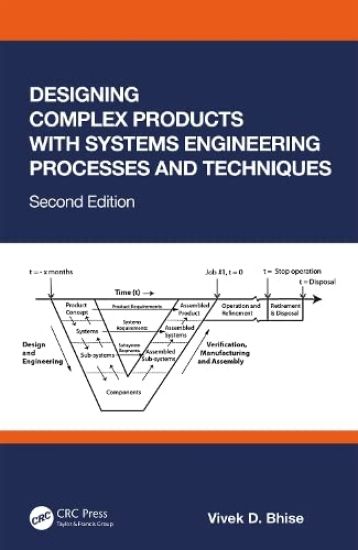
Completely revised including six new chapters, this new edition presents a more comprehensive knowledge of issues facing developers of complex products and process management. It includes more tools for implementing a Systems Engineering approach to minimize the risks of delays and cost overruns and helps create the right product for its customers.Designing Complex Products with Systems Engineering Processes and Techniques, Second Edition highlights how to increase customer satisfaction, quality, safety, and usability to meet program timings and budgets using a Systems Engineering approach. It provides decision-making considerations and models for creating sustainable product design and describes many techniques and tools used in product development and the product life-cycle orientation. The book also offers techniques used in Design for Manufacturing, Design for Assembly, and product evaluation methods for verification and validation testing. Many new examples, case studies, six new chapters, and updated program and data charts held on our website are offered.The book targets practicing engineers, engineering management personnel, product designers, product planners, product and program managers in all industrialized and developing countries. In addition the book is also useful to undergraduate, graduate students, and faculty in engineering, product design, and product project and program management.
Designing Complex Products with Systems Engineering Processes and Techniques
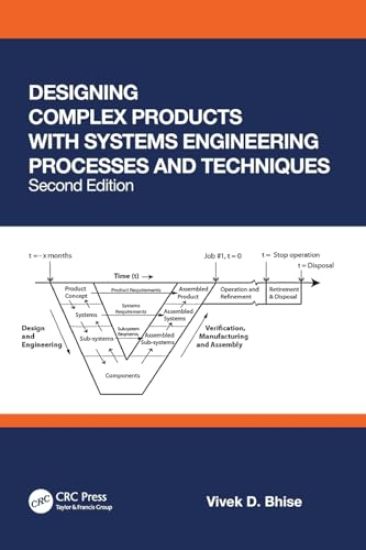
Completely revised including six new chapters, this new edition presents a more comprehensive knowledge of issues facing developers of complex products and process management. It includes more tools for implementing a Systems Engineering approach to minimize the risks of delays and cost overruns and helps create the right product for its customers.Designing Complex Products with Systems Engineering Processes and Techniques, Second Edition highlights how to increase customer satisfaction, quality, safety, and usability to meet program timings and budgets using a Systems Engineering approach. It provides decision-making considerations and models for creating sustainable product design and describes many techniques and tools used in product development and the product life-cycle orientation. The book also offers techniques used in Design for Manufacturing, Design for Assembly, and product evaluation methods for verification and validation testing. Many new examples, case studies, six new chapters, and updated program and data charts held on our website are offered.The book targets practicing engineers, engineering management personnel, product designers, product planners, product and program managers in all industrialized and developing countries. In addition the book is also useful to undergraduate, graduate students, and faculty in engineering, product design, and product project and program management.
Ergonomics in the Automotive Design Process

Ergonomics in the Automotive Design Process

Vivek D. Bhise

TAYLOR FRANCIS LTD
2024
sidottu
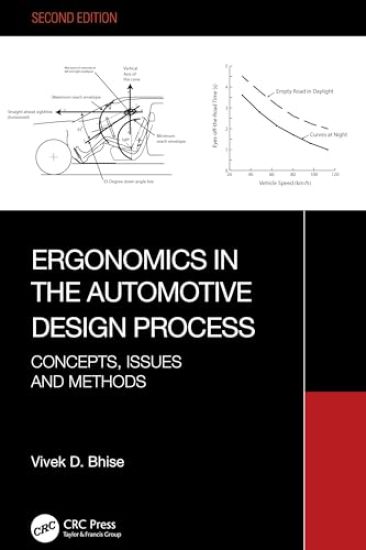
Automotive design continues to evolve at a rapid pace. As electric cars become ever more commonplace on the roads to the advent of the driverless vehicle, understanding the ergonomics behind automotive engineering becomes ever more paramount. Vehicle attributes must be considered early during the new vehicle development program by coordinated work of multi-disciplinary teams to begin creating vehicle specifications and development of vehicle attribute requirements.In Ergonomics in the Automotive Design Process: Concepts, Issues and Methods, Vivek D. Bhise covers the need-to-know fundamentals as to what makes an ergonomically sound vehicle. This book covers the entire range of ergonomics issues involved in designing a car or truck and offers evaluation techniques to avoid costly mistakes and assure high customer satisfaction. Across 13 chapters, vehicle design and the attributes of vehicle handling, appearance (interior and exterior styling), safety and security, infotainment, noise and vibrations, emissions, costs and process compatibility are considered in the context of ergonomics. New material to this edition includes coverage of ergonomics in the systems engineering process, decision-making and risks in automotive product programs and ergonomic considerations in electric vehicle development.This book will allow the reader to develop a more comprehensive knowledge of issues facing the developers of automotive products and delivers methods to manage communication, coordination and integration processes. It provides more tools in implementing systems engineering to minimize the risks of delays and cost overruns, and most importantly, creates the right product for its customers. The reader will develop a knowledge of future in- vehicle devices that are easy to program and use, safe, cheap to manufacture and assemble and are eco-friendly From an author with over forty years of experience in automotive design, this title is an ideal read for students and practitioners of ergonomics, human factors, automotive design, civil engineering, product design, work design and mechanical engineering.Vivek D. Bhise is currently a LEO Lecturer/ Visiting Professor and a Professor in post-retirement of Industrial and Manufacturing Systems Engineering at the University of Michigan-Dearborn. He received his B.Tech. in Mechanical Engineering (1965) from the Indian Institute of Technology, Bombay, India, M.S. in Industrial Engineering (1966) from the University of California, Berkeley, and PhD in Industrial and Systems Engineering (1971) from the Ohio State University, Columbus, Ohio. During 1973 to 2001, he held several management and research positions at the Ford Motor Company in Dearborn, Michigan.
Ergonomics in the Automotive Design Process

Ergonomics in the Automotive Design Process

Vivek D. Bhise

TAYLOR FRANCIS LTD
2024
sidottu
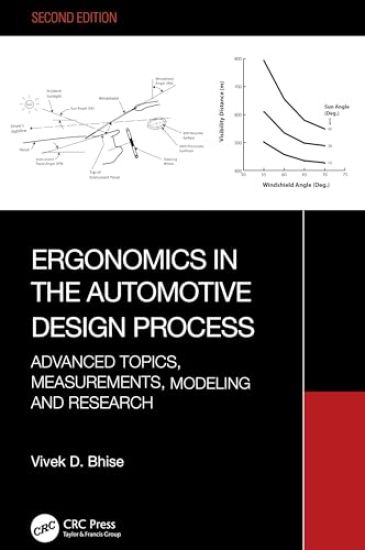
Automotive design continues to evolve at a rapid pace. As electric cars become ever more commonplace on the roads to the advent of the driverless vehicle, understanding the ergonomics behind automotive engineering becomes ever more paramount. Vehicle attributes must be considered early during the new vehicle development program by coordinated work of multi- disciplinary teams to begin creating vehicle specifications and development of vehicle attribute requirements.In Ergonomics in the Automotive Design Process: Advanced Topics, Measurements, Modeling and Research, experienced automotive engineer Vivek D. Bhise investigates the advanced procedures and considerations to develop an ergonomic vehicle This book covers the entire range of ergonomics issues involved in designing a car or truck and offers evaluation techniques to avoid costly mistakes and assure high customer satisfaction. This book delves into driver performance, electric vehicles (EVs), interfaces, new technology and costs and benefits plus a lot more. Evaluation and measurement are covered in essential detail and the title has been brought right up to date with chapters on engineering design during automotive product development, vehicle evaluation, verification and validation and product liability litigations and ergonomic considerations.This book is designed to allow the reader to develop a more comprehensive knowledge of issues facing the developers of automotive products and delivers methods to manage communication, coordination and integration processes. Delivering a toolkit that will allow you to implement systems engineering to minimize the risks of delays and cost overruns, it delivers a framework that will allow you to create the right product for your customers. The reader will therefore develop a knowledge of future in-vehicle devices that are easy to program and use, safe, cheap to manufacture and assemble and eco-friendly. This title is an ideal read for students and practitioners of ergonomics, human factors, automotive design, civil engineering, product design, work design and mechanical engineering.This title is an ideal read for students and practitioners of ergonomics, human factors, automotive design, civil engineering, product design, work design and mechanical engineering.
Ergonomics in the Automotive Design Process

Ergonomics in the Automotive Design Process

Vivek D. Bhise

TAYLOR FRANCIS LTD
2024
muu
Automotive design continues to evolve at a pace. As electric cars become ever more commonplace on the roads to the advent of driverless vehicles, understanding the ergonomics behind automotive engineering becomes ever more paramount. Vehicle attributes must be considered early during the new vehicle development program by coordinated work of multi-disciplinary teams to begin creating vehicle specifications.In this two-volume set of Ergonomics in the Automotive Design Process, Vivek D. Bhise covers the need-to-know fundamentals and advanced-level discussions and arguments as to what makes an ergonomically sound vehicle. The books cover the entire range of ergonomics issues involved in designing a car or truck and offer evaluation techniques to avoid costly mistakes and assure high customer satisfaction. Through 26 interesting chapters, vehicle design and the attributes of vehicle handling, appearance, safety and security, infotainment, noise and vibrations, emissions, costs and benefits, process compatibility, driver performance, electric vehicles (EVs), interfaces and new technology are considered in the context of ergonomics. Evaluation and measurement are covered in essential detail and the title has been brought right up to date with new chapters on engineering design during automotive product development, vehicle evaluation, verification and validation and product liability litigations and ergonomic considerations. This book will allow the reader to develop a more comprehensive knowledge of issues facing the developers of automotive products and delivers methods to manage communication, coordination and integration processes. The reader will develop a knowledge of future in-vehicle devices that are easy to program and use, safe, cheap to manufacture and assemble and are eco-friendly.Written by an expert author with over forty years of experience in automotive design, these volumes are designed for students and practitioners of ergonomics, human factors, automotive design, civil engineering, product design, work design and mechanical engineering.
Automotive Product Development

Automotive Product Development

Vivek D. Bhise

TAYLOR FRANCIS LTD
2026
sidottu
This new edition continues to explore the intricate processes of designing, developing, and manufacturing automotive products, by integrating multiple levels of complex systems. It describes systems engineering and attribute engineering, ensuring the new product meets the customer's desired attributes. The book also discusses cascading vehicle-level attribute requirements to all vehicle systems, analyzing interfaces between systems, and developing interface requirements for seamless collaboration. The second edition of Automotive Product Development: A Systems Engineering Implementation has been meticulously revised to incorporate the most recent innovations in vehicle powertrains, driver interfaces, and state-of-the-art manufacturing techniques. Additionally, it discusses the influence of government regulations on safety, fuel economy, and emissions. This enhanced edition boasts four new chapters, 12 new sections, and updated examples in implementing new technologies, providing a comprehensive overview of the industry's challenges and the array of approaches and tools at engineers' disposal for designing, analyzing, and evaluating products. By mastering these essential steps, engineers can develop products that not only meet but exceed the needs and expectations of their customers. The ongoing goal of this book is to equip practicing and future engineering graduates in the automotive industry with the essential knowledge needed to understand the product development process and how to implement systems engineering. Supplemental materials are available to download at Routledge.com/9781032997902
Ergonomics in the Automotive Design Process
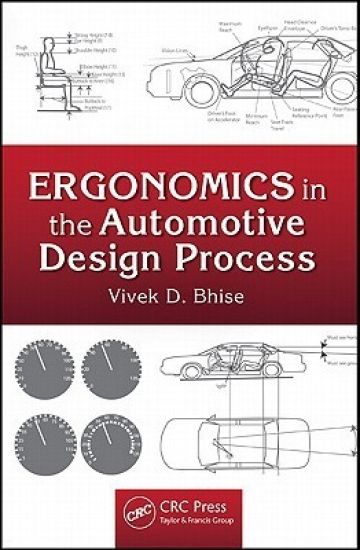
The auto industry is facing tough competition and severe economic constraints. Their products need to be designed "right the first time" with the right combinations of features that not only satisfy the customers but continually please and delight them by providing increased functionality, comfort, convenience, safety, and craftsmanship. Based on the author's forty plus years of experience as a human factors researcher, engineer, manager, and teacher who has conducted numerous studies and analyses, Ergonomics in the Automotive Design Process covers the entire range of ergonomics issues involved in designing a car or truck and provides evaluation techniques to avoid costly mistakes and assure high customer satisfaction. The book begins with the definitions and goals of ergonomics, historic background, and ergonomics approaches. It covers human characteristics, capabilities, and limitations considered in vehicle design in key areas such as anthropometry, biomechanics, and human information processing. It then examines how the driver and the occupants are positioned in the vehicle space and how package drawings and/or computer-aided design models are created from key vehicle dimensions used in the automobile industry. The author describes design tools used in the industry for occupant packaging, driver vision, and applications of other psychophysical methods. He covers important driver information processing concepts and models and driver error categories to understand key considerations and principles used in designing controls, displays, and their usages, including current issues related to driver workload and driver distractions.The author has included only the topics and materials that he found to be useful in designing car and truck products and concentrated on the ergonomic issues generally discussed in the automotive design studios and product development teams. He distills the information needed to be a member of an automotive product development team and create an ergonomically superior vehicle.
Automotive Product Development

Automotive Product Development

Vivek D. Bhise

Productivity Press
2017
sidottu
This book is about how to develop future automotive products by applying the latest methodologies based on a systems engineering approach and by taking into account many issues facing the auto industry such as meeting government safety, emissions and fuel economy regulations, incorporating advances in new technology applications in structural materials, power trains, vehicle lighting systems, displays and telematics, and satisfying the very demanding customer.It is financially disastrous for any automotive company to create a vehicle that very few people want. To design an automotive product that will be successful in the marketplace requires carefully orchestrated teamwork of experts from many disciplines, substantial amount of resources, and application of proven techniques at the right time during the product development process.Automotive Product Development: A Systems Engineering Implementation is intended for company management personnel and graduate students in engineering, business management and other disciplines associated with the development of automotive and other complex products.
Ergonomics in the Automotive Design Process

Ergonomics in the Automotive Design Process

Vivek D. Bhise

TAYLOR FRANCIS LTD
2026
nidottu
Automotive design continues to evolve at a rapid pace. As electric cars become ever more commonplace on the roads to the advent of the driverless vehicle, understanding the ergonomics behind automotive engineering becomes ever more paramount. Vehicle attributes must be considered early during the new vehicle development program by coordinated work of multi-disciplinary teams to begin creating vehicle specifications and development of vehicle attribute requirements. In Ergonomics in the Automotive Design Process: Concepts, Issues and Methods, Vivek D. Bhise covers the need-to-know fundamentals as to what makes an ergonomically sound vehicle. This book covers the entire range of ergonomics issues involved in designing a car or truck and offers evaluation techniques to avoid costly mistakes and assure high customer satisfaction. Across 13 chapters, vehicle design and the attributes of vehicle handling, appearance (interior and exterior styling), safety and security, infotainment, noise and vibrations, emissions, costs and process compatibility are considered in the context of ergonomics. New material to this edition includes coverage of ergonomics in the systems engineering process, decision-making and risks in automotive product programs and ergonomic considerations in electric vehicle development. This book will allow the reader to develop a more comprehensive knowledge of issues facing the developers of automotive products and delivers methods to manage communication, coordination and integration processes. It provides more tools in implementing systems engineering to minimize the risks of delays and cost overruns, and most importantly, creates the right product for its customers. The reader will develop a knowledge of future in- vehicle devices that are easy to program and use, safe, cheap to manufacture and assemble and are eco-friendly From an author with over forty years of experience in automotive design, this title is an ideal read for students and practitioners of ergonomics, human factors, automotive design, civil engineering, product design, work design and mechanical engineering. Vivek D. Bhise is currently a LEO Lecturer/ Visiting Professor and a Professor in post-retirement of Industrial and Manufacturing Systems Engineering at the University of Michigan-Dearborn. He received his B.Tech. in Mechanical Engineering (1965) from the Indian Institute of Technology, Bombay, India, M.S. in Industrial Engineering (1966) from the University of California, Berkeley, and PhD in Industrial and Systems Engineering (1971) from the Ohio State University, Columbus, Ohio. During 1973 to 2001, he held several management and research positions at the Ford Motor Company in Dearborn, Michigan.
Ergonomics in the Automotive Design Process

Ergonomics in the Automotive Design Process

Vivek D. Bhise

TAYLOR FRANCIS LTD
2026
nidottu
Automotive design continues to evolve at a rapid pace. As electric cars become ever more commonplace on the roads to the advent of the driverless vehicle, understanding the ergonomics behind automotive engineering becomes ever more paramount. Vehicle attributes must be considered early during the new vehicle development program by coordinated work of multi- disciplinary teams to begin creating vehicle specifications and development of vehicle attribute requirements. In Ergonomics in the Automotive Design Process: Advanced Topics, Measurements, Modeling and Research, experienced automotive engineer Vivek D. Bhise investigates the advanced procedures and considerations to develop an ergonomic vehicle This book covers the entire range of ergonomics issues involved in designing a car or truck and offers evaluation techniques to avoid costly mistakes and assure high customer satisfaction. This book delves into driver performance, electric vehicles (EVs), interfaces, new technology and costs and benefits plus a lot more. Evaluation and measurement are covered in essential detail and the title has been brought right up to date with chapters on engineering design during automotive product development, vehicle evaluation, verification and validation and product liability litigations and ergonomic considerations. This book is designed to allow the reader to develop a more comprehensive knowledge of issues facing the developers of automotive products and delivers methods to manage communication, coordination and integration processes. Delivering a toolkit that will allow you to implement systems engineering to minimize the risks of delays and cost overruns, it delivers a framework that will allow you to create the right product for your customers. The reader will therefore develop a knowledge of future in-vehicle devices that are easy to program and use, safe, cheap to manufacture and assemble and eco-friendly. This title is an ideal read for students and practitioners of ergonomics, human factors, automotive design, civil engineering, product design, work design and mechanical engineering.This title is an ideal read for students and practitioners of ergonomics, human factors, automotive design, civil engineering, product design, work design and mechanical engineering.