Kirjojen hintavertailu. Mukana 11 717 486 kirjaa ja 12 kauppaa.

Kirjahaku

Etsi kirjoja tekijän nimen, kirjan nimen tai ISBN:n perusteella.

7 kirjaa tekijältä Vlado Valkovic

Low Energy Particle Accelerator-Based Technologies and Their Applications
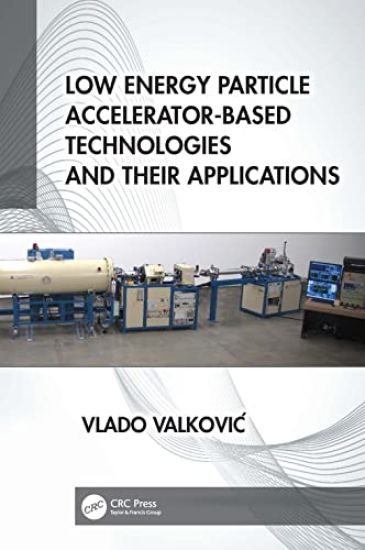
Low Energy Particle Accelerator-Based Technologies and Their Applications describes types of low energy accelerators, presents some of the main manufacturers, illustrates some of the accelerator laboratories around the globe and shows examples of successful transfers of accelerators to needed laboratories. Key Features: Presents new trends and the state of the art in a field that's growing Provides an overview of numerous applications of such accelerators in medicine, industry, earth sciences, nuclear non-proliferation and oil Fills a gap, with the author drawing on his own experiences with transporting such relatively large machines from one lab to the other that require a tremendous amount of planning, technical and engineering effortsThis is an essential reference for advanced students as well as for physicists, engineers and practitioners in accelerator science.About the Author Dr. Vladivoj (Vlado) Valkovic, a retired professor of physics, is a fellow of the American Physical Society and Institute of Physics (London). He has authored 22 books (from Trace Elements, Taylor & Francis, 1975, to Radioactivity in the Environment, Elsevier, 1st Edition 2001, 2nd Edition 2019), and more than 400 scientific and technical papers in the research areas of nuclear physics, applications of nuclear techniques to trace element analysis in biology, medicine and environmental research. He has lifelong experience in the study of nuclear reactions induced by 14 MeV neutrons. This research has been done through coordination and works on many national and international projects, including US-Croatia bilateral, NATO, IAEA, EU-FP5, FP6 and FP7 projects.Cover photo credit: 3SDH 1 MV Pelletron system with RF source and analysis endstation designed with the intended purpose of aiding in fusion research. It is capable of Ion Beam Analysis (IBA) techniques such as RBS, ERD, PIXE and NRA. Further detectors could be added to the endstation to allow for other techniques. Installed in Japan in 2014. Courtesy of National Electrostatics Corp.
Radioactivity in the Environment

Radioactivity in the Environment

Vlado Valkovic

Elsevier Science Ltd
2019
nidottu
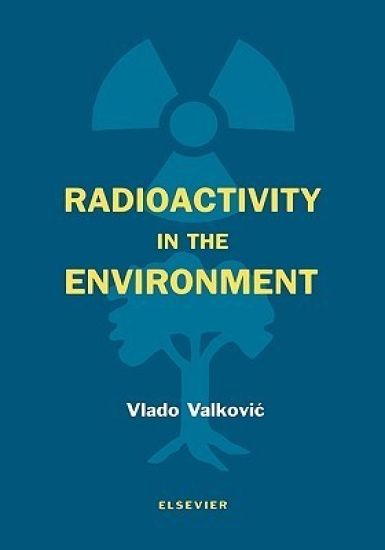
Radioactivity in the Environment, Second Edition, presents the facts on the presence of both natural and manmade radionuclides in the environment. Sources of ionizing radiation that can lead to human exposure are discussed, including natural sources, nuclear explosions, nuclear power generation, the use of radiation in medical, industrial and research purposes, and radiation-emitting consumer products. In this thoroughly updated edition, users will find new sections on developments in radioactive nuclides in nature and technologically modified exposure to natural radiation, new threats by terrorist individuals, groups and countries, changes to the status of nuclear power in the world, and more. Additional new sections cover radioisotopes in geo-prospecting and the oil industry, the use of radiation in environmental protection, detector types and detectors used for personal dosimetry, the "Dirty Bomb", the Fukushima accident, and North Korea testing sites and nuclear capabilities.
Radioactivity in the Environment

Radioactivity in the Environment

Vlado Valkovic

Elsevier Science Ltd
2000
sidottu
Numerous sources of ionizing radiation can lead to human exposure: natural sources, nuclear explosions, nuclear power generation, use of radiation in medical, industrial and research purposes, and radiation emitting consumer products. Before assessing the radiation dose to a population one requires a precise knowledge of the activity of a number of radionuclides. The basis for the assessment of the dose to a population from a release of radioactivity to the environment, the estimation of the potential clinical heath effects due to the dose received and, ultimately, the implementation of countermeasures to protect the population, is the measurement of radioactive contamination in the environment after the release.It is the purpose of this book to present the facts about the presence of radionuclides in the environment, natural and man made. There is no aspect of radioactivity, which has marked the passing century, not mentioned or discussed in this book.
X-Ray Spectroscopy in Environmental Sciences
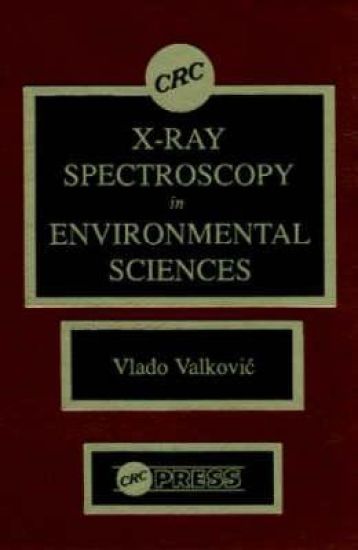
Applications of X-ray spectroscopy to air, water, and soil pollution studies are covered in detail in this essential publication. Air pollution can hardly be studied by any other method to such an extent. Much of our present knowledge in this field was obtained by laboratories using many of the same methods described in this work. A number of examples illustrate the contribution of X-ray emission spectroscopy and its capabilities in the area of water pollution. Examples of soil pollution studies by the use of biological monitors is also presented. A comprehensive reference list with the help of author and subject indices provides direction for further investigation.
Origins of Life

Origins of Life

Vlado Valkovic

Taylor Francis Ltd
2021
sidottu
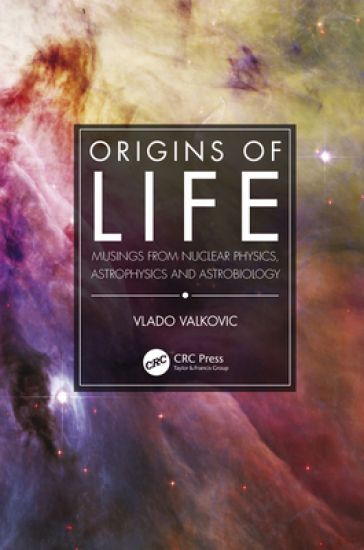
The primary purpose of this book is to prepare the ground for coordinated efforts aiming to answer the question: where and when life originated. The appearance of life involves three successive stages: i) the formation of chemical elements and their combination to simple molecules, which is the concern of physicists; ii) the evolution of organized complexity in biomolecules and their reactions, which falls within the field of chemistry; iii) the onset of Darwinian evolution after the appearance of the first cell-like structure, which is studied by biologists. This book focuses on the first two steps of this process with chapters exploring topics such as chemical element abundances; galaxies, galactic magnetic fields and cosmic rays; galactic chemical evolution. Key Features: Contains extensive lists of reference and additional reading. Includes new hypotheses concerning the origin of life. Combines consideration from nuclear physics, astrophysics, astro- and geochemistry.Despite its interdisciplinary nature, this book remains accessible to nonexperts, and would be a valuable companion for both experts and laypeople.
Origins of Life

Origins of Life

Vlado Valkovic

TAYLOR FRANCIS LTD
2024
nidottu
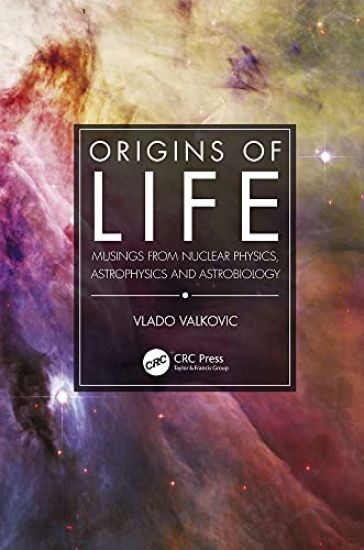
The primary purpose of this book is to prepare the ground for coordinated efforts aiming to answer the question: where and when life originated. The appearance of life involves three successive stages: i) the formation of chemical elements and their combination to simple molecules, which is the concern of physicists; ii) the evolution of organized complexity in biomolecules and their reactions, which falls within the field of chemistry; iii) the onset of Darwinian evolution after the appearance of the first cell-like structure, which is studied by biologists. This book focuses on the first two steps of this process with chapters exploring topics such as chemical element abundances; galaxies, galactic magnetic fields and cosmic rays; galactic chemical evolution. Key Features: Contains extensive lists of reference and additional reading. Includes new hypotheses concerning the origin of life. Combines consideration from nuclear physics, astrophysics, astro- and geochemistry.Despite its interdisciplinary nature, this book remains accessible to nonexperts, and would be a valuable companion for both experts and laypeople.
Low Energy Particle Accelerator-Based Technologies and Their Applications
Low Energy Particle Accelerator-Based Technologies and Their Applications describes types of low energy accelerators, presents some of the main manufacturers, illustrates some of the accelerator laboratories around the globe and shows examples of successful transfers of accelerators to needed laboratories. Key Features: Presents new trends and the state of the art in a field that's growing Provides an overview of numerous applications of such accelerators in medicine, industry, earth sciences, nuclear non-proliferation and oil Fills a gap, with the author drawing on his own experiences with transporting such relatively large machines from one lab to the other that require a tremendous amount of planning, technical and engineering effortsThis is an essential reference for advanced students as well as for physicists, engineers and practitioners in accelerator science.About the Author Dr. Vladivoj (Vlado) Valkovic, a retired professor of physics, is a fellow of the American Physical Society and Institute of Physics (London). He has authored 22 books (from Trace Elements, Taylor & Francis, 1975, to Radioactivity in the Environment, Elsevier, 1st Edition 2001, 2nd Edition 2019), and more than 400 scientific and technical papers in the research areas of nuclear physics, applications of nuclear techniques to trace element analysis in biology, medicine and environmental research. He has lifelong experience in the study of nuclear reactions induced by 14 MeV neutrons. This research has been done through coordination and works on many national and international projects, including US-Croatia bilateral, NATO, IAEA, EU-FP5, FP6 and FP7 projects.Cover photo credit: 3SDH 1 MV Pelletron system with RF source and analysis endstation designed with the intended purpose of aiding in fusion research. It is capable of Ion Beam Analysis (IBA) techniques such as RBS, ERD, PIXE and NRA. Further detectors could be added to the endstation to allow for other techniques. Installed in Japan in 2014. Courtesy of National Electrostatics Corp.