Kirjojen hintavertailu. Mukana 11 627 630 kirjaa ja 12 kauppaa.

Kirjahaku

Etsi kirjoja tekijän nimen, kirjan nimen tai ISBN:n perusteella.

8 kirjaa tekijältä W. B. Carnochan

Lemuel Gulliver's Mirror for Man

Lemuel Gulliver's Mirror for Man

W. B. Carnochan

University of California Press
2022
pokkari
Satire, long the most neglected of literary genres, has begun to claim its share of critical attention. And no book in the satiric tradition has generated more controversy that Gulliver's Travels; since it was first published it has been the subject of an often passionate debate about its moral and esthetic value--a debate inseparable from the question of what Swift was really saying about us all, especially in Book IV. Despite the running controversy, this is the first extended study of the Travels to appear in over forty years. It places Swift's masterpiece in the perspective of its own age, but also in relation to ours. First it reviews the philosophical doubts of the Augustans about the nature of man--doubts now recognized as a major force behind Swift's satire. It examines Augustan satiric theory and its Continental background; and, coming to the Travels, treats them as one instance of a conventional form, the "satire on man." On the vexed problem of Book IV it argues that alternative views of Swift as a savage misanthrope and as a benign humanist are both inadequate, and that as in Swift's irony generally, what seem to be contradictory truths are simultaneously in force. The study is concerned throughout with the way values operate in a satiric context. What, for example are we to make of Gulliver's pious attachment to "truth"-telling? In this connection, a speculative theory is proposed which relates Swift's satiric intentions to the epistemology of John Locke. Finally, an epilogue looks ahead to some modern writers--Lewis Carroll, Joyce, Vladimir Nabokov--whose habits throw a retrospective light on Swift's. The study, broadly speaking, is not only about Gulliver's Travels but also about the psychology of the satirist and about the mind's response, whether the Augustans' or our own, at moments of intellectual crisis. This title is part of UC Press's Voices Revived program, which commemorates University of California Press's mission to seek out and cultivate the brightest minds and give them voice, reach, and impact. Drawing on a backlist dating to 1893, Voices Revived makes high-quality, peer-reviewed scholarship accessible once again using print-on-demand technology. This title was originally published in 1968.

Lemuel Gulliver's Mirror for Man

Lemuel Gulliver's Mirror for Man

W. B. Carnochan

University of California Press
2022
sidottu
Satire, long the most neglected of literary genres, has begun to claim its share of critical attention. And no book in the satiric tradition has generated more controversy that Gulliver's Travels; since it was first published it has been the subject of an often passionate debate about its moral and esthetic value--a debate inseparable from the question of what Swift was really saying about us all, especially in Book IV. Despite the running controversy, this is the first extended study of the Travels to appear in over forty years. It places Swift's masterpiece in the perspective of its own age, but also in relation to ours. First it reviews the philosophical doubts of the Augustans about the nature of man--doubts now recognized as a major force behind Swift's satire. It examines Augustan satiric theory and its Continental background; and, coming to the Travels, treats them as one instance of a conventional form, the "satire on man." On the vexed problem of Book IV it argues that alternative views of Swift as a savage misanthrope and as a benign humanist are both inadequate, and that as in Swift's irony generally, what seem to be contradictory truths are simultaneously in force. The study is concerned throughout with the way values operate in a satiric context. What, for example are we to make of Gulliver's pious attachment to "truth"-telling? In this connection, a speculative theory is proposed which relates Swift's satiric intentions to the epistemology of John Locke. Finally, an epilogue looks ahead to some modern writers--Lewis Carroll, Joyce, Vladimir Nabokov--whose habits throw a retrospective light on Swift's. The study, broadly speaking, is not only about Gulliver's Travels but also about the psychology of the satirist and about the mind's response, whether the Augustans' or our own, at moments of intellectual crisis. This title is part of UC Press's Voices Revived program, which commemorates University of California Press's mission to seek out and cultivate the brightest minds and give them voice, reach, and impact. Drawing on a backlist dating to 1893, Voices Revived makes high-quality, peer-reviewed scholarship accessible once again using print-on-demand technology. This title was originally published in 1968.
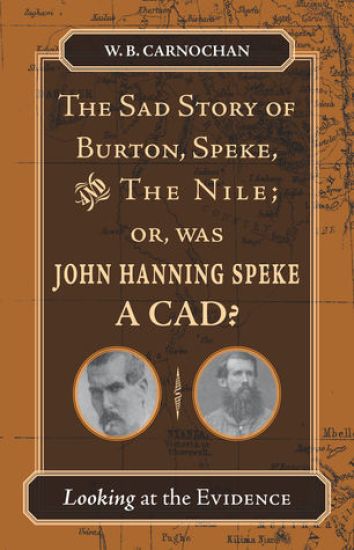
The Sad Story of Burton, Speke, and the Nile; or, Was John Hanning Speke a Cad?
This is a study of the famous controversy between Richard Burton and John Hanning Speke, fellow explorers who quarreled over Speke's claim to have discovered the source of the Nile during their African expedition in 1857-59. Speke died of a gunshot wound, probably accidental, the day before a scheduled debate with Burton in 1864. Burton has had the upper hand in subsequent accounts. Speke has been called a "cad." In light of new evidence and after a careful reading of duelling texts, Carnochan concludes that the case against Speke remains unproven-and that the story, as normally told, displays the inescapable uncertainty of historical narrative. All was fair in this love-war.
The Sad Story of Burton, Speke, and the Nile; or, Was John Hanning Speke a Cad?
This is a study of the famous controversy between Richard Burton and John Hanning Speke, fellow explorers who quarreled over Speke's claim to have discovered the source of the Nile during their African expedition in 1857-59. Speke died of a gunshot wound, probably accidental, the day before a scheduled debate with Burton in 1864. Burton has had the upper hand in subsequent accounts. Speke has been called a "cad." In light of new evidence and after a careful reading of duelling texts, Carnochan concludes that the case against Speke remains unproven-and that the story, as normally told, displays the inescapable uncertainty of historical narrative. All was fair in this love-war.
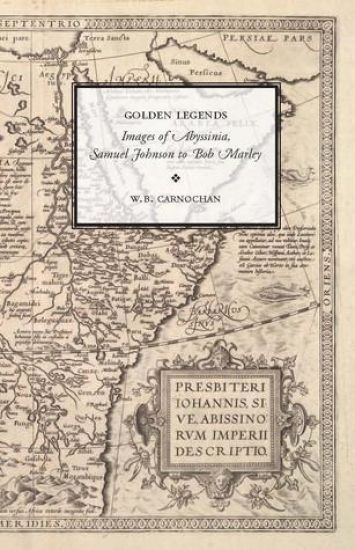
Golden Legends

Golden Legends

W. B. Carnochan

Stanford University Press
2008
sidottu
From the eighteenth century to the present, travellers, explorers, journalists, imaginative writers like Samuel Johnson, and legendary reggae musician Bob Marley have shared a fascination with Abyssinia. So did even earlier writers and mapmakers, who thought Abyssinia was the land of the mythical (and fabulously rich) Christian ruler, Prester John. The principal subject of this book is the allure of the exotic, as represented by Abyssinia, to the British imagination. In addition to Johnson and Marley, some others included are the eighteenth-century Scot James Bruce, nineteenth-century explorer Richard Burton, author Evelyn Waugh, Wilfred Thesiger (best known of twentieth-century British explorers), Sylvia Pankhurst (crusading journalist and daughter of the suffragist Emmeline Pankhurst), and the contemporary Irish traveller Dervla Murphy. The author also considers the beginnings of anthropology and the variations of quest narrative in modern travel writing.