Kirjojen hintavertailu. Mukana 11 244 527 kirjaa ja 12 kauppaa.

Kirjahaku

Etsi kirjoja tekijän nimen, kirjan nimen tai ISBN:n perusteella.

5 kirjaa tekijältä W. B. Patterson

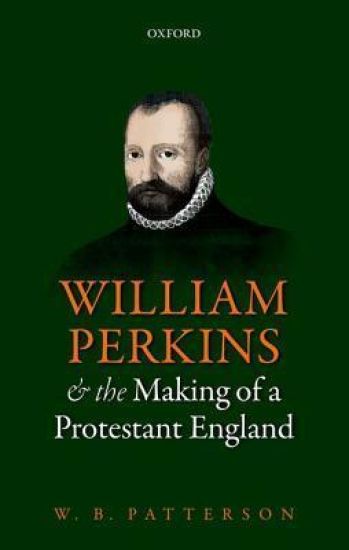
William Perkins and the Making of a Protestant England

William Perkins and the Making of a Protestant England

W. B. Patterson

Oxford University Press
2018
nidottu
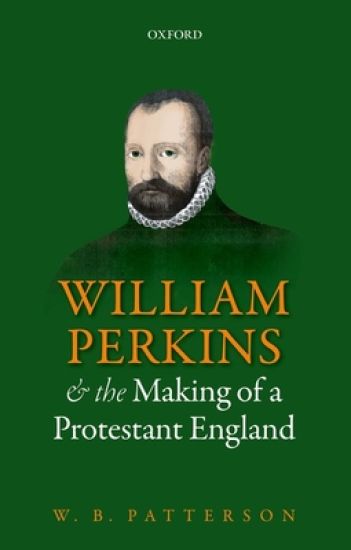
William Perkins and the Making of Protestant England presents a new interpretation of the theology and historical significance of William Perkins (1558-1602), a prominent Cambridge scholar and teacher during the reign of Queen Elizabeth I. Though often described as a Puritan, Perkins was in fact a prominent and effective apologist for the established church whose contributions to English religious thought had an immense influence on an English Protestant culture that endured well into modern times. The English Reformation is shown to be a part of the European-wide Reformation, and Perkins himself a leading Reformed theologian. In A Reformed Catholike (1597), Perkins distinguished the theology upheld in the English Church from that of the Roman Catholic Church, while at the same time showing the considerable extent to which the two churches shared common concerns. His books dealt extensively with the nature of salvation and the need to follow a moral way of life. Perkins wrote pioneering works on conscience and 'practical divinity'. In The Arte of Prophecying (1607), he provided preachers with a guidebook to the study of the Bible and their oral presentation of its teachings. He dealt boldly and in down-to-earth terms with the need to achieve social justice in an era of severe economic distress. Perkins is shown to have been instrumental to the making of a Protestant England, and to have contributed significantly to the development of the religious culture not only of Britain but also of a broad range of countries on the Continent.
Thomas Fuller

Thomas Fuller

W. B. Patterson

Oxford University Press
2018
sidottu
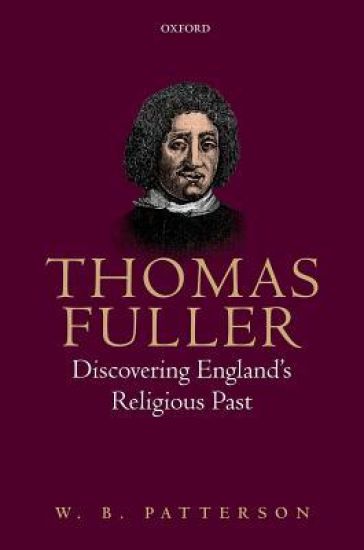
Long considered a highly distinctive English writer, Thomas Fuller (1608-1661) has not been treated as the significant historian he was. Fuller's The Church-History of Britain (1655) was the first comprehensive history of Christianity from antiquity to the upheavals of the Protestant and Catholic Reformations and the tumultuous events of the English civil wars. His numerous publications outside the genre of history--sermons, meditations, pamphlets on current thought and events--reflected and helped to shape public opinion during the revolutionary era in which he lived. Thomas Fuller: Discovering England's Religious Past highlights the fact that Fuller was a major contributor to the flowering of historical writing in early modern England. W. B. Patterson provides both a biography of Thomas Fuller's life and career in the midst of the most wrenching changes his country had ever experienced and a critical account of the origins, growth, and achievements of a new kind of history in England, a process to which he made a significant and original contribution. The volume begins with a substantial introduction dealing with memory, uses of the past, and the new history of England in the late sixteenth and early seventeenth centuries. Fuller was moved by the changes in Church and state that came during the civil wars that led to the trial and execution of King Charles I and to the Interregnum that followed. He sought to revive the memory of the English past, recalling the successes and failures of both distant and recent events. The book illuminates Fuller's focus on history as a means of understanding the present as well as the past, and on religion and its important place in English culture and society.
William Perkins and the Making of a Protestant England

William Perkins and the Making of a Protestant England

W. B. Patterson

Oxford University Press
2014
sidottu
William Perkins and the Making of Protestant England presents a new interpretation of the theology and historical significance of William Perkins (1558-1602), a prominent Cambridge scholar and teacher during the reign of Queen Elizabeth I. Though often described as a Puritan, Perkins was in fact a prominent and effective apologist for the established church whose contributions to English religious thought had an immense influence on an English Protestant culture that endured well into modern times. The English Reformation is shown to be a part of the European-wide Reformation, and Perkins himself a leading Reformed theologian. In A Reformed Catholike (1597), Perkins distinguished the theology upheld in the English Church from that of the Roman Catholic Church, while at the same time showing the considerable extent to which the two churches shared common concerns. His books dealt extensively with the nature of salvation and the need to follow a moral way of life. Perkins wrote pioneering works on conscience and 'practical divinity'. In The Arte of Prophecying (1607), he provided preachers with a guidebook to the study of the Bible and their oral presentation of its teachings. He dealt boldly and in down-to-earth terms with the need to achieve social justice in an era of severe economic distress. Perkins is shown to have been instrumental to the making of a Protestant England, and to have contributed significantly to the development of the religious culture not only of Britain but also of a broad range of countries on the Continent.
King James VI and I and the Reunion of Christendom

King James VI and I and the Reunion of Christendom

W. B. Patterson

Cambridge University Press
1998
sidottu
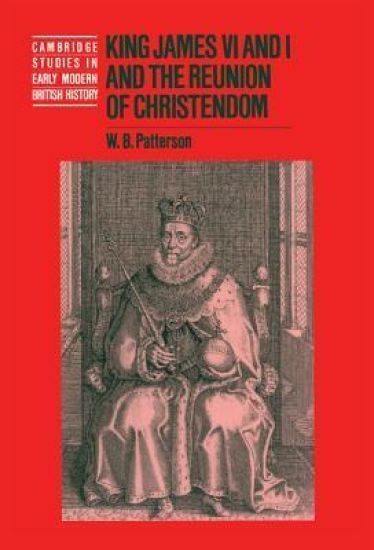
This book shows King James VI and I, king of Scotland and England, in an unaccustomed light. Long regarded as inept, pedantic, and whimsical, James is shown here as an astute and far-sighted statesman whose reign was focused on achieving a permanent union between his two kingdoms and a peaceful and stable community of nations throughout Europe.
King James VI and I and the Reunion of Christendom

King James VI and I and the Reunion of Christendom

W. B. Patterson

Cambridge University Press
2000
pokkari
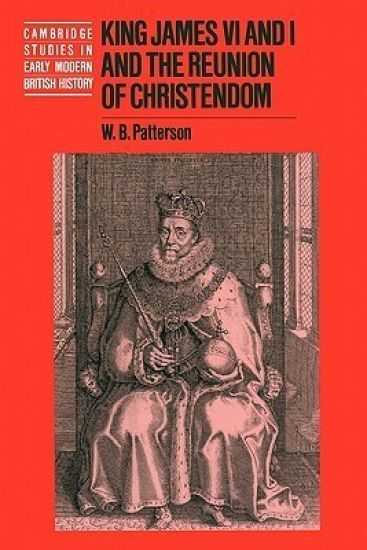
This book shows King James VI and I, king of Scotland and England, in an unaccustomed light. Long regarded as inept, pedantic, and whimsical, James is shown here as an astute and far-sighted statesman whose reign was focused on achieving a permanent union between his two kingdoms and a peaceful and stable community of nations throughout Europe.