Kirjojen hintavertailu. Mukana 11 717 486 kirjaa ja 12 kauppaa.

Kirjahaku

Etsi kirjoja tekijän nimen, kirjan nimen tai ISBN:n perusteella.

7 kirjaa tekijältä W. Barksdale Maynard

Walden Pond

Walden Pond

W. Barksdale Maynard

Oxford University Press Inc
2004
sidottu
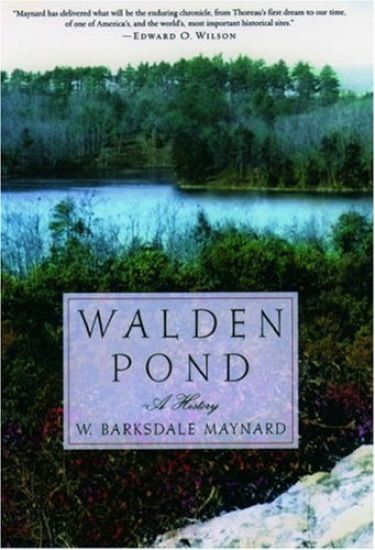
Perhaps no other natural setting has as much literary, spiritual, and environmental significance for Americans as Walden Pond. Some 700,000 people visit the pond annually, and countless others journey to Walden in their mind, to contemplate the man who lived there and what the place means to us today. Here is the first history of the Massachusetts pond Thoreau made famous 150 years ago. W. Barksdale Maynard offers a lively and comprehensive account of Walden Pond from the early nineteenth century to the present. From Thoreau's first visit at age 4 in 1821--"That woodland vision for a long time made the drapery of my dreams"--to present day efforts both to conserve the pond and allow public access, Maynard captures Walden Pond's history and the role it has played in social, cultural, literary, and environmental movements in America. Along the way Maynard details the geography of the pond; Thoreau's and Emerson's experiences of Walden over their lifetimes; the development of the cult of Thoreau and the growth of the pond as a site of literary and spiritual pilgrimages; rock star Don Henley's Walden Woods Project and the much publicized battle to protect the pond from developers in the 1980s; and the vitally important ecological symbol Walden Pond has become today. Exhaustively researched, vividly written, and illustrated with historical photographs and the most detailed maps of Thoreau country yet created, Walden Pond: A History reveals the many ways an ordinary pond has come to be such an extraordinarily inspiring symbol.

Walden Pond

Walden Pond

W. Barksdale Maynard

Oxford University Press Inc
2005
nidottu
Perhaps no other natural setting has as much literary, spiritual, and environmental significance for Americans as Walden Pond. Some 700,000 people visit the pond annually, and countless others journey to Walden in their mind, to contemplate the man who lived there and what the place means to us today. Here is the first history of the Massachusetts pond Thoreau made famous 150 years ago. W. Barksdale Maynard offers a lively and comprehensive account of Walden Pond from the early nineteenth century to the present. From Thoreau's first visit at age 4 in 1821--"That woodland vision for a long time made the drapery of my dreams"--to present day efforts both to conserve the pond and allow public access, Maynard captures Walden Pond's history and the role it has played in social, cultural, literary, and environmental movements in America. Along the way Maynard details the geography of the pond; Thoreau's and Emerson's experiences of Walden over their lifetimes; the development of the cult of Thoreau and the growth of the pond as a site of literary and spiritual pilgrimages; rock star Don Henley's Walden Woods Project and the much publicized battle to protect the pond from developers in the 1980s; and the vitally important ecological symbol Walden Pond has become today. Exhaustively researched, vividly written, and illustrated with historical photographs and the most detailed maps of Thoreau country yet created, Walden Pond: A History reveals the many ways an ordinary pond has come to be such an extraordinarily inspiring symbol.

Princeton

Princeton

W. Barksdale Maynard

Pennsylvania State University Press
2012
sidottu
Founded in 1746, Princeton is the fourth-oldest university in the country. It has been called “a national treasure” and is considered by many to be the loveliest campus in America. The very word “campus” debuted there in the eighteenth century, and over time, Princeton’s has ceaselessly evolved, passing through a series of distinct identities. Architectural critics have lavishly praised it, and careful stewardship by administrators and architects has preserved its appeal from generation to generation. Thousands of alumni return every year to march in the gaudy P-rade, which twists among the buildings in a veritable tour of campus history, from Nassau Hall (1756) to the twenty-first century’s Bloomberg Hall. And yet, if one wants to learn more—to go deeper than the beautiful surface and explore the history of these buildings or the complex development of the campus—it can be surprisingly hard to do so. Although Princeton resembles an outdoor museum, explanatory markers are few, written sources are out of print and scattered, and sophomore tour guides cheerfully mix fact and myth. No plaques help the curious visitor who wishes to follow in the footsteps of James Madison, Aaron Burr, James McCosh, Albert Einstein, John Foster Dulles, Bill Bradley, or Michelle Obama, and the stories of the buildings themselves are known to few. Princeton: America’s Campus offers a way in. Neither a straightforward architectural history nor a simple guidebook, it weaves social history and the built fabric into a biography of a great American place.To create this work, Barksdale Maynard conducted an ambitious series of interviews with major architects active at Princeton over the past forty years, including Robert Venturi, Denise Scott Brown, Charles Gwathmey, Michael Graves, Tod Williams, Hugh Hardy, Perry Morgan, Rodolfo Machado, Henry Cobb, Frances Halsband, Demetri Porphyrios, Harold Fredenburgh, Alan Chimacoff, Robert A. M. Stern, and Rafael Viñoly. He also interviewed educational leaders, including deans at Princeton, MIT, Cooper Union, and Yale, in addition to university presidents Goheen and Bowen of Princeton, Gutmann of Penn, and Rudenstine of Harvard. The book is thus not just a guide and a history; it is also an archive of the living recollections of the people who built Princeton’s majestic campus.
Princeton

Princeton

W. Barksdale Maynard

Pennsylvania State University Press
2012
pokkari
Founded in 1746, Princeton is the fourth-oldest university in the country. It has been called “a national treasure” and is considered by many to be the loveliest campus in America. The very word “campus” debuted there in the eighteenth century, and over time, Princeton’s has ceaselessly evolved, passing through a series of distinct identities. Architectural critics have lavishly praised it, and careful stewardship by administrators and architects has preserved its appeal from generation to generation. Thousands of alumni return every year to march in the gaudy P-rade, which twists among the buildings in a veritable tour of campus history, from Nassau Hall (1756) to the twenty-first century’s Bloomberg Hall. And yet, if one wants to learn more—to go deeper than the beautiful surface and explore the history of these buildings or the complex development of the campus—it can be surprisingly hard to do so. Although Princeton resembles an outdoor museum, explanatory markers are few, written sources are out of print and scattered, and sophomore tour guides cheerfully mix fact and myth. No plaques help the curious visitor who wishes to follow in the footsteps of James Madison, Aaron Burr, James McCosh, Albert Einstein, John Foster Dulles, Bill Bradley, or Michelle Obama, and the stories of the buildings themselves are known to few. Princeton: America’s Campus offers a way in. Neither a straightforward architectural history nor a simple guidebook, it weaves social history and the built fabric into a biography of a great American place.To create this work, Barksdale Maynard conducted an ambitious series of interviews with major architects active at Princeton over the past forty years, including Robert Venturi, Denise Scott Brown, Charles Gwathmey, Michael Graves, Tod Williams, Hugh Hardy, Perry Morgan, Rodolfo Machado, Henry Cobb, Frances Halsband, Demetri Porphyrios, Harold Fredenburgh, Alan Chimacoff, Robert A. M. Stern, and Rafael Viñoly. He also interviewed educational leaders, including deans at Princeton, MIT, Cooper Union, and Yale, in addition to university presidents Goheen and Bowen of Princeton, Gutmann of Penn, and Rudenstine of Harvard. The book is thus not just a guide and a history; it is also an archive of the living recollections of the people who built Princeton’s majestic campus.
Woodrow Wilson

Woodrow Wilson

W. Barksdale Maynard

Yale University Press
2013
pokkari
Before Woodrow Wilson became president of the United States, he spent 25 years at Princeton University, first as an undergraduate, then professor, and finally as president. His experiences at the helm of Princeton—where he enjoyed four productive years followed by four years of wrangling and intense acrimony—reveal much about the kind of man he was and how he earned a reputation as a fearless crusader. This engrossing book focuses on how Wilson’s Princeton years influenced the ideas and worldview he later applied in politics. His career in the White House, W. Barksdale Maynard shows, repeated with uncanny precision his Princeton experiences. The book recounts how Wilson’s inspired period of building, expansion, and intellectual fervor at Princeton deteriorated into one of the most famous academic disputes in American history. His battle to abolish elitist eating clubs and establish a more egalitarian system culminated in his defeat and dismissal, and the ruthlessness of his tactics alienated even longtime friends. So extreme was his behavior, some historians have wondered whether he suffered a stroke. Maynard sheds new light on this question, on Wilson’s temper, and on other aspects of his strengths and shortcomings. The book provides an unprecedented inside view of a hard-fighting president—a man who tried first to remake a university and then to remake the world.
The Brandywine

The Brandywine

W. Barksdale Maynard

University of Pennsylvania Press
2014
sidottu
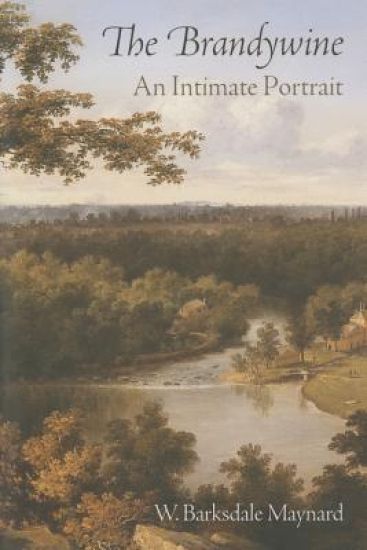
Nestled among picturesque rolling hills, the Brandywine River winds from southeastern Pennsylvania into Delaware. The Brandywine: An Intimate Portrait is the first book to trace the rich vein of history in the region, from original European settlement to the Battle of the Brandywine-the largest land battle of the Revolutionary War-to the establishment of First State National Monument on its banks in 2013. Acclaimed writer and Brandywine Valley resident W. Barksdale Maynard crafts a sweeping narrative about the men and women who shaped the Brandywine's history and culture. They include the du Ponts, who made their fortunes from gunpowder, and artist Howard Pyle, a native of the region, whose Brandywine School of American illustration took inspiration from the pastoral environment. Most famously, the Brandywine Valley is where N. C. and Andrew Wyeth, father and son, painted amid evocative landscapes for more than a century. With its unparalleled collection of museums and public gardens, including Longwood, Winterthur, and Hagley, the Brandywine continues to attract millions of visitors from around the world. Richly illustrated with seldom-seen historical photographs, paintings, and drawings, The Brandywine vividly captures the spirit of a storied region that has inspired generations.
Artists of Wyeth Country

Artists of Wyeth Country

W. Barksdale Maynard

Temple University Press,U.S.
2021
nidottu
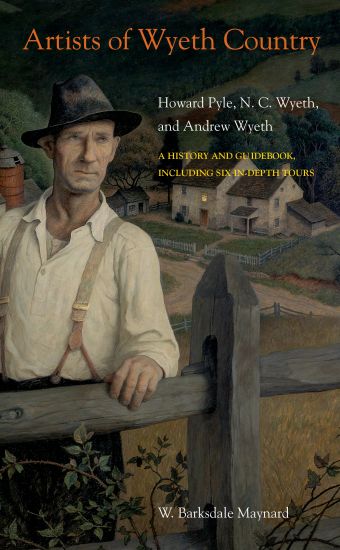
Few artists have ever been so beloved-or so controversial among art critics-as Andrew Wyeth. The groundbreaking book Artists of Wyeth Country presents an unauthorized and unbiased biographical portrait of Wyeth, based on interviews with family, friends, neighbors-even actress Eva Marie Saint. Journalist W. Barksdale Maynard shines new light on the reclusive artist, emphasizing Wyeth’s artistic debt to Howard Pyle as well as his surprising interest in surrealism. The book is filled with brand-new information and fresh interpretations. Artists of Wyeth Country also comprises the first-ever guidebook to the artistic world of Chadds Ford, Pennsylvania, center of the Brandywine Tradition begun by Howard Pyle. Six in-depth tours for walking or driving allow the reader to stand exactly where N. C. and Andrew Wyeth stood, as has never been fully possible before. As Maynard explains, Andrew Wyeth’s artistic process was influenced by Henry David Thoreau’s nature-worship and by his habit of walking daily. Newly commissioned maps, rare aerial photographs, as well as glorious full-color images and artworks of the landscape (many never reproduced before) illustrate the text. A fascinating exploration of the world of Andrew Wyeth, Artists of Wyeth Country is sure to become an essential new source for those who love American art as well as for admirers of the scenic landscapes of the Mid-Atlantic, of which the Brandywine Valley is an exceptional example. As a rare, unauthorized biography of Andrew Wyeth, it opens the door for an entirely new understanding of the American master.