Kirjojen hintavertailu. Mukana 12 366 592 kirjaa ja 12 kauppaa.

Kirjahaku

Etsi kirjoja tekijän nimen, kirjan nimen tai ISBN:n perusteella.

5 kirjaa tekijältä W. Bernard Carlson

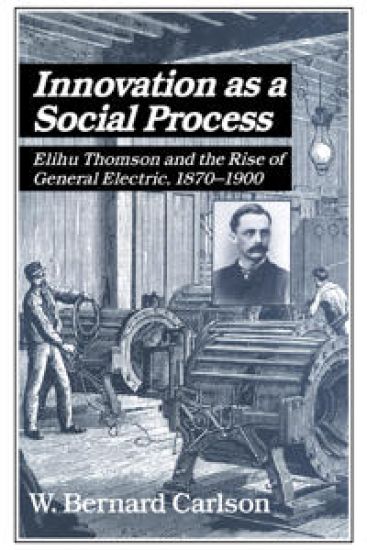
Innovation as a Social Process

Innovation as a Social Process

W. Bernard Carlson

Cambridge University Press
1991
sidottu
Elihu Thomson was a late-nineteenth-century American inventor who helped create the first electric lighting and power systems. One of the most prolific inventors in American history, Thomson was granted nearly 700 patents in a career spanning the 1880s to 1930s. His inventions included arc and incandescent lighting systems, alternating current motors and transformers, electric welding equipment, and the recording watt-meter, all of which were central in determining how electricity is used today. Thomson was educated in science, and he used a combination of scientific values and craft skills to develop his many inventions. Consequently, his career permits an investigation of how technologists employ craft knowledge to create new products. While employed by the General Electric Company, Thomson worked with other managers and entrepreneurs to link the hardware of electric lighting with business organization and marketing strategy. Thus, his story also traces the role of technology in the rise of a major American corporation.
Innovation as a Social Process

Innovation as a Social Process

W. Bernard Carlson

Cambridge University Press
2003
pokkari
Elihu Thomson was a late-nineteenth-century American inventor who helped create the first electric lighting and power systems. One of the most prolific inventors in American history, Thomson was granted nearly 700 patents in a career spanning the 1880s to 1930s. His inventions included arc and incandescent lighting systems, alternating current motors and transformers, electric welding equipment, and the recording watt-meter, all of which were central in determining how electricity is used today. Thomson was educated in science, and he used a combination of scientific values and craft skills to develop his many inventions. Consequently, his career permits an investigation of how technologists employ craft knowledge to create new products. While employed by the General Electric Company, Thomson worked with other managers and entrepreneurs to link the hardware of electric lighting with business organization and marketing strategy. Thus, his story also traces the role of technology in the rise of a major American corporation.
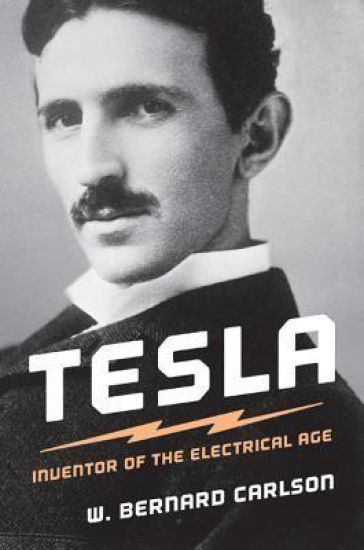
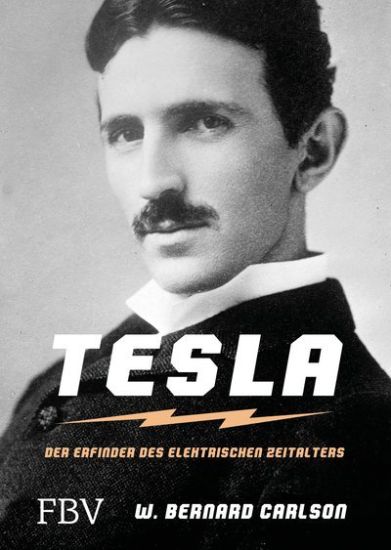
Tesla

Tesla

W. Bernard Carlson

Princeton University Press
2015
pokkari
Nikola Tesla was a major contributor to the electrical revolution that transformed daily life at the turn of the twentieth century. His inventions, patents, and theoretical work formed the basis of modern AC electricity, and contributed to the development of radio and television. Like his competitor Thomas Edison, Tesla was one of America's first celebrity scientists, enjoying the company of New York high society and dazzling the likes of Mark Twain with his electrical demonstrations. An astute self-promoter and gifted showman, he cultivated a public image of the eccentric genius. Even at the end of his life when he was living in poverty, Tesla still attracted reporters to his annual birthday interview, regaling them with claims that he had invented a particle-beam weapon capable of bringing down enemy aircraft. Plenty of biographies glamorize Tesla and his eccentricities, but until now none has carefully examined what, how, and why he invented. In this groundbreaking book, W. Bernard Carlson demystifies the legendary inventor, placing him within the cultural and technological context of his time, and focusing on his inventions themselves as well as the creation and maintenance of his celebrity. Drawing on original documents from Tesla's private and public life, Carlson shows how he was an "idealist" inventor who sought the perfect experimental realization of a great idea or principle, and who skillfully sold his inventions to the public through mythmaking and illusion. This major biography sheds new light on Tesla's visionary approach to invention and the business strategies behind his most important technological breakthroughs.
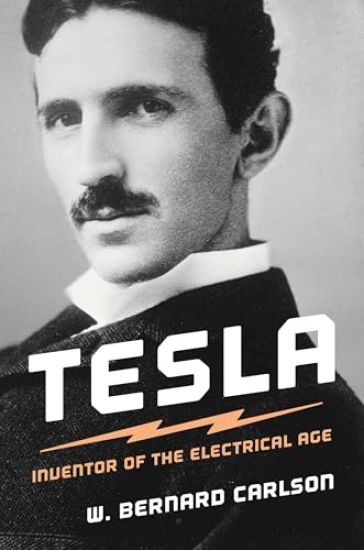
Tesla

Tesla

W. Bernard Carlson

PRINCETON UNIVERSITY PRESS
2026
pokkari
“The gold standard for Tesla biography.”—Science “Superb.”—Nature The definitive account of Tesla's life and work Nikola Tesla was a major contributor to the electrical revolution that transformed daily life at the turn of the twentieth century. His inventions, patents, and theoretical work formed the basis of modern AC electricity, and contributed to the development of radio and television. Like his competitor Thomas Edison, Tesla was one of America's first celebrity scientists, enjoying the company of New York high society and dazzling the likes of Mark Twain with his electrical demonstrations. An astute self-promoter and gifted showman, he cultivated a public image of the eccentric genius. Even at the end of his life when he was living in poverty, Tesla still attracted reporters to his annual birthday interview, regaling them with claims that he had invented a particle-beam weapon capable of bringing down enemy aircraft. Plenty of biographies glamorize Tesla and his eccentricities, but until now none has carefully examined what, how, and why he invented. In this groundbreaking book, W. Bernard Carlson demystifies the legendary inventor, placing him within the cultural and technological context of his time, and focusing on his inventions themselves as well as the creation and maintenance of his celebrity. Drawing on original documents from Tesla's private and public life, Carlson shows how he was an "idealist" inventor who sought the perfect experimental realization of a great idea or principle, and who skillfully sold his inventions to the public through mythmaking and illusion. This major biography sheds new light on Tesla's visionary approach to invention and the business strategies behind his most important technological breakthroughs.