Kirjojen hintavertailu. Mukana 12 595 353 kirjaa ja 12 kauppaa.

Kirjahaku

Etsi kirjoja tekijän nimen, kirjan nimen tai ISBN:n perusteella.

4 kirjaa tekijältä W. Gordon Campbell

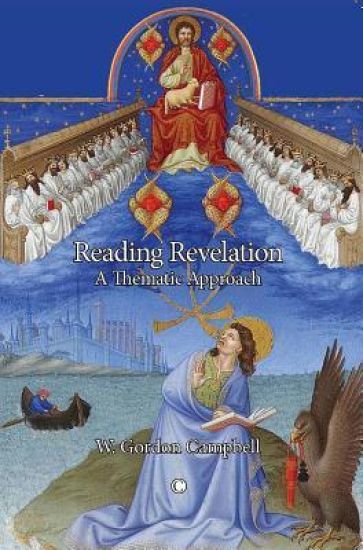
Reading Revelation

Reading Revelation

W. Gordon Campbell

James Clarke Co Ltd
2012
nidottu
The Book of Revelation can be read in various ways. Where interpretation opts not to venture beyond Revelation or approach the book as a forecast of end-time events, it typically favours either going behind the text, in search­­­ of a socio-historical context of origin to which it might refer, or else standing in front of the text and investigating the book's reception history, or its present relevance and impact. Comparatively little interpretative work has been undertaken inside the text, exploring the mechanics of how Revelation 'works', still less how its complex parts might fit together into a meaningful whole. Gordon Campbell considers Revelation to be a coherent narrative composition that draws its hearer or reader into its text-world. In Reading Revelation: A Thematic Approach, Campbell gives an innovative account of Revelation's sophisticated thematic content. Mindful of Revelation's narrative verve, or its architecture en mouvement (as Jacques Ellul once put it), Campbell plots a series of thematic trajectories through the book. On this reading, parody and parallelism fundamentally shape the whole narrative. As a first-ever integrated account of Revelation's macro-themes, Reading Revelation makes an important contribution to Revelation scholarship. In its light, the book may justifiably be seen as the 'crowning achievement' of the Scriptures.
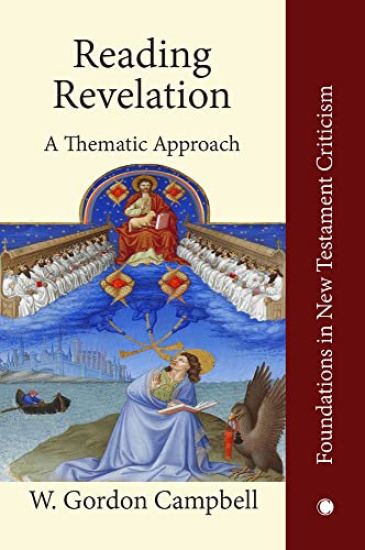
Reading Revelation

Reading Revelation

W. Gordon Campbell

JAMES CLARKE CO LTD
2022
sidottu
The Book of Revelation can be read in various ways. Where interpretation opts not to venture beyond Revelation or approach the book as a forecast of end-time events, it typically favours either going behind the text, in search­­­ of a socio-historical context of origin to which it might refer, or else standing in front of the text and investigating the book's reception history, or its present relevance and impact. Comparatively little interpretative work has been undertaken inside the text, exploring the mechanics of how Revelation 'works', still less how its complex parts might fit together into a meaningful whole. Gordon Campbell considers Revelation to be a coherent narrative composition that draws its hearer or reader into its text-world. In Reading Revelation: A Thematic Approach, Campbell gives an innovative account of Revelation's sophisticated thematic content. Mindful of Revelation's narrative verve, or its architecture en mouvement (as Jacques Ellul once put it), Campbell plots a series of thematic trajectories through the book. On this reading, parody and parallelism fundamentally shape the whole narrative. As a first-ever integrated account of Revelation's macro-themes, Reading Revelation makes an important contribution to Revelation scholarship. In its light, the book may justifiably be seen as the 'crowning achievement' of the Scriptures.
Martin Luther's Bible

Martin Luther's Bible

W. Gordon Campbell

JAMES CLARKE CO LTD
2024
sidottu
Martin Luther's 1522 September Testament marked a watershed in Bible translation, making Scripture available to ordinary German people in their own tongue and sparking similar efforts across Europe. Building on the nascent trend of vernacular Bible translations in the early sixteenth century, Luther's translation quickly became definitive linguistically, theologically and culturally, especially once the complete Bible was published in 1534, with production of New Testaments and Bibles in French, English and other languages keeping pace. Luther and his associates constantly revised and improved their methodology for translation and interpretation over a quarter-century of Bible publishing - efforts that helped shape Bible translation, reading and exegesis, for scholars and ordinary Christians alike, well beyond his lifetime. Martin Luther's Bible commemorates the September Testament, exploring the Wittenberg Bible project in its context and tracing aspects of its legacy in Europe and the wider world, from the sixteenth century to the present day. Essays from a range of leading experts draw upon the 2022 Martin Luther: Bible Translator, Illustrator and Publisher International Conference held at Union Theological College, Belfast. Together, they provide critical new insights into the linguistic, hermeneutical and theological history and influence of this landmark text.
Martin Luther's Bible

Martin Luther's Bible

W. Gordon Campbell

JAMES CLARKE CO LTD
2024
nidottu
Martin Luther's 1522 September Testament marked a watershed in Bible translation, making Scripture available to ordinary German people in their own tongue and sparking similar efforts across Europe. Building on the nascent trend of vernacular Bible translations in the early sixteenth century, Luther's translation quickly became definitive linguistically, theologically and culturally, especially once the complete Bible was published in 1534, with production of New Testaments and Bibles in French, English and other languages keeping pace. Luther and his associates constantly revised and improved their methodology for translation and interpretation over a quarter-century of Bible publishing - efforts that helped shape Bible translation, reading and exegesis, for scholars and ordinary Christians alike, well beyond his lifetime. Martin Luther's Bible commemorates the September Testament, exploring the Wittenberg Bible project in its context and tracing aspects of its legacy in Europe and the wider world, from the sixteenth century to the present day. Essays from a range of leading experts draw upon the 2022 Martin Luther: Bible Translator, Illustrator and Publisher International Conference held at Union Theological College, Belfast. Together, they provide critical new insights into the linguistic, hermeneutical and theological history and influence of this landmark text.