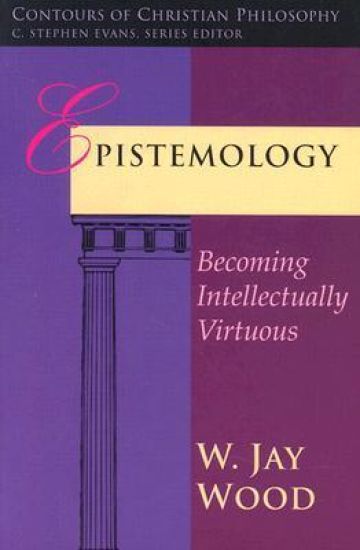
How do we know what we know? What have wisdom, prudence and studiousness to do with justifying our beliefs? Jay Wood begins this introduction to epistemology by taking an extended look at the idea of knowing within the context of the intellectual virtues. He then surveys current views of foundationalism, epistemic justification and reliabilism. Finally he examines the relationship of epistemology to religious belief, and the role of emotions and virtues in proper cognitive functioningProfessors will find this text, with its many examples drawn from everyday student experience, especially useful in introducing students to the formal study of epistemology.
The first part of the book addresses the epistemological concerns, focusing on arguments for and against the claim that theism is rationally justifiable. These include discussion of cosmological arguments, the ontological argument, the argument from design, and the moral argument for God's existence. Metaphysical questions about God's nature, in particular God's knowledge and power, and the nature of religious experience constitute the second part of the book. Epistemological and metaphysical questions are shown to be related since, if the concept of a God perfect in wisdom, power, and goodness is incoherent, it cannot be reasonable to believe that God exists. Throughout his discussion Wood draws on the most recent writings in the field as well as classic arguments and offers readers a clear, balanced, and incisive analysis of the core philosophical arguments for the existence of God. The book equips readers with the necessary understanding of issues in natural theology that will enable them to tackle more specialized and complex questions in the philosophy of religion.
Out of the ferment of recent debates about the intellectual virtues, Roberts and Wood have developed an approach they call 'regulative epistemology'. This is partly a return to classical and medieval traditions, partly in the spirit of Locke's and Descartes's concern for intellectual formation, partly an exploration of connections between epistemology and ethics, and partly an approach that has never been tried before. Standing on the shoulders of recent epistemologists - including William Alston, Alvin Plantinga, Ernest Sosa, and Linda Zagzebski - Roberts and Wood pursue epistemological questions by looking closely and deeply at particular traits of intellectual character such as love of knowledge, intellectual autonomy, intellectual generosity, and intellectual humility. Central to their vision is an account of intellectual goods that includes not just knowledge as properly grounded belief, but understanding and personal acquaintance, acquired and shared through the many social practices of actual intellectual life. This approach to intellectual virtue infuses the discipline of epistemology with new life, and makes it interesting to people outside the circle of professional epistemologists. It is epistemology for the whole intellectual community, as Roberts and Wood carefully sketch the ways in which virtues that would have been categorized earlier as moral make for agents who can better acquire, refine, and communicate important kinds of knowledge.
Out of the ferment of recent debates about the intellectual virtues, Roberts and Wood have developed an approach they call 'regulative epistemology'. This is partly a return to classical and medieval traditions, partly in the spirit of Locke's and Descartes's concern for intellectual formation, partly an exploration of connections between epistemology and ethics, and partly an approach that has never been tried before. Standing on the shoulders of recent epistemologists - including William Alston, Alvin Plantinga, Ernest Sosa, and Linda Zagzebski - Roberts and Wood pursue epistemological questions by looking closely and deeply at particular traits of intellectual character such as love of knowledge, intellectual autonomy, intellectual generosity, and intellectual humility. Central to their vision is an account of intellectual goods that includes not just knowledge as properly grounded belief, but understanding and personal acquaintance, acquired and shared through the many social practices of actual intellectual life. This approach to intellectual virtue infuses the discipline of epistemology with new life, and makes it interesting to people outside the circle of professional epistemologists. It is epistemology for the whole intellectual community, as Roberts and Wood carefully sketch the ways in which virtues that would have been categorized earlier as moral make for agents who can better acquire, refine, and communicate important kinds of knowledge.