Kirjojen hintavertailu. Mukana 11 244 527 kirjaa ja 12 kauppaa.

Kirjahaku

Etsi kirjoja tekijän nimen, kirjan nimen tai ISBN:n perusteella.

3 kirjaa tekijältä W. Puck Brecher

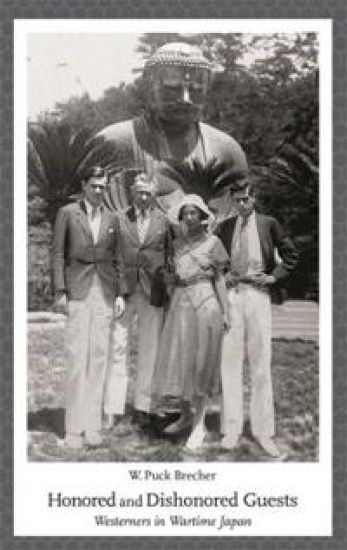
Honored and Dishonored Guests

Honored and Dishonored Guests

W. Puck Brecher

Harvard University, Asia Center
2021
nidottu
The brutality and racial hatred exhibited by Japan’s military during the Pacific War piqued outrage in the West and fanned resentments throughout Asia. Public understanding of Japan’s wartime atrocities, however, often fails to differentiate the racial agendas of its military and government elites from the racial values held by the Japanese people. While not denying brutalities committed by the Japanese military, Honored and Dishonored Guests overturns these standard narratives and demonstrates rather that Japan’s racial attitudes during wartime are more accurately discerned in the treatment of Western civilians living in Japan than the experiences of enemy POWs.The book chronicles Western communities in wartime Japan, using this body of experiences to reconsider allegations of Japanese racism and racial hatred. Its bold thesis is borne out by a broad mosaic of stories from dozens of foreign families and individuals who variously endured police harassment, suspicion, relocation, starvation, denaturalization, internment, and torture, as well as extraordinary acts of charity. The book’s account of stranded Westerners—from Tokyo, Yokohama, and Kobe to the mountain resorts of Karuizawa and Hakone—yields a unique interpretation of race relations and wartime life in Japan.
Honored and Dishonored Guests

Honored and Dishonored Guests

W. Puck Brecher

Harvard University, Asia Center
2017
sidottu
The brutality and racial hatred exhibited by Japan’s military during the Pacific War piqued outrage in the West and fanned resentments throughout Asia. Public understanding of Japan’s wartime atrocities, however, often fails to differentiate the racial agendas of its military and government elites from the racial values held by the Japanese people. While not denying brutalities committed by the Japanese military, Honored and Dishonored Guests overturns these standard narratives and demonstrates rather that Japan’s racial attitudes during wartime are more accurately discerned in the treatment of Western civilians living in Japan than the experiences of enemy POWs.The book chronicles Western communities in wartime Japan, using this body of experiences to reconsider allegations of Japanese racism and racial hatred. Its bold thesis is borne out by a broad mosaic of stories from dozens of foreign families and individuals who variously endured police harassment, suspicion, relocation, starvation, denaturalization, internment, and torture, as well as extraordinary acts of charity. The book’s account of stranded Westerners—from Tokyo, Yokohama, and Kobe to the mountain resorts of Karuizawa and Hakone—yields a unique interpretation of race relations and wartime life in Japan.
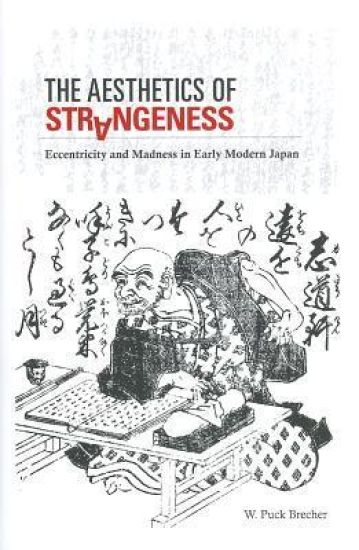
The Aesthetics of Strangeness

The Aesthetics of Strangeness

W. Puck Brecher

University of Hawai'i Press
2013
sidottu
Eccentric artists are “the vagaries of humanity” that inhabit the deviant underside of Japanese society: This was the conclusion drawn by pre–World War II commentators on most early modern Japanese artists. Postwar scholarship, as it searched for evidence of Japan’s modern roots, concluded the opposite: The eccentric, mad, and strange are moral exemplars, paragons of virtue, and shining hallmarks of modern consciousness. In recent years, the pendulum has swung again, this time in favour of viewing these oddballs as failures and dropouts without lasting cultural significance. This work corrects the disciplinary (and exclusionary) nature of such interpretations by reconsidering the sudden and dramatic emergence of aesthetic eccentricity during the Edo period (1600–1868). It explains how, throughout the period, eccentricity (ki) and madness (ky?) developed and proliferated as subcultural aesthetics. By excavating several generations of early modern Japan’s eccentric artists, it demonstrates that individualism and strangeness carried considerable moral and cultural value. Indeed, Edo society fetishized various marginal personae—the recluse, the loser, the depraved, the outsider, the saint, the mad genius—as local heroes and paragons of moral virtue. This book concludes that a confluence of intellectual, aesthetic, and social conditions enabled multiple concurrent heterodoxies to crystallize around strangeness as a prominent cultural force in Japanese society. A study of impressive historical and disciplinary breadth, The Aesthetics of Strangeness also makes extensive use of primary sources, many previously overlooked in existing English scholarship. Its coverage of the entire Edo period and engagement with both Chinese and native Japanese traditions reinterprets Edo-period tastes and perceptions of normalcy. By wedding art history to intellectual history, literature, aesthetics, and cultural practice, W. Puck Brecher strives for a broadly interdisciplinary perspective on this topic. Readers will discover that the individuals that form the backbone of his study lend credence to a new interpretation of Edo-period culture: a growing valuation of eccentricity within artistic and intellectual circles that exerted indelible impacts on mainstream society. The Aesthetics of Strangeness demystifies this emergent paradigm by illuminating the conditions and tensions under which certain rubrics of strangeness— ki and ky? particularly—were appointed as aesthetic criteria. Its revision of early modern Japanese culture constitutes an important contribution to the field.