Kirjojen hintavertailu. Mukana 11 342 296 kirjaa ja 12 kauppaa.

Kirjahaku

Etsi kirjoja tekijän nimen, kirjan nimen tai ISBN:n perusteella.

15 kirjaa tekijältä W.H. Auden

W. H. Auden

W. H. Auden

W.H. Auden

Faber Faber
2005
nidottu
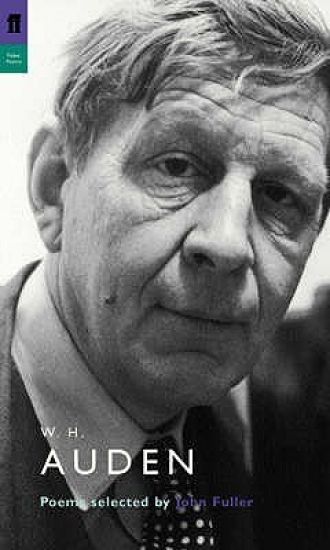
W. H. Auden was born in York in 1907. His first full-length collection, Poems, was published by T. S. Eliot at Faber and Faber in 1930. The many volumes he published thereafter included poetry, plays, essays and libretti, and his ceaseless experimentation, consummate craftsmanship and originality established him as one of the most influential poets of the twentieth century. He died in 1973.
Collected Auden

Collected Auden

W.H. Auden

Faber Faber
2004
pokkari
This collection presents all the poems Auden wished to preserve, in the texts that received his final approval. It included the full contents of his previous collected editions along with all the later volumes of his shorter poems. Together, these works display the astonishing range of Auden's voice and the breadth of his concerns, his deep knowledge of the traditions he inherited, and his ability to recast those traditions in modern times.
Collected Shorter Poems 1927-1957
W. H. Auden was once described as the Picasso of modern poetry - a tribute to his ceaseless experimentation with form and subject matter. Beginning with Anglo-Saxon poetry and ending with an Horatian expansiveness and conversational sweep, this volume is essential reading for anyone seriously interested in modern poetry after T. S. Eliot.In his lifetime a controversial, outspoken, yet enigmatic, writer, Auden has gradually come to seem an intimate poet, as we have learned to read him correctly. This volume is the best possible introduction to his consummate craftsmanship and his unparalleled originality which made him the master-poet of his generation.
Look, Stranger!

Look, Stranger!

W.H. Auden

Faber Faber
2001
nidottu
Faber are pleased to announce the relaunch of the poetry list - starting in Spring 2001 and continuing, with publication dates each month, for the rest of the year. This will involve a new jacket design recalling the typographic virtues of the classic Faber poetry covers, connecting the backlist and the new titles within a single embracing cover solution. A major reissue program is scheduled, to include classic individual collections from each decade, some of which have long been unavailable: Wallace Stevens's Harmonium and Ezra Pound's Personae from the 1920s; W.H. Auden's Poems (1930); Robert Lowell's Life Studies from the 1950s; John Berryman's 77 Dream Songs and Philip Larkin's The Whitsun Weddings from the 1960s; Ted Hughes's Gaudete and Seamus Heaney's Field Work from the 1970s; Michael Hofmann's Acrimony and Douglas Dunn's Elegies from the 1980s. Timed to celebrate publication of Seamus Heaney's new collection, Electric Light, the relaunch is intended to re-emphasize the predominance of Faber Poetry, and to celebrate a series which has played a shaping role in the history of modern poetry since its inception in the 1920s.
Another Time

Another Time

W.H. Auden

Faber Faber
2007
nidottu
Another Time was the first volume that Auden published after his departure to America with Christopher Isherwood in January 1939. It was dedicated to Chester Kallman. The poems, some of which date from the early thirties, are about people, places and the intellectual climate of the times, and they show greater variety of tone and technique than in any previous book of Auden's. Some of his most famous and often quoted (or misquoted) lines appear in their original form, including the text of two poems in particular - 'Spain 1937' and 'September 1,1939' - that he later altered or repudiated.'[He] has made himself into a kind of unofficial poet laureate. If I am bombed I hope he will write a few sapphics about me.' Stephen Spender, 1941
Selected Poems

Selected Poems

W.H. Auden

Faber Faber
2010
pokkari
Edward Mendelson has significantly expanded his authoritative, chronological ordered edition of Auden's Selected Poems (first published in 1979), adding twenty items to the hundred in the original edition, and broadening the focus to reflect the wealth of forms, the rhetorical and tonal range, and the variousness of content in Auden's poetry, in the confines of one volume. In particular, there are newly included examples of Auden's mastery of light verse: the self-descriptive sequence of haiku called 'Profiles', the barbed wartime quatrains of 'Leap Before You Look', or 'Funeral Blues' itself. Also included are brief notes explaining references that may have become obscure, and a revised introduction drawing on recent additions to Auden scholarship.
The Selected Writings of Sydney Smith
'He is a very clever fellow, but he will never be a bishop.' George III'A more profligate parson I never met.' George IV'I sat next to Sydney Smith, who was delightful ... I don't remember a more agreeable party.' Benjamin Disraeli'I wish you would tell Mr Sydney Smith that of all the men I ever heard of and never saw, I have the greatest curiosity to see ... and to know him.' Charles DickensHow one agrees with Dickens. Without doubt, Sydney Smith was the most famous wit of his generation. But there was more to him than that, he was an outstanding representative of the English liberal tradition.Starting as an impoverished village curate he went to Edinburgh as a tutor, and co-founded the Edinburgh Review, the first major nineteenth-century periodical. Happily married, he moved in 1803 to London, where he was introduced into the Holland House circle - of which he quickly became an admired and popular member - but at the age of thirty-eight a Tory government banished him to a village parsonage. There he became 'one of the best country vicars of whom there is a record', and after his two chief causes - the Catholic Emancipation Act of 1829 and the Reform Bill of 1832 - triumphed, he was rewarded by a canonry of St. Paul's.This generous selection of his writings gives the full flavour of his mind and intellectual personality. In a characteristically stimulating introduction in which he discusses Sydney Smith both as an individual and as a shining exemplar of the liberal mind, W. H. Auden places him with Jonathan Swift and Bernard Shaw among the few polemic authors 'who must be ranked very high by any literary standard.'As Macaulay said he was 'The Smith of Smiths'.
Nineteenth-Century Minor Poets

Nineteenth-Century Minor Poets

W.H. Auden

Faber Faber
2010
nidottu
Who is a major, who is a minor poet? Inevitably, in his introduction, W. H. Auden offers a stimulating rationale for distinguishing between the two. To paraphrase him, one cannot say that a major poet always writes better poems than a minor poet. Nor is it a matter of pleasure the poet gives an individual reader - Auden himself confesses to not liking Shelley but being 'delighted by every line of William Barnes', but not doubting for a moment the former is a major poet and the latter a minor one. One does not always enjoy what one most admires. Yet everyone is to some extent familiar with the work of the major nineteenth century poets and few have had the chance to read the patriotic poems of Thomas Campbell, several of which rank among the finest such poems in English literature, the songs of Tom Moore or his political and social satires, the humorous verse of Thomas Hood, the superb lyrics of Thomas Lovell Beddoes, the odes of Coventry Patmore, the satirical poems of Samuel Butler. These poets and many more are discerningly represented in this anthology which puts into the limelight every genuine minor poet (they must have written at least one good poem) born between 1770 and 1870.
Collected Longer Poems

Collected Longer Poems

W.H. Auden

Faber Faber
2012
nidottu
First published in 1968, this companion volume to the Collected Shorter Poems was compiled by W.H. Auden to bring together six of his longer poetic works, originally published between 1930 and 1947. Auden was one of the modern masters of the extended poem, and these works are among his most enduring achievements, both for their technical virtuosity and for the emotional and intellectual precision with which they dissected the malaise and turmoil of their age.Collected Longer Poems includes Paid on Both Sides, Letter to Lord Byron, For the Time Being, The Sea and the Mirror, and The Age of Anxiety.
The Dyer's Hand

The Dyer's Hand

W.H. Auden

Faber Faber
2013
pokkari
In the early 1950s Auden began planning a prose volume that would bring together some of his published essays, lectures, and reviews, together with newly-written notes and aphorisms. In 1956 he was elected Professor of Poetry at Oxford, and The Dyer's Hand appeared in 1962, combining earlier material with revised versions of many of his Oxford lectures: The result is one of Auden's most original works, his only book of prose devised as a single cohesive work about disparate subjects, and containing - as he remarked at the time - 'all the autobiography I am willing to make public'.'Speaking for myself, the questions which interest me most when reading a poem are two. The first is technical: "Here is a verbal contraption. How does it work?" The second is, in the broadest sense, moral: "What kind of a guy inhabits this poem? What is his notion of the good life or the good place? His notion of the Evil One? What does he conceal from the reader? What does he conceal even from himself?" - W. H. Auden (inaugural lecture as Professor of Poetry at Oxford, June 1956)
Poems (1930)

Poems (1930)

W.H. Auden

Faber Faber
2013
nidottu
Auden's electrifying, enigmatic and extraordinarily influential debut collection was published by Faber in 1930, and simply entitled Poems. For the second edition (1933) he omitted seven items and added new poems in their place. Available again for the first time since 1950, this reissue follows the text of the second edition.
The Orators

The Orators

W.H. Auden

Faber Faber
2015
pokkari
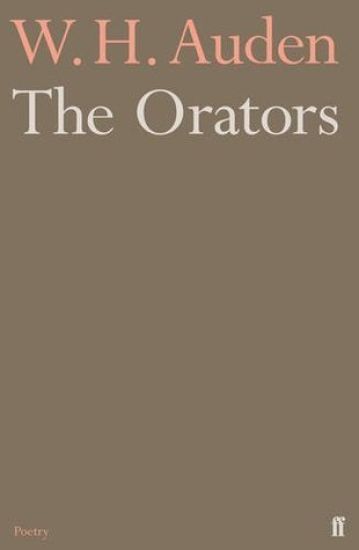
When The Orators was originally published in 1932 it was described by Poetry Review as 'something as important as the appearance of Mr Eliot's poems fifteen years ago'. A long poem written in both prose and verse, it was a powerful addition to the canon of modernist poetry.
Another Time

Another Time

W.H. Auden

Faber Faber
2019
sidottu
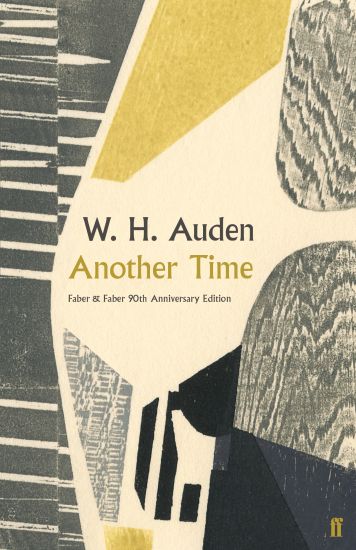
Another Time was the first volume that Auden published after his departure to America with Christopher Isherwood in January 1939. It was dedicated to Chester Kallman. The poems, some of which date from the early thirties, are about people, places and the intellectual climate of the times, and they show greater variety of tone and technique than in any previous book of Auden's. Some of his most famous and often quoted (or misquoted) lines appear in their original form, including the text of two poems in particular - 'Spain 1937' and 'September 1,1939' - that he later altered or repudiated.This beautifully designed edition forms part of a series of ten titles celebrating Faber's publishing over the decades.
Stop All the Clocks

Stop All the Clocks

W.H. Auden

Faber Faber
2025
sidottu
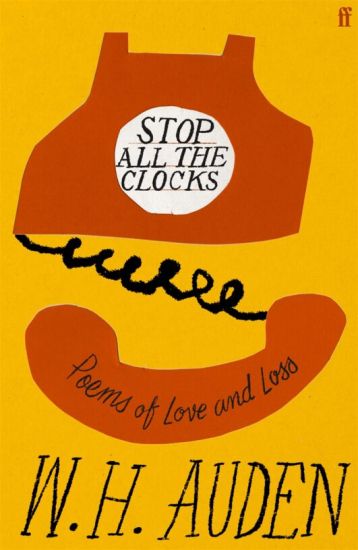
Stop All the Clocks presents a selection of his best known, most lucid poems, poems that pitch human frailty against a persisting desire for love and belonging. Here are the anxieties that beset our waking and sleeping hours: the delirium of desire, the torture of unrequited love, the trauma of loss and displacement.