Kirjojen hintavertailu. Mukana 11 627 220 kirjaa ja 12 kauppaa.

Kirjahaku

Etsi kirjoja tekijän nimen, kirjan nimen tai ISBN:n perusteella.

7 kirjaa tekijältä Wade Sarver

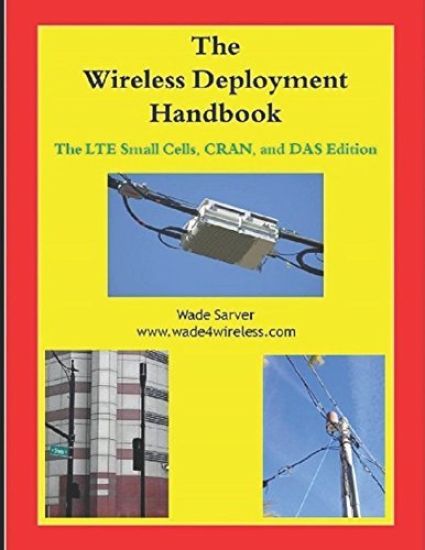
Wireless Deployment Handbook: Lte Small Cells, Cran, and Das Edition.
Do you have wireless deployment questions? This book can help. How do you make the transition into wireless telecom? How do you deploy small cells? How do you deploy DAS? How do you deploy CRAN? Do you understand the issues with macro sites? If you're curious about LTE deployment, for carrier grade LTE systems, take a look and learn. Based on real world experience of carrier deployments. Get the inside information that could help you avoid all the mistakes I made Learn what CRAN really is? The deployment of LTE small cells, CRAN, DAS, and mini macros can be challenging. By preparing for all of the phases of deployment you can predict the problems and minimize them prior to sending anyone in the field. This preparation will be necessary to make the field work as cost effective as possible. This is where many companies get in trouble. They do not realize the complexity of the deployment nor do they look at all the phases required to make it a success. Planning is the key Learn the carrier's wireless deployment phases step by step and how to build partnerships to grow business.
The 5G Deployment Plan Handbook: Volume 1, 5G technical deployment and history around building 5G and IOT businesses.
Do you want to learn about 5G? Do you want to learn more about 5G deployment? What is 5G? How will it be rolled out? Will small cells be a critical part of 5G? What is network slicing? How does 5G technology work? Will 5G include LTE? Lear more about 5G in this handy book Learn how it will be deployed and rolled out. Learn what technology and spectrum will be used in 5G Are you interested in 5G? Here is your source. The basics of 5G from a deployment perspective. This book is not covering the technical details of the radio equipment or chips, Qualcomm and Intel have done a pretty good job of covering that. Don't worry, Nokia, Ericsson, and Samsung will explain it to the carriers with great detail. The goal was to respond to all of your questions about the practical deployment of 5G in today's wireless networks. How can others outside of the carrier domain deploy? You wanted to know the foundation, well here it is. Business case summaries and all. From the author of the blog, www.wade4wireless.com and the founder of www.techfecta.com. Here is another installment of the Wireless Deployment Handbook (WDH) series. Many people ask me about 4G and 5G and how we get there from here. Well, since you asked I thought I would cover the deployment part of the networks. Are you interested in how to deploy and how the transition happens? You all know that 5G is coming and it is going to open the doors to new applications such as wireless virtual reality, new IOT ideas, Artificial Intelligence applications, low-latency offerings, wireless cloud computing, and so much more. It's a game changer if it's done right. Will the network be more than a cool this? It's becoming a necessity for any of us to do business. The broadband connections need to be made available anywhere making this the new utility. We already see it with the mandates coming from the US Government that broadband is a necessity for growth and business. We all need electricity in our homes, right, now let's add broadband. The telephone has been replaced with the broadband connection. The difference is that the phone was in every home, now the phone and a broadband connection is with you every minute of the day, by your side as a smartphone, tablet, or laptop. We all feel the need to be connected most of the time. This constant connection is such an addiction in most countries that we see addictions to being connected. The need to stay in touch has totally overwhelmed some people, even me. I now know that I can manage my priorities in life. Staying connected can be a good thing. Look how families can live remote yet communicate every day for pennies. They don't have to talk, but they can text and take pictures. Remote family members can see their relatives, children, grandchildren, nieces, nephews, aunts, uncles, brothers, and sisters daily and even over holidays without taking the time or expense to visit. We can talk anytime and share those special moments with all of them with the click of a button on your smartphone. How cool is that? See, technology is a good thing when properly managed. So, let's dive into the networks that make all of this happen. Let's look at the new generation, 5G, and how to deploy it so that we don't let these families down. Let's support them and increase the functions and ways to stay in touch. Let's make all of this happen. It is up to you, the deployment teams, the unsung heroes that make this happen with little or no recognition from anyone, even the customer who wanted this system. Sure, they will take most of the credit, but you have the bragging rights knowing that they could not have done it without you Congratulations on taking the first step her, now, today
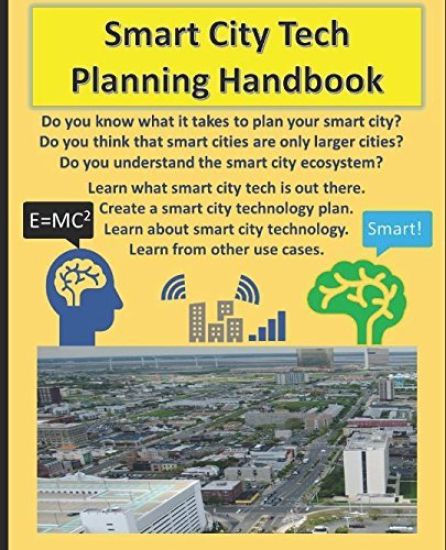
Smart City Tech Planning Handbook: Your Smart City Planning Guide for Broadband, Iot, and Solutions in Technology. a Handbook for Learning about Smart
Do you know that the smart city is here now? Most cities want to be a smart city and they are looking for technology to save them. I once saw a TED talk where they described a smart city as being the way the buildings are built. Let me tell you something, the buildings are constructed in these cities. While it would be wonderful to plan a smart city from scratch, it's not the reality of the cities out there. They intend to improve the existing city infrastructure, which is no easy task. That's the purpose of this book, to help you work with cities and have them develop their smart city initiatives. Develop a plan That is why I put together the Smart City Tech Planning Handbook. Learn this What is a Smart City? How do you plan the Smart City infrastructure? Where do you start when developing the smart city? What planning is involved? Whom should I partner with? What about permitting, rent, acquisition, construction planning? Whom should we work with? Learn all this and more from case studied and deployment planning. The rest is up to you
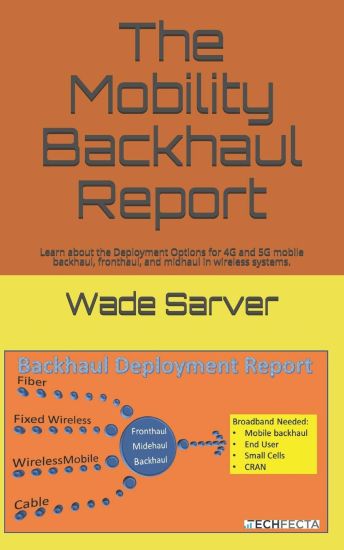
Mobility Backhaul Report: Backhaul Deployment Report. Learn about the Deployment Options for 4g and 5g Mobile Backhaul, Fronthaul, and Midhaul i
The thing about running any type of equipment is more than the cost of the equipment and installation. It's all the other stuff that most magazines and articles won't cover. It's the delays, permitting, acquisition, and approvals needed to be managed. These are necessary evils for any deployment. Just ask any carrier. Therefore they are adamant about fighting local jurisdictions for the small cell costs of permitting and rent. This is all before you deploy one thing, pay for one piece of equipment, or even design the backhaul. It needs to be worked through, and chances are it will be around 10% to 25% of the cost. If you're talking small cells, then it could be 50% to 75% of the cost. The other thing that has helped the carriers is automation. While they still rely on drive teams for testing, for the most part, they have automated RF engineering and optimization. This has dramatically reduced the cost and effort put forth. The labor of any deployment adds up. However, as the work becomes a commodity, the costs go down. So far, the carriers can't replace the tower climber, but they have been offshoring and automating other services to save costs. Utility power is another cost. If you need power at the site, which you do, running utility to a site costs money. It could also add delays. You need a licensed electrician to work with the power company to make sure you have the power in properly. Then the permitting and inspections that go along with it. It adds delay and cost to any project. You will need power, whether at a pole or in a building or at a tower site. It all adds up. Before you mount anything, this is generally a 3-month wait. It's similar to fiber. Fiber deployments have all the costs of permitting, permissions, and more. They often run into a dig once policy with cities. This is good for the city because they don't want the streets dug up again and again, but the company running the fiber may have to wait until one or more companies are also running fiber. This adds delays, costs, and competition. If you're deploying first, you have a chance to lock up accounts, but if you must wait for the competition to go alongside you, I am pretty sure they are going to go after the same customers you thought you had locked up. It is a dog eat dog world out there. The thing about running fiber everywhere is not the fiber itself. It is the costs associated with running the fiber. In fact, anything you deploy has high costs. Building towers and adding a radio to a pole has a high cost. While you may think it's the installation and design, that is a small portion. It's all the civil work and the acquisition paperwork that needs to be done to make it happen.
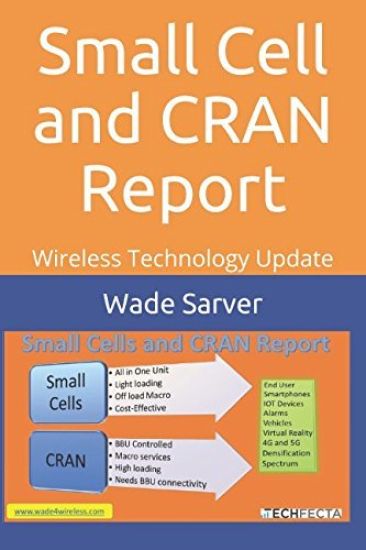
Small Cell and Cran Report: Wireless Technology Update
Learn about Small Cells and CRAN in Wireless. The Small Cell and CRAN report is out. This report is to help you understand more about small cell and CRAN deployments and all associated options. When you work in the industry people, commonly lump other things into small cells or small cells into other things. For instance, CRAN and cRAN centralized RAN and Cloud RAN often looked at as small cells because a radio head is being deployed on a pole or building all by itself. That is just like a real small cell; it's installed all by itself. Another thing is the mini macro; it's just a big and power small cell. It has the form factor of a small cell but can do more. Not quite as much as a macro site, but more than your typical 1-watt small cell. Then there is DAS. DAS incorporates small cells, Wi-Fi, radio heads all into its system for the carriers. It could be one of these or all of these. DAS systems for 4G and 5G are going to be all digital. It's going to help you look at small cell deployment holistically. There are deployment notes, history, and an outline of what works and doesn't work. This report covers more than small cells to give you a big picture of the future of wireless outside of the macro site.