Kirjojen hintavertailu. Mukana 12 390 323 kirjaa ja 12 kauppaa.

Kirjahaku

Etsi kirjoja tekijän nimen, kirjan nimen tai ISBN:n perusteella.

11 kirjaa tekijältä Waldemar Heckel

In the Path of Conquest

In the Path of Conquest

Waldemar Heckel

Oxford University Press Inc
2020
sidottu
This book offers a fresh insight into the conquests of Alexander the Great by attempting to view the events of 336-323 BCE from the vantage point of the defeated. The extent and form of the resistance of the populations he confronted varied according to their previous relationships with either the Macedonian invaders or their own Achaemenid rulers. The internal political situations of many states--particularly the Greek cities of Asia Minor--were also a factor. In the vast Persian Empire that stretched from the Aegean to the Indus, some states surrendered voluntarily and others offered fierce resistance. Not all regions were subdued through military actions. Indeed, as the author argues, the excessive use of force on Alexander's part was often ineffective and counterproductive. In the Path of Conquest examines the reasons for these varied responses, giving more emphasis to the defeated and less to the conqueror and his Macedonian army. In the process, it debunks many long-held views concerning Alexander's motives, including the idea that his aim was to march to the eastern limits of the world. It also provides a fresh reevaluation of Darius III's successes and failures as a commander. Such a study involves rigorous analysis of the ancient sources, and their testimony is presented throughout the book in the form of newly translated passages. A unique portrait of a well-known age, In the Path of Conquest will significantly alter our understanding of Alexander's career.
In the Path of Conquest

In the Path of Conquest

Waldemar Heckel

OXFORD UNIVERSITY PRESS INC
2022
nidottu
This book offers a fresh insight into the conquests of Alexander the Great by attempting to view the events of 336-323 BCE from the vantage point of the defeated. The extent and form of the resistance of the populations he confronted varied according to their previous relationships with either the Macedonian invaders or their own Achaemenid rulers. The internal political situations of many states--particularly the Greek cities of Asia Minor--were also a factor. In the vast Persian Empire that stretched from the Aegean to the Indus, some states surrendered voluntarily and others offered fierce resistance. Not all regions were subdued through military actions. Indeed, as the author argues, the excessive use of force on Alexander's part was often ineffective and counterproductive. In the Path of Conquest examines the reasons for these varied responses, giving more emphasis to the defeated and less to the conqueror and his Macedonian army. In the process, it debunks many long-held views concerning Alexander's motives, including the idea that his aim was to march to the eastern limits of the world. It also provides a fresh reevaluation of Darius III's successes and failures as a commander. Such a study involves rigorous analysis of the ancient sources, and their testimony is presented throughout the book in the form of newly translated passages. A unique portrait of a well-known age, In the Path of Conquest will significantly alter our understanding of Alexander's career.
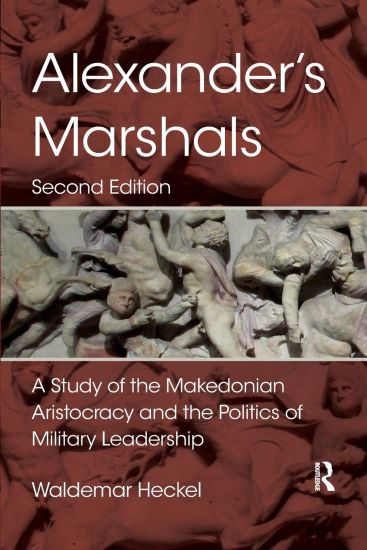
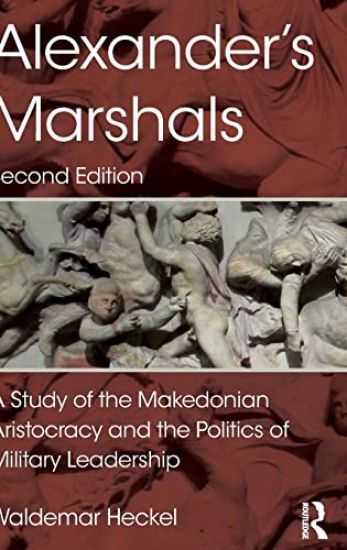
Alexander's Marshals

Alexander's Marshals

Waldemar Heckel

Routledge
2019
nidottu
This substantially revised and updated second edition of The Marshals of Alexander’s Empire (1992) examines Alexander’s most important officers, who commanded army units and were involved in military and political deliberations. Chapters on these men have been expanded, giving greater attention to personalities, bias in the sources, and the social as well as military setting, including more on familial connections and regional origins in an attempt to create a better understanding of factions. The major confrontations, military and political, are treated in greater detail within the biographies, and a discussion of the organization and command structure of the Makedonian army has been added.
The Wars of Alexander the Great

The Wars of Alexander the Great

Waldemar Heckel

Routledge
2003
sidottu
The age of Alexander and his conquest of the Persian or Achaemenid Empire, which had existed for over two centuries, represents a watershed in the history of the world. This book offers fascinating insight into the achievements of one of the greatest generals ever known. Alexander's conquests are of profound significance. By perfecting the new weapons and tactics developed by his father and combining them with the use of specialist units and advancements in siege warfare, Alexander enabled the Macedonian kingdom to move beyond the restrictions of city-state armies and on to the stage of world conquest.
The Conquests of Alexander the Great

The Conquests of Alexander the Great

Waldemar Heckel

Cambridge University Press
2007
sidottu
Waldemar Heckel provides a revisionist overview of the conquests of Alexander the Great. Emphasising the aims and impact of his military expeditions, the political consequences of military action, and the use of propaganda, both for motivation and justification, his underlying premise is that the basic goals of conquest and the keys to military superiority have not changed dramatically over the millennia. Indeed, as Heckel makes clear, many aristocratic and conquest societies are remarkably similar to that of Alexander in their basic aims and organisation. Heckel rejects the view of Alexander as a reincarnation of Achilles - as an irrational youth on a heroic quest for fame and immortality. In an engaging and balanced account of key military events, Heckel shows how Alexander imposed his will on the willing and how the defeated were no longer capable of resisting his military might.
The Conquests of Alexander the Great

The Conquests of Alexander the Great

Waldemar Heckel

Cambridge University Press
2012
pokkari
In this book, Waldemar Heckel traces the rise and eventual fall of one of the most successful military commanders in history. In 325 BCE, Alexander and his conquering army prepared to return home, after overcoming everything in their path: armies, terrain, climate, all invariably hostile. Little did they know that within two years their beloved king would be dead and their labours seemingly wasted. Tracing the rise and eventual fall of one of the most successful military commanders in history, Heckel engagingly and with great detail shows us how Alexander earned his appellation, The Great.
Alexander's Marshals

Alexander's Marshals

Waldemar Heckel

Routledge
2016
sidottu
This substantially revised and updated second edition of The Marshals of Alexander’s Empire (1992) examines Alexander’s most important officers, who commanded army units and were involved in military and political deliberations. Chapters on these men have been expanded, giving greater attention to personalities, bias in the sources, and the social as well as military setting, including more on familial connections and regional origins in an attempt to create a better understanding of factions. The major confrontations, military and political, are treated in greater detail within the biographies, and a discussion of the organization and command structure of the Makedonian army has been added.
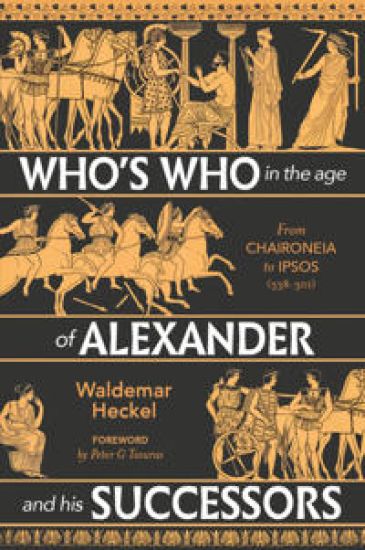
Who's Who in the Age of Alexander and His Successors: From Chaironeia to Ipsos (338-301 Bc)
Definitive biographical reference work on the life and campaigns of Alexander the Great."Waldemar Heckel has created a triumph of scholarship in his Who's Who in the Age of Alexander and his Successors that will hold its place as the standard reference far into the future ... the culmination of a half century of loving and skilled scholarship by a distinguished historian." -- Peter TsourasWho's Who in the Age of Alexander and his Successors is a unique compilation of more than 1,150 concise biographies of the men and women involved in the life and campaigns of Alexander the Great, and the struggle for power after his death. From leading commanders in Alexander's army to the nobles of the Persian Empire, and the many other individuals he encountered throughout his life and reign, these complete and balanced biographies by a renowned Canadian scholar are drawn from the literary and epigraphic sources of the age.When the first edition of this volume was originally published in 2006 (with some 800 entries) it was acclaimed as a vital reference resource for anyone interested in the period; this second edition has been greatly expanded and substantially revised to widen the coverage of the human and political landscape in which Alexander moved. It is sure to be received as enthusiastically as its predecessor.Who's Who in the Age of Alexander and his Successors is the only work of its kind in English. It is an essential guide to a fascinating and pivotal historical era, and to one of history's most successful military commanders.
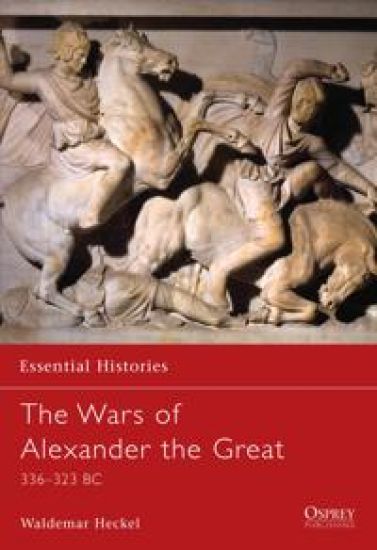
The Wars of Alexander the Great

The Wars of Alexander the Great

Waldemar Heckel

Osprey Publishing
2002
nidottu
The age of Alexander and his conquest of the Persian or 'Achaemenid' Empire, which had existed for over two centuries, represents a watershed in the history of the world. This book offers a fascinating insight into the achievements of one of the greatest generals ever known. Alexander's conquests are of profound significance. By perfecting the new weapons and tactics developed by his father, Philip II, and combining them with the use of specialist units and advancements in siege warfare, Alexander enabled the Macedonian kingdom to move beyond the restrictions of city-state armies and on to the stage of world conquest.
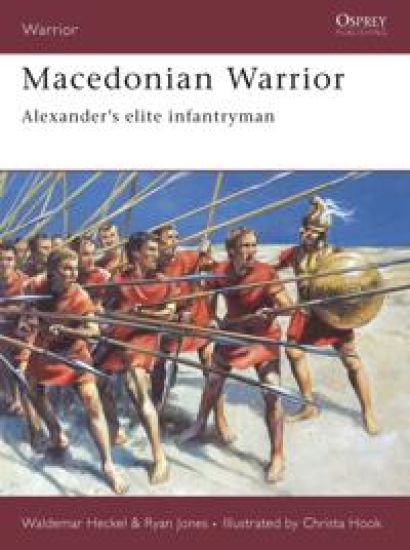
Macedonian Warrior

Macedonian Warrior

Ryan Jones; Waldemar Heckel

Osprey Publishing
2006
nidottu
During the reigns of Philip II and Alexander the Great, the Macedonian Army - the phalangites - were reformed and drilled into an invincible fighting force with unique tactics and weaponry. The Macedonian warrior, during his service, would march over 20,000 miles (32,000 kilometres) in the most diverse climates and terrains, fighting in four of the epoch battles of the time. This book examines their initial training, rise to an elite unit under Alexander the Great, and eventual defeat at the battle of Pydna, in 168 BC. The daily life, weaponry, experience, and motivations of these men are detailed, using primary sources and anecdotal material.