
Kirjahaku
Etsi kirjoja tekijän nimen, kirjan nimen tai ISBN:n perusteella.
7 kirjaa tekijältä Waldo Frank



This work has been selected by scholars as being culturally important, and is part of the knowledge base of civilization as we know it. This work was reproduced from the original artifact, and remains as true to the original work as possible. Therefore, you will see the original copyright references, library stamps (as most of these works have been housed in our most important libraries around the world), and other notations in the work.This work is in the public domain in the United States of America, and possibly other nations. Within the United States, you may freely copy and distribute this work, as no entity (individual or corporate) has a copyright on the body of the work.As a reproduction of a historical artifact, this work may contain missing or blurred pages, poor pictures, errant marks, etc. Scholars believe, and we concur, that this work is important enough to be preserved, reproduced, and made generally available to the public. We appreciate your support of the preservation process, and thank you for being an important part of keeping this knowledge alive and relevant.

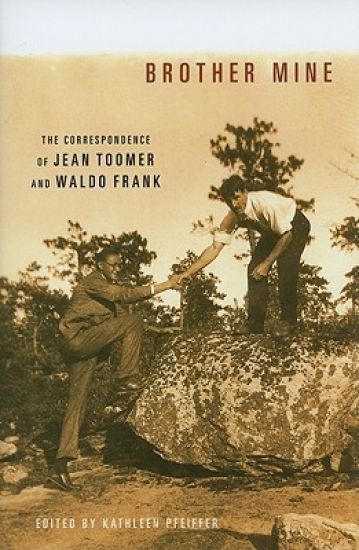
The friendship of Jean Toomer and Waldo Frank was one of the most emotionally intense, racially complicated, and aesthetically significant relationships in the history of American literary modernism. Waldo Frank was an established white writer who advised and assisted the younger African American Jean Toomer as he pursued a literary career. They met in 1920, began corresponding regularly in 1922, and were estranged by the end of 1923, the same year that Toomer published his ambitiously modernist debut novel, Cane.While individual letters between Frank and Toomer have been published separately on occasion, they have always been presented out of context. This volume presents for the first time their entire correspondence in chronological order, comprising 121 letters ranging from 200 to 800 words each. Kathleen Pfeiffer annotates and introduces the letters, framing the correspondence and explaining the literary and historical allusions in the letters themselves.Reading like an epistolary novel, Brother Mine captures the sheer emotional force of the story that unfolds in these letters: two men discover an extraordinary friendship, and their intellectual and emotional intimacy takes shape before our eyes. This unprecedented collection preserves the raw honesty of their exchanges, together with the developing drama of their ambition, their disappointments, their assessment of their world, and ultimately, the betrayal that ended the friendship.