Kirjojen hintavertailu. Mukana 11 244 527 kirjaa ja 12 kauppaa.

Kirjahaku

Etsi kirjoja tekijän nimen, kirjan nimen tai ISBN:n perusteella.

222 kirjaa tekijältä Walter Benjamin

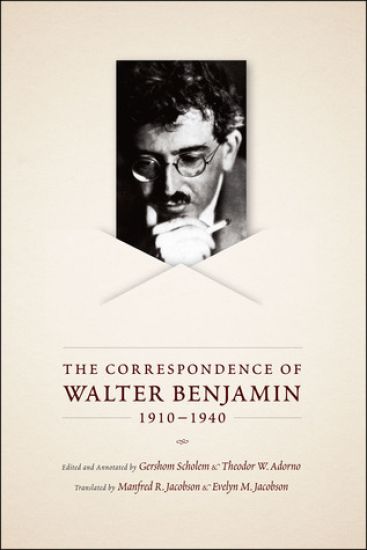
The Correspondence of Walter Benjamin, 1910-1940

The Correspondence of Walter Benjamin, 1910-1940

Walter Benjamin

University of Chicago Press
2012
nidottu
Called "the most important critic of his time" by Hannah Arendt, Walter Benjamin has only become more influential over the years, as his work has assumed a crucial place in current debates over the interactions of art, culture, and meaning. A "natural and extraordinary talent for letter writing was one of the most captivating facets of his nature," writes Gershom Scholem in his foreword to this volume; and Benjamin's correspondence reveals the evolution of some of his most powerful ideas, while also offering an intimate picture of Benjamin himself and the times in which he lived. Writing at length to Scholem and Theodor Adorno, and exchanging letters with Rainer Maria Rilke, Hannah Arendt, Max Brod, and Bertolt Brecht, Benjamin elaborates on his ideas about metaphor and language. He reflects on literary figures from Kafka to Karl Kraus, and expounds his personal attitudes toward such subjects as Marxism and French national character. Providing an indispensable tool for any scholar wrestling with Benjamin's work, "The Correspondence of Walter Benjamin" is a revelatory look at the man behind much of the twentieth century's most significant criticism.
Walter Benjamin: Selected Writings

Walter Benjamin: Selected Writings

Walter Benjamin

The Belknap Press
2004
nidottu
Walter Benjamin was one of the most original and important critical voices of the twentieth century, but until now only a few of his writings have been available in English. Harvard University Press has now undertaken to publish a significant portion of his work in definitive translation, under the general editorship of Michael W. Jennings. This volume, the first of three, will at last give readers of English a true sense of the man and the many facets of his thought. (The magnum opus of Benjamin’s Paris years, The Arcades Project, has been published in a separate volume.) Walter Benjamin emerged from the head-on collision of an idealistic youth movement and the First World War, which Benjamin and his close friends thought immoral. He walked away from the wreck scarred yet determined “to be considered as the principal critic of German literature.” But the scene, as he found it, was dominated by “talented fakes,” so—to use his words—“only a terrorist campaign would I suffice” to effect radical change. This book offers the record of the first phase of that campaign, culminating with “One Way Street,” one of the most significant products of the German avant-garde of the Twenties. Against conformism, homogeneity, and gentrification of all life into a new world order, Benjamin made the word his sword. Volume I of the Selected Writings brings together essays long and short, academic treatises, reviews, fragments, and privately circulated pronouncements. Fully five-sixths of this material has never before been translated into English. The contents begin in 1913, when Benjamin, as an undergraduate in imperial Germany, was president of a radical youth group, and take us through 1926, when he had already begun, with his explorations of the world of mass culture, to emerge as a critical voice in Weimar Germany’s most influential journals. The volume includes a number of his most important works, including “Two Poems by Friedrich Hölderlin,” “Goethe’s Elective Affinities,” “The Concept of Criticism in German Romanticism,” “The Task of the Translator,” and “One Way Street.” He is as compelling and insightful when musing on riddles or children’s books as he is when dealing with weightier issues such as the philosophy of language, symbolic logic, or epistemology. We meet Benjamin the youthful idealist, the sober moralist, the political theorist, the experimentalist, the translator, and, above all, the virtual king of criticism, with his magisterial exposition of the basic problems of aesthetics. Benjamin’s sentences provoke us to return to them again and again, luring us as though with the promise of some final revelation that is always being postponed. He is by turns fierce and tender, melancholy and ebullient; he is at once classically rooted, even archaic, in his explorations of the human psyche and the world of things, and strikingly progressive in his attitude toward society and what he likes to call the organs of the collective (its architectures, fashions, signboards). Throughout, he displays a far-sighted urgency, judging the present on the basis of possible futures. And he is gifted with a keen sense of humor. Mysterious though he may sometimes be (his Latvian love, Asia Lacis, once described him as a visitor from another planet), Benjamin remains perhaps the most consistently surprising and challenging of critical writers.
Walter Benjamin: Selected Writings

Walter Benjamin: Selected Writings

Walter Benjamin

The Belknap Press
2005
nidottu
In the frenzied final years of the Weimar Republic, amid economic collapse and mounting political catastrophe, Walter Benjamin emerged as the most original practicing literary critic and public intellectual in the German-speaking world. Volume 2 of the Selected Writings is now available in paperback in two parts.In Part 1, Benjamin is represented by two of his greatest literary essays, "Surrealism" and "On the Image of Proust," as well as by a long article on Goethe and a generous selection of his wide-ranging commentary for Weimar Germany's newspapers. Part 2 contains, in addition to the important longer essays, "Franz Kafka," "Karl Kraus," and "The Author as Producer," the extended autobiographical meditation "A Berlin Chronicle," and extended discussions of the history of photography and the social situation of the French writer, previously untranslated shorter pieces on such subjects as language and memory, theological criticism and literary history, astrology and the newspaper, and on such influential figures as Paul Valery, Stefan George, Hitler, and Mickey Mouse.
Walter Benjamin: Selected Writings

Walter Benjamin: Selected Writings

Walter Benjamin

The Belknap Press
2005
nidottu
In the frenzied final years of the Weimar Republic, amid economic collapse and mounting political catastrophe, Walter Benjamin emerged as the most original practicing literary critic and public intellectual in the German-speaking world. Volume 2 of the Selected Writings is now available in paperback in two parts.In Part 1, Benjamin is represented by two of his greatest literary essays, "Surrealism" and "On the Image of Proust," as well as by a long article on Goethe and a generous selection of his wide-ranging commentary for Weimar Germany's newspapers. Part 2 contains, in addition to the important longer essays, "Franz Kafka," "Karl Kraus," and "The Author as Producer," the extended autobiographical meditation "A Berlin Chronicle," and extended discussions of the history of photography and the social situation of the French writer, previously untranslated shorter pieces on such subjects as language and memory, theological criticism and literary history, astrology and the newspaper, and on such influential figures as Paul Valery, Stefan George, Hitler, and Mickey Mouse.
Walter Benjamin: Selected Writings

Walter Benjamin: Selected Writings

Walter Benjamin

The Belknap Press
2006
nidottu
Radical critic of a European civilization plunging into darkness, yet commemorator of the humane traditions of the old bourgeoisie--such was Walter Benjamin in the later 1930s. This volume, the third in a four-volume set, offers twenty-seven brilliant pieces, nineteen of which have never before been translated.The centerpiece, A Berlin Childhood around 1900, marks the first appearance in English of one of the greatest German works of the twentieth century: a profound and beautiful account of the vanished world of Benjamin's privileged boyhood, recollected in exile. No less remarkable are the previously untranslated second version of Benjamin's most famous essay, "The Work of Art in the Age of Its Technological Reproducibility," with its striking insights into the relations between technology and aesthetics, and German Men and Women, a book in which Benjamin collects twenty-six letters by distinguished Germans from 1783 to 1883 in an effort to preserve what he called the true humanity of German tradition from the debasement of fascism.Volume 3 also offers extensively annotated translations of essays that are key to Benjamin's rewriting of the story of modernism and modernity--such as "The Storyteller" and "Paris, the Capital of the Nineteenth Century"--as well as a fascinating diary from 1938 and penetrating studies of Bertolt Brecht, Franz Kafka, and Eduard Fuchs. A narrative chronology details Benjamin's life during these four harrowing years of his exile in France and Denmark. This is an essential collection for anyone interested in his work.
Walter Benjamin: Selected Writings

Walter Benjamin: Selected Writings

Walter Benjamin

The Belknap Press
2006
nidottu
"Every line we succeed in publishing today...is a victory wrested from the powers of darkness." So wrote Walter Benjamin in January 1940. Not long afterward, he himself would fall prey to those powers, a victim of suicide following a failed attempt to flee the Nazis. However insistently the idea of catastrophe hangs over Benjamin's writings in the final years of his life, the "victories wrested" in this period nonetheless constitute some of the most remarkable twentieth-century analyses of the emergence of modern society. The essays on Charles Baudelaire are the distillation of a lifetime of thinking about the nature of modernity. They record the crisis of meaning experienced by a civilization sliding into the abyss, even as they testify to Benjamin's own faith in the written word.This volume ranges from studies of Baudelaire, Brecht, and the historian Carl Jochmann to appraisals of photography, film, and poetry. At their core is the question of how art can survive and thrive in a tumultuous time. Here we see Benjamin laying out an ethic for the critic and artist--a subdued but resilient heroism. At the same time, he was setting forth a sociohistorical account of how art adapts in an age of violence and repression. Working at the height of his powers to the very end, Benjamin refined his theory of the mass media that culminated in the final version of his essay "The Work of Art in the Age of Its Technological Reproducibility." Also included in this volume is his influential piece "On the Concept of History," completed just before his death. The book is remarkable for its inquiry into the nature of "the modern" (especially as revealed in Baudelaire), for its ideas about the transmogrification of art and the radical discontinuities of history, and for its examples of humane life and thought in the midst of barbarism. The entire collection is eloquent testimony to the indomitable spirit of humanity under siege.
Walter Benjamin's Archive

Walter Benjamin's Archive

Walter Benjamin

Verso Books
2015
nidottu
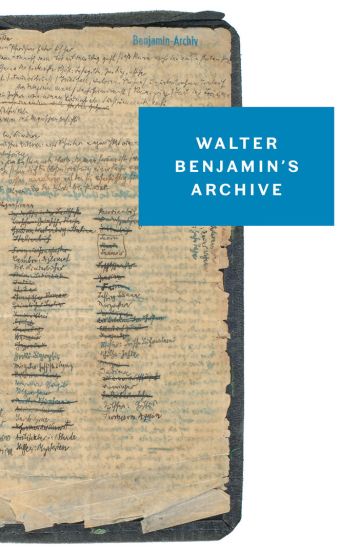
The work of the great literary and cultural critic Walter Benjamin is an audacious plotting of history, art, and thought; a reservoir of texts, commentaries, scraps, and fragments of everyday life, art, and dreams. Throughout his life, Benjamin gathered together all kinds of artifacts, assortments of images, texts, and signs, themselves representing experiences, ideas, and hopes, each of which was enthusiastically logged, systematized, and analyzed by their author. In this way, Benjamin laid the groundwork for the salvaging of his own legacy.Intricate and intimate, Walter Benjamin's Archive leads readers to the heart of his intellectual world, yielding a rich and detailed portrait of its author.
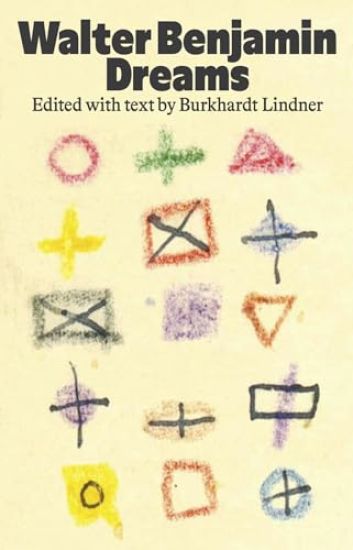
Dreams: Walter Benjamin

Dreams: Walter Benjamin

Walter Benjamin

Bierke Verlag
2025
nidottu
Though published during his lifetime, Walter Benjamin's dream notes and theoretical reflections on dreams are collected here for the first time in a single volume.Dreams highlights a dimension of Benjamin's thinking that was invaluable for his writing and thought but which has thus far received little attention.The first section, "Dream Notes," is a comprehensive and chronological collection of Benjamin's transcriptions of his own dreams and includes unpublished manuscript materials. The second section, "On Perception of Dreams. Awakening and Dream," features his theoretical reflections on dreams, ranging from short aphorisms and longer analyses of dream literature and the history of dreams to the political conception of a "dreaming collective" and its awakening.Editor Burkhardt Lindner describes Benjamin's literary approach to his own dreams in the epilogue and gives a sketch of Benjamin's own definition of the dream sphere, independent of and in contrast to Surrealism and Freud's interpretation of dreams.This pocket-size reader presents Benjamin as both a great dreamerand an important theorist of dreams.
Radio Benjamin

Radio Benjamin

Walter Benjamin

Verso Books
2021
nidottu
Walter Benjamin was fascinated by the impact of new technology on culture, an interest that extended beyond his renowned critical essays. From 1927 to '33, he wrote and presented something in the region of eighty broadcasts using the new medium of radio. Radio Benjamin gathers the surviving transcripts, which appear here for the first time in English. This eclectic collection demonstrates the range of Benjamin's thinking and his enthusiasm for popular sensibilities. His celebrated "Enlightenment for Children" youth programs, his plays, readings, book reviews, and fiction reveal Benjamin in a creative, rather than critical, mode. They flesh out ideas elucidated in his essays, some of which are also represented here, where they cover topics as varied as getting a raise and the history of natural disasters, subjects chosen for broad appeal and examined with passion and acuity.Delightful and incisive, this is Walter Benjamin channeling his sophisticated thinking to a wide audience, allowing us to benefit from a new voice for one of the twentieth century's most respected thinkers.
The Work of Art in the Age of Mechanical Reproduction
One of the most important works of cultural theory ever written, Walter Benjamin's groundbreaking essay explores how the age of mass media means audiences can listen to or see a work of art repeatedly – and what the troubling social and political implications of this are.Throughout history, some books have changed the world. They have transformed the way we see ourselves – and each other. They have inspired debate, dissent, war and revolution. They have enlightened, outraged, provoked and comforted. They have enriched lives – and destroyed them. Now Penguin brings you the works of the great thinkers, pioneers, radicals and visionaries whose ideas shook civilization and helped make us who we are.
One-Way Street and Other Writings

One-Way Street and Other Writings

Walter Benjamin

Penguin Classics
2009
pokkari
Walter Benjamin - philosopher, essayist, literary and cultural theorist - was one of the most original writers and thinkers of the twentieth century. This new selection brings together Benjamin's major works, including 'One-Way Street', his dreamlike, aphoristic observations of urban life in Weimar Germany; 'Unpacking My Library', a delightful meditation on book-collecting; the confessional 'Hashish in Marseille'; and 'The Work of Art in the Age of Mechanical Reproduction', his seminal essay on how technology changes the way we appreciate art. Also including writings on subjects ranging from Proust to Kafka, violence to surrealism, this is the essential volume on one of the most prescient critical voices of the modern age. Contains: 'Unpacking My Library'; 'One-Way Street'; 'The Work of Art in the Age of Mechanical Reproduction'; 'Brief History of Photography'; 'Hashish in Marseille'; 'On the Critique of Violence'; 'The Job of the Translator'; 'Surrealism'; 'Franz Kafka' and 'Picturing Proust'.
Unpacking My Library

Unpacking My Library

Walter Benjamin

PENGUIN BOOKS LTD
2025
nidottu
90 Classic titles celebrating 90 years of Penguin Books‘Every sort of passion verges on chaos, I know, but what the collecting passion verges on is a chaos of memories.’From intimate musings on his book collection, to a dream-like trip through the bustling streets of Marseille, each of these essays offers a compelling journey into the mind of one of the twentieth century’s most influential philosophers.
The Arcades Project

The Arcades Project

Walter Benjamin

The Belknap Press
2002
nidottu
"To great writers," Walter Benjamin once wrote, "finished works weigh lighter than those fragments on which they labor their entire lives." Conceived in Paris in 1927 and still in progress when Benjamin fled the Occupation in 1940, The Arcades Project (in German, Das Passagen-Werk) is a monumental ruin, meticulously constructed over the course of thirteen years--"the theater," as Benjamin called it, "of all my struggles and all my ideas." Focusing on the arcades of nineteenth-century Paris-glass-roofed rows of shops that were early centers of consumerism--Benjamin presents a montage of quotations from, and reflections on, hundreds of published sources, arranging them in thirty-six categories with descriptive rubrics such as "Fashion," "Boredom," "Dream City," "Photography," "Catacombs," "Advertising," "Prostitution," "Baudelaire," and "Theory of Progress." His central preoccupation is what he calls the commodification of things--a process in which he locates the decisive shift to the modern age.The Arcades Project is Benjamin's effort to represent and to critique the bourgeois experience of nineteenth-century history, and, in so doing, to liberate the suppressed "true history" that underlay the ideological mask. In the bustling, cluttered arcades, street and interior merge and historical time is broken up into kaleidoscopic distractions and displays of ephemera. Here, at a distance from what is normally meant by "progress," Benjamin finds the lost time(s) embedded in the spaces of things.
On Hashish

On Hashish

Walter Benjamin

The Belknap Press
2006
nidottu
Walter Benjamin's posthumously published collection of writings on hashish is a detailed blueprint for a book that was never written--a "truly exceptional book about hashish," as Benjamin describes it in a letter to his friend Gershom Scholem. A series of "protocols of drug experiments," written by himself and his co-participants between 1927 and 1934, together with short prose pieces that he published during his lifetime, On Hashish provides a peculiarly intimate portrait of Benjamin, venturesome as ever at the end of the Weimar Republic, and of his unique form of thought.Consciously placing himself in a tradition of literary drug-connoisseurs from Baudelaire to Hermann Hesse, Benjamin looked to hashish and other drugs for an initiation into what he called "profane illumination." At issue here, as everywhere in Benjamin's work, is a new way of seeing, a new connection to the ordinary world. Under the influence of hashish, as time and space become inseparable, experiences become subtly stratified and resonant: we inhabit more than one plane in time. What Benjamin, in his contemporaneous study of Surrealism, calls "image space" comes vividly to life in this philosophical immersion in the sensuous.This English-language edition of On Hashish features a section of supplementary materials--drawn from Benjamin's essays, letters, and sketches--relating to hashish use, as well as a reminiscence by his friend Jean Selz, which concerns a night of opium-smoking in Ibiza. A preface by Howard Eiland discusses the leading motifs of Benjamin's reflections on intoxication.
Berlin Childhood around 1900

Berlin Childhood around 1900

Walter Benjamin

The Belknap Press
2006
nidottu
Begun in Poveromo, Italy, in 1932, and extensively revised in 1938, Berlin Childhood around 1900 remained unpublished during Walter Benjamin’s lifetime, one of his “large-scale defeats.” Now translated into English for the first time in book form, on the basis of the recently discovered “final version” that contains the author’s own arrangement of a suite of luminous vignettes, it can be more widely appreciated as one of the masterpieces of twentieth-century prose writing.Not an autobiography in the customary sense, Benjamin’s recollection of his childhood in an upper-middle-class Jewish home in Berlin’s West End at the turn of the century becomes an occasion for unified “expeditions into the depths of memory.” In this diagram of his life, Benjamin focuses not on persons or events but on places and things, all seen from the perspective of a child—a collector, flâneur, and allegorist in one. This book is also one of Benjamin’s great city texts, bringing to life the cocoon of his childhood—the parks, streets, schoolrooms, and interiors of an emerging metropolis. It reads the city as palimpsest and labyrinth, revealing unexpected lyricism in the heart of the familiar.As an added gem, a preface by Howard Eiland discusses the genesis and structure of the work, which marks the culmination of Benjamin’s attempt to do philosophy concretely.