

Kirjahaku
Etsi kirjoja tekijän nimen, kirjan nimen tai ISBN:n perusteella.
234 kirjaa tekijältä Walter Crane

Flora's Feast. a Masque of Flowers, Penned and Pictured by Walter Crane.
Walter Crane
British Library, Historical Print Editions
2011
pokkari
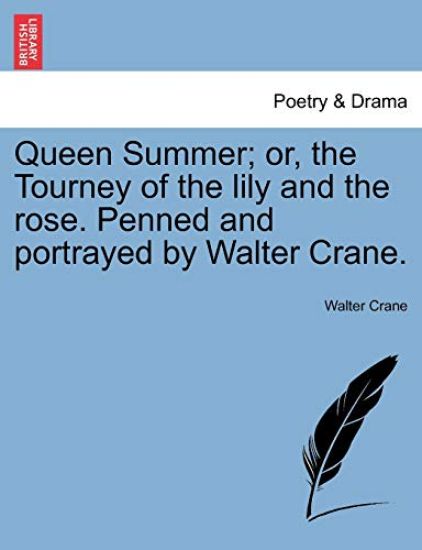
Queen Summer; Or, the Tourney of the Lily and the Rose. Penned and Portrayed by Walter Crane.
Walter Crane
British Library, Historical Print Editions
2011
pokkari

Walter Crane: Hazelford Sketch Book is a book that showcases the artistic talents of Walter Crane, a renowned artist and illustrator from the late 19th century. The book is a collection of sketches and drawings that Crane created during his time in Hazelford, a village in the English countryside. The sketches in the book are a mix of landscapes, portraits, and scenes from everyday life, all of which are rendered in Crane's signature style that blends realism with a touch of whimsy. The book also includes some of Crane's notes and observations about the subjects he was drawing, providing insight into his creative process.In addition to the sketches, the book also features an introduction by art historian Elizabeth Crawford, who provides context and background information on Crane's life and work. The book is a must-have for fans of Crane's art, as well as anyone interested in the history of illustration and art in the late 19th century.This is a new release of the original 1937 edition.This scarce antiquarian book is a facsimile reprint of the old original and may contain some imperfections such as library marks and notations. Because we believe this work is culturally important, we have made it available as part of our commitment for protecting, preserving, and promoting the world's literature in affordable, high quality, modern editions, that are true to their original work.

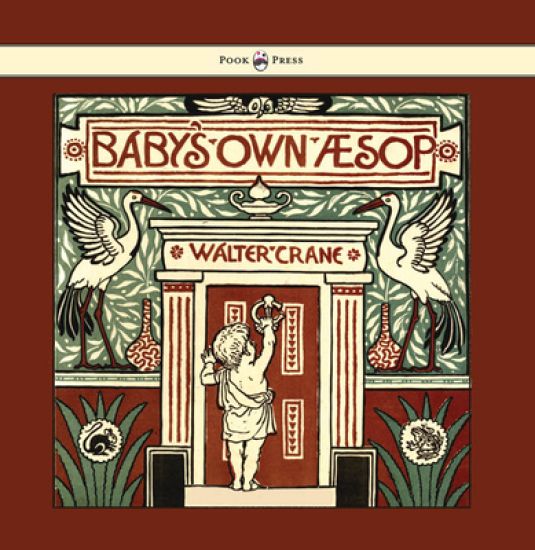
Baby's Own Aesop - Being the Fables Condensed in Rhyme with Portable Morals - Illustrated by Walter Crane
Walter Crane
Pook Press
2016
sidottu
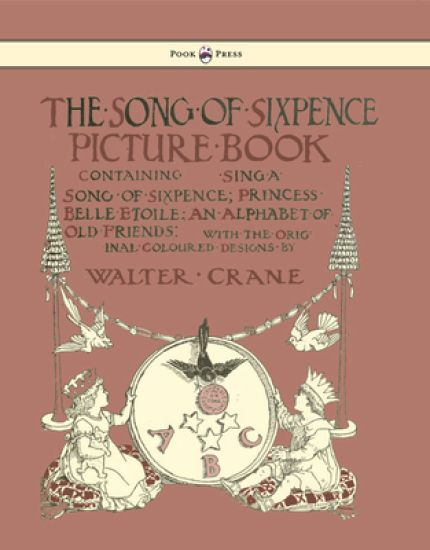

The Baby's Opera - A Book of Old Rhymes with New Dresses - Illustrated by Walter Crane
Walter Crane
Pook Press
2016
sidottu



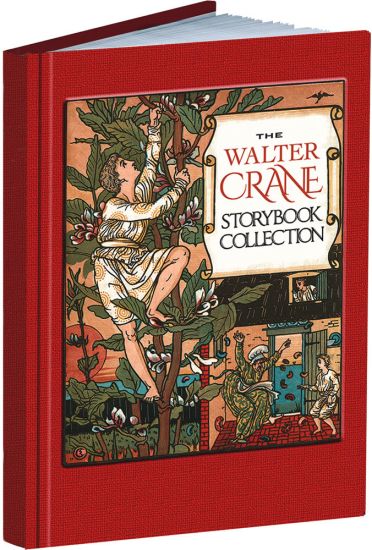

Reproduction of the original: Walter Crane s Painting Book by Walter Crane

Reproduction of the original: Walter Crane s Painting Book by Walter Crane

Travels with a donkey in the Cevennes By: Robert Louis Stevenson, illustrated By: Walter Crane (15 August 1845 - 14 March 1915): Travels with a Donkey
Walter Crane; Robert Louis Stevenson
Createspace Independent Publishing Platform
2017
nidottu
Travels with a Donkey in the Cevennes (1879) is one of Robert Louis Stevenson's earliest published works and is considered a pioneering classic of outdoor literature.Background: Stevenson was in his late 20s and still dependent on his parents for support. His journey was designed to provide material for publication while allowing him to distance himself from a love affair with an American woman of which his friends and families did not approve and who had returned to her husband in California. Travels recounts Stevenson's 12-day, 200 kilometres (120 mi) solo hiking journey through the sparsely populated and impoverished areas of the C vennes mountains in south-central France in 1878. The terrain, with its barren rocky heather-filled hillsides, he often compared to parts of Scotland. The other principal character is Modestine, a stubborn, manipulative donkey he could never quite master. It is one of the earliest accounts to present hiking and camping outdoors as a recreational activity. It also tells of commissioning one of the first sleeping bags, large and heavy enough to require a donkey to carry. Stevenson is several times mistaken for a peddler, the usual occupation of someone traveling in his fashion. Some locals are horrified that he would sleep outdoors and suggest it is dangerous to do so because of wolves or robbers. Stevenson provides the reader with the philosophy behind his undertaking: 2] For my part, I travel not to go anywhere, but to go. I travel for travel's sake. The great affair is to move; to feel the needs and hitches of our life more clearly; to come down off this feather-bed of civilization, and find the globe granite underfoot and strewn with cutting flints. Alas, as we get up in life, and are more preoccupied with our affairs, even a holiday is a thing that must be worked for. To hold a pack upon a pack-saddle against a gale out of the freezing north is no high industry, but it is one that serves to occupy and compose the mind. And when the present is so exacting who can annoy himself about the future? The C vennes was the site of a Protestant rebellion around 1702, severely suppressed by Catholic Louis XIV. The Protestant insurgents were known as the Camisards. Stevenson was Protestant by upbringing, and a non-believer by philosophy. Stevenson was well-versed in the history and evokes scenes from the rebellion as he passes through the area of the rebellion during the final days of his trek. He notes that the Catholics and the Protestants, at the time of his travels, live peaceably alongside one another, though each community is faithful to its own traditions and its version of the region's history. All disapprove equally of a young Catholic man who married a Protestant girl and changed his faith, agreeing that "It's a bad idea for a man to change." As for a Catholic priest who left the priesthood and married, the sentiment common to all was that it is wrong to change one's commitments. The book appeared the following year, 1879, and is dedicated to his friend Sidney Colvin, an art historian and critic who had befriended him when he was unpublished and seeking to develop a career as a writer. Walter Crane (15 August 1845 - 14 March 1915) was an English artist and book illustrator. Robert Louis Balfour Stevenson (13 November 1850 - 3 December 1894) was a Scottish novelist, poet, essayist, and travel writer. His most famous works are Treasure Island, Kidnapped, Strange Case of Dr Jekyll and Mr Hyde, and A Child's Garden of Verses.
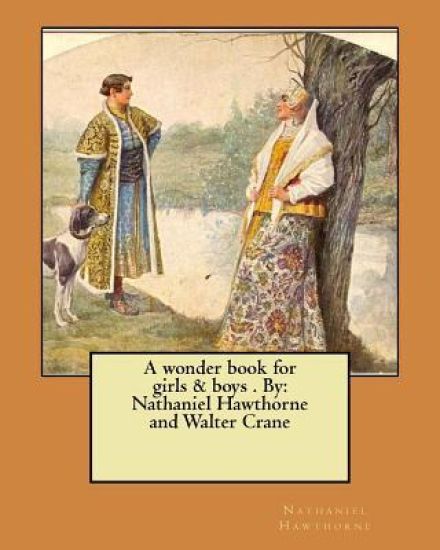
A wonder book for girls & boys . By: Nathaniel Hawthorne and Walter Crane
Walter Crane; Nathaniel Hawthorne
Createspace Independent Publishing Platform
2017
nidottu
A Wonder-Book for Girls and Boys (1851) is a children's book by American author Nathaniel Hawthorne in which he retells several Greek myths. It was followed by a sequel, Tanglewood Tales. The stories in A Wonder-Book for Girls and Boys are all stories within a story, the frame story being that a Williams College student, Eustace Bright, is telling these tales to a group of children at Tanglewood, an area in Lenox, Massachusetts, where Hawthorne lived for a time. All the tales are modified from the original myths. "Midas' Daughter Turned to Gold" by Walter Crane, illustrating the Midas myth for an 1893 edition A Wonder-Book for Girls and Boys covers the myths of The Gorgon's Head - recounts the story of Perseus killing Medusa at the request of the king of the island, Polydectes. The Golden Touch - recounts the story of King Midas and his "Golden Touch". The Paradise of Children - recounts the story of Pandora opening the box filled with all of mankind's Troubles. The Three Golden Apples - recounts the story of Heracles procuring the Three Golden Apples from the Hesperides' orchard, with the help of Atlas. The Miraculous Pitcher - recounts the story of Baucis and Philemon providing food and shelter to two strangers who were Zeus and "Quicksilver" (Hermes) in disguise. Baucis and Philemon were rewarded by the gods for their kindness; they were promised never to live apart from one another. The Chim ra - recounts the story of Bellerophon taming Pegasus and killing the Chim ra.
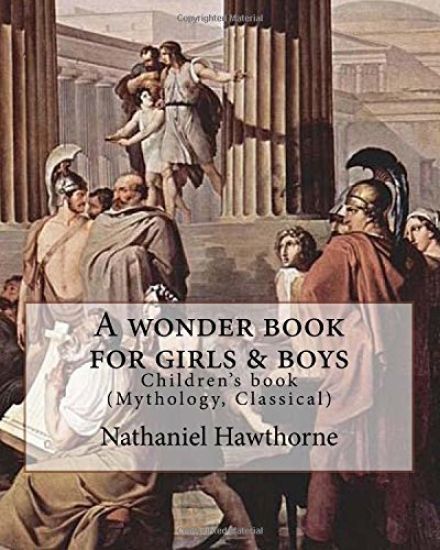
A wonder book for girls & boys By: Nathaniel Hawthorne, Desing By: Walter Crane (15 August 1845 - 14 March 1915): Children's book (Mythology, Classica
Walter Crane; Nathaniel Hawthorne
Createspace Independent Publishing Platform
2018
nidottu
A Wonder-Book for Girls and Boys (1851) is a children's book by American author Nathaniel Hawthorne in which he retells several Greek myths. It was followed by a sequel, Tanglewood Tales. Overview edit] The stories in A Wonder-Book for Girls and Boys are all stories within a story, the frame story being that a Williams College student, Eustace Bright, is telling these tales to a group of children at Tanglewood, an area in Lenox, Massachusetts, where Hawthorne lived for a time. All the tales are modified from the original myths. A Wonder-Book for Girls and Boys covers the myths of The Gorgon's Head - recounts the story of Perseus killing Medusa at the request of the king of the island, Polydectes. The Golden Touch - recounts the story of King Midas and his "Golden Touch". The Paradise of Children - recounts the story of Pandora opening the box filled with all of mankind's Troubles. The Three Golden Apples - recounts the story of Heracles procuring the Three Golden Apples from the Hesperides' orchard, with the help of Atlas. The Miraculous Pitcher - recounts the story of Baucis and Philemon providing food and shelter to two strangers who were Zeus and "Quicksilver" (Hermes) in disguise. Baucis and Philemon were rewarded by the gods for their kindness; they were promised never to live apart from one another. The Chim ra - recounts the story of Bellerophon taming Pegasus and killing the Chim ra....... Nathaniel Hawthorne ( born Nathaniel Hathorne; July 4, 1804 - May 19, 1864) was an American novelist, dark romantic, and short story writer. He was born in 1804 in Salem, Massachusetts to Nathaniel Hathorne and the former Elizabeth Clarke Manning. His ancestors include John Hathorne, the only judge involved in the Salem witch trials who never repented of his actions. He entered Bowdoin College in 1821, was elected to Phi Beta Kappa in 1824, and graduated in 1825. He published his first work in 1828, the novel Fanshawe; he later tried to suppress it, feeling that it was not equal to the standard of his later work. He published several short stories in periodicals, which he collected in 1837 as Twice-Told Tales. The next year, he became engaged to Sophia Peabody. He worked at the Boston Custom House and joined Brook Farm, a transcendentalist community, before marrying Peabody in 1842. The couple moved to The Old Manse in Concord, Massachusetts, later moving to Salem, the Berkshires, then to The Wayside in Concord. The Scarlet Letter was published in 1850, followed by a succession of other novels. A political appointment as consul took Hawthorne and family to Europe before their return to Concord in 1860. Hawthorne died on May 19, 1864, and was survived by his wife and their three children. Much of Hawthorne's writing centers on New England, many works featuring moral metaphors with an anti-Puritan inspiration. His fiction works are considered part of the Romantic movement and, more specifically, dark romanticism. His themes often center on the inherent evil and sin of humanity, and his works often have moral messages and deep psychological complexity. His published works include novels, short stories, and a biography of his college friend Franklin Pierce, the 14th President of the United States..........
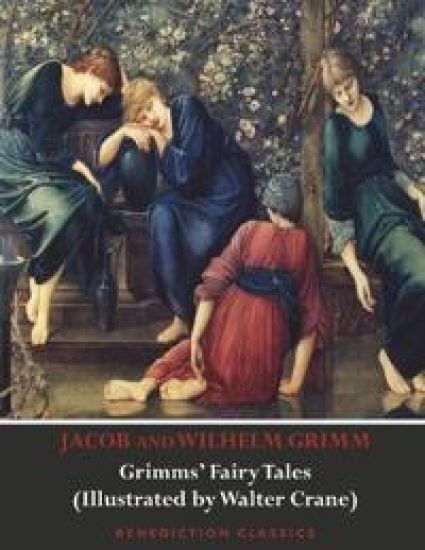
Grimms' Fairy Tales (Illustrated by Walter Crane)
Jacob Grimm; Wilhelm Grimm; Walter Crane
Benediction Classics
2019
pokkari
A magical collection of Grimms' tales, including Sleeping Beauty, Cinderella, Rapunzel, Rumpelstiltskin and many others all lovingly illustrated by the renowned Walter Crane. Each story begins with a title illustration and an illustrated capital, and has additional illustrations. These spellbinding stories, deeply embedded in the Western consciousness, begin innocently enough, but end with a twist, and will delight, surprise and educate.
Grimms' Fairy Tales (Illustrated by Walter Crane)
Jacob Grimm; Wilhelm Grimm; Walter Crane
Benediction Classics
2019
sidottu
A magical collection of Grimms' tales, including Sleeping Beauty, Cinderella, Rapunzel, Rumpelstiltskin and many others all lovingly illustrated by the renowned Walter Crane. Each story begins with a title illustration and an illustrated capital, and has additional illustrations. These spellbinding stories, deeply embedded in the Western consciousness, begin innocently enough, but end with a twist, and will delight, surprise and educate.

Spenser's Faerie Queene. A Poem in six Books; With the Fragment Mutabilitie. Ed. by Thomas J. Wise, Pictured by Walter Crane
Thomas James Wise; Edmund Spenser; Walter Crane
Hutson Street Press
2025
sidottu