
Kirjahaku
Etsi kirjoja tekijän nimen, kirjan nimen tai ISBN:n perusteella.
12 kirjaa tekijältä Walter J. Ong
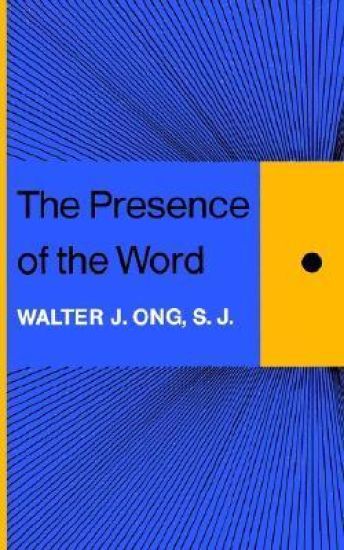
This provocative exploration of the nature and history of the word in some of its social, psychological, literary, phenomenological, and religious dimensions argues that the word is initially aural and in the last analysis always remains sound; it cannot be reduced to any other category. Father Ong contends that sound is essentially an event manifesting power and personal presence, and his descriptive analysis of the development of the media of verbal expression, from their oral sources through the laborious transfer to the visual world and then to contemporary means of electronic communication, shows that the predicament of the human word is the predicament of man himself. Examining the close alliance of the spoken word with the sense of the sacred, particularly in the Hebreo-Christian tradition, he reveals that in a world where presence has penetrated time and space as never before, modern man must find the God who has given himself in the Word which brings man more into the world of sound than of sight.

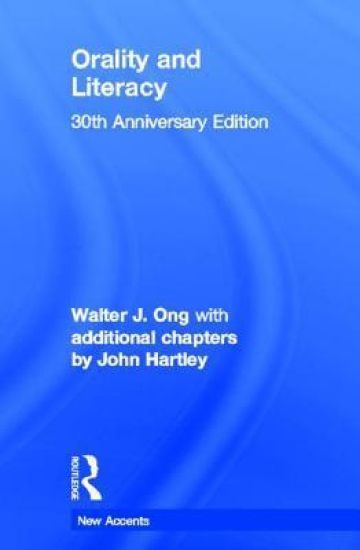
Walter J. Ong’s classic work provides a fascinating insight into the social effects of oral, written, printed and electronic technologies, and their impact on philosophical, theological, scientific and literary thought.This thirtieth anniversary edition – coinciding with Ong’s centenary year – reproduces his best-known and most influential book in full and brings it up to date with two new exploratory essays by cultural writer and critic John Hartley. Hartley provides: A scene-setting chapter that situates Ong’s work within the historical and disciplinary context of post-war Americanism and the rise of communication and media studies; A closing chapter that follows up Ong’s work on orality and literacy in relation to evolving media forms, with a discussion of recent criticisms of Ong’s approach, and an assessment of his concept of the ‘evolution of consciousness’; Extensive references to recent scholarship on orality, literacy and the study of knowledge technologies, tracing changes in how we know what we know.These illuminating essays contextualize Ong within recent intellectual history, and display his work’s continuing force in the ongoing study of the relationship between literature and the media, as well as that of psychology, education and sociological thought.
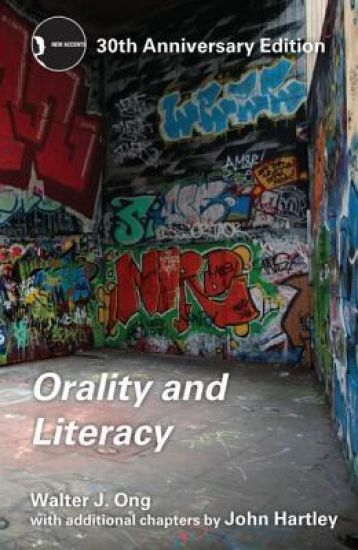
Walter J. Ong’s classic work provides a fascinating insight into the social effects of oral, written, printed and electronic technologies, and their impact on philosophical, theological, scientific and literary thought.This thirtieth anniversary edition – coinciding with Ong’s centenary year – reproduces his best-known and most influential book in full and brings it up to date with two new exploratory essays by cultural writer and critic John Hartley. Hartley provides: A scene-setting chapter that situates Ong’s work within the historical and disciplinary context of post-war Americanism and the rise of communication and media studies; A closing chapter that follows up Ong’s work on orality and literacy in relation to evolving media forms, with a discussion of recent criticisms of Ong’s approach, and an assessment of his concept of the ‘evolution of consciousness’; Extensive references to recent scholarship on orality, literacy and the study of knowledge technologies, tracing changes in how we know what we know.These illuminating essays contextualize Ong within recent intellectual history, and display his work’s continuing force in the ongoing study of the relationship between literature and the media, as well as that of psychology, education and sociological thought.

What accounts for the popularity of the macho image, the fanaticism of sports enthusiasts, and the perennial appeal of Don Quixote's ineffectual struggles? In Fighting for Life, Walter J. Ong addresses these and related questions, offering insight into the role of competition in human existence. Focusing on the ways in which human life is affected by contest, Ong argues that the male agonistic drive finds an outlet in games as divergent as football and chess. Demonstrating the importance of contest in biological evolution and in the growth of consciousness out of the unconscious, Ong also shows how adversary procedure has affected social, linguistic, and intellectual history. He discusses shifting patterns of contest in such arenas as spectator sports, politics, business, academia, and religion. Human beings' internalization of agonistic drives, he concludes, can foster the deeper discovery of the self and of distinctively human freedom.
This collection of essays by Walter J. Ong focuses on the complex and dynamic relationship between verbal performance and cultural evolution. By studying the history of rhetoric and related arts from classical antiquity through the age of romanticism to the modern period, Ong both illuminates the past and helps explain late-twentieth-century modes of expression. Elegantly written and wide ranging, Rhetoric, Romance, and Technology traces the evolution of devices used to store, retrieve, and communicate knowledge. Ong discusses diverse topics including memory as art, associationist critical theory, the close relationship between romanticism and technology, and the popular culture of the 1970s. This book also contains essays about Tudor writings in English on rhetoric and literary theory, the study of Latin as a Renaissance puberty rite, Ramism in the classroom and in commerce, Jonathan Swift's notion of the mind, and John Stuart Mill's politics.
Drawing on a wide range of disciplines—linguistics, phenomenological analysis, cultural anthropology, media studies, and intellectual history—Walter J. Ong offers a reasoned and sophisticated view of human consciousness different in many respects from that of structuralism. The essays in Interfaces of the Word are grouped around the dialectically related themes of change or alienation and growth or integration. Among the subjects Ong covers are the origins of speech in mother tongues; the rise and final erosion of nonvernacular learned languages; and the fictionalizing of audiences that is enforced by writing. Other essays treat the idiom of African talking drums, the ways new media interface with the old, and the various connections between specific literary forms and shifts in media that register in the work of Shakespeare and Milton and in movements such as the New Criticism. Ong also discusses the paradoxically nonliterary character of the Bible and the concerted blurring of fiction and actuality that marked much drama and narrative toward the close of the twentieth century.
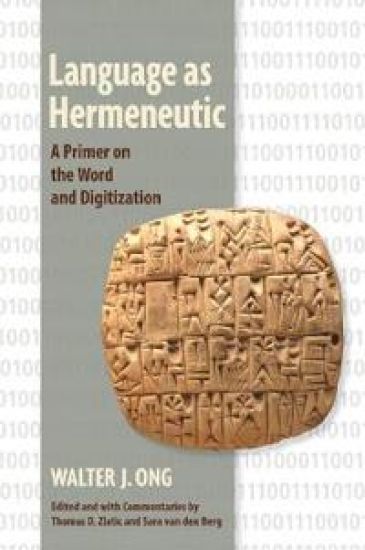
Language in all its modes—oral, written, print, electronic—claims the central role in Walter J. Ong's acclaimed speculations on human culture. After his death, his archives were found to contain unpublished drafts of a final book manuscript that Ong envisioned as a distillation of his life's work. This first publication of Language as Hermeneutic, reconstructed from Ong's various drafts by Thomas D. Zlatic and Sara van den Berg, is more than a summation of his thinking. It develops new arguments around issues of cognition, interpretation, and language. Digitization, he writes, is inherent in all forms of "writing," from its early beginnings in clay tablets. As digitization increases in print and now electronic culture, there is a corresponding need to counter the fractioning of digitization with the unitive attempts of hermeneutics, particularly hermeneutics that are modeled on oral rather than written paradigms. In addition to the edited text of Language as Hermeneutic, this volume includes essays on the reconstruction of Ong's work and its significance within Ong's intellectual project, as well as a previously unpublished article by Ong, "Time, Digitization, and Dalí's Memory," which further explores language's role in preserving and enhancing our humanity in the digital age.
Language in all its modes—oral, written, print, electronic—claims the central role in Walter J. Ong's acclaimed speculations on human culture. After his death, his archives were found to contain unpublished drafts of a final book manuscript that Ong envisioned as a distillation of his life's work. This first publication of Language as Hermeneutic, reconstructed from Ong's various drafts by Thomas D. Zlatic and Sara van den Berg, is more than a summation of his thinking. It develops new arguments around issues of cognition, interpretation, and language. Digitization, he writes, is inherent in all forms of "writing," from its early beginnings in clay tablets. As digitization increases in print and now electronic culture, there is a corresponding need to counter the fractioning of digitization with the unitive attempts of hermeneutics, particularly hermeneutics that are modeled on oral rather than written paradigms. In addition to the edited text of Language as Hermeneutic, this volume includes essays on the reconstruction of Ong's work and its significance within Ong's intellectual project, as well as a previously unpublished article by Ong, "Time, Digitization, and Dalí's Memory," which further explores language's role in preserving and enhancing our humanity in the digital age.
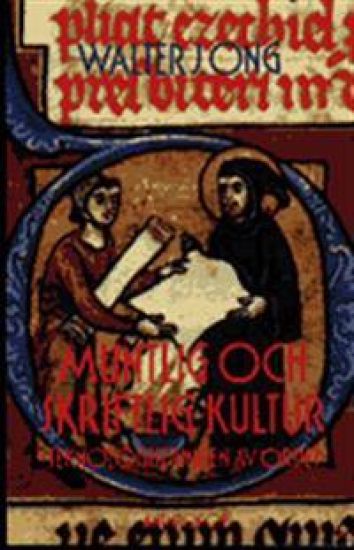
Muntlig och skriftlig kultur. Teknologiseringen av ordet
Walter J. Ong
Bokförlaget Daidalos
2015
nidottu
Walter J Ongs Muntlig och skriftlig kultur handlar om talets och skriftens historia. Ong försöker få oss - de skriftkulturella bokläsarna - att förstå muntlighetens uttrycks- och minnesfunktioner genom att ifrågasätta vedertagna föreställningar om ord, text, retorik, skriftsystem och litteraturtolkning. Boken ger också nya perspektiv på många av de skriftliga och muntliga uttrycksformer som omger oss idag. I vår elektroniska värld finns åtskilliga paralleller till tidigare epokers motsättningar mellan muntlighet och skriftlighet. Muntlig och skriftlig kultur är något av ett genombrottsverk inom sitt ämnesområde och utgör en utomordentlig sammanfattning av tidigare forskningsinsatser när det gäller förhållandet mellan det talade och det skrivna ordet, mellan muntliga och skriftliga uttrycksformer.
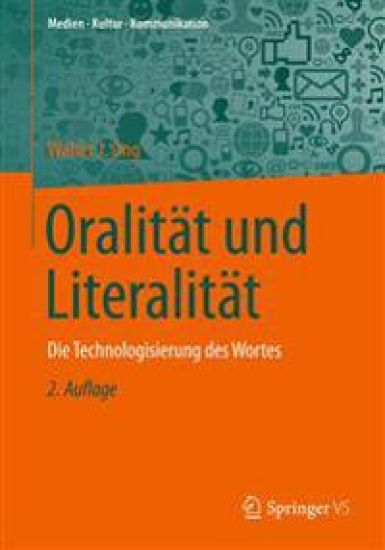
Walter J. Ongs Standardwerk erweist sich vor dem Hintergrund des heutigen Wandels von Medien, Kultur und Gesellschaft als relevanter denn je: Es bietet in anschaulicher Weise Einblicke in den Charakter mündlicher und schriftlicher Gesellschaften und führt damit vor Augen, welche zentrale Bedeutung der Transformation von Kommunikation für die gesellschaftliche und kulturelle Entwicklung zukommt. Ong zeichnet nach, wie tiefgreifend unsere gesamte Kultur durch den Übergang von der mündlichen zur schriftlichen und dann zur elektronischen Kommunikation, durch die Entwicklung des Schreibens und Druckens umgestaltet worden ist. Dieses Buch zeigt eindrucksvoll die unterschiedliche Bedeutung mündlicher und schriftlicher Kommunikationsweisen und hilft, die ‚zweite Oralität’ einer digitalen Medienumgebung zu verstehen. Es beantwortet Fragen wie: welchen Stellenwert hat gesprochene Sprache in einer schriftbasierten Gesellschaft? Wie haben sich Kulturen durch immer leistungsfähigere Aufzeichnungstechniken verändert? Und in welchem Spannungsverhältnis befinden sich Oralität und Literalität im elektronischen Zeitalter?