Kirjojen hintavertailu. Mukana 12 016 292 kirjaa ja 12 kauppaa.

Kirjahaku

Etsi kirjoja tekijän nimen, kirjan nimen tai ISBN:n perusteella.

2 kirjaa tekijältä Walter Marsh

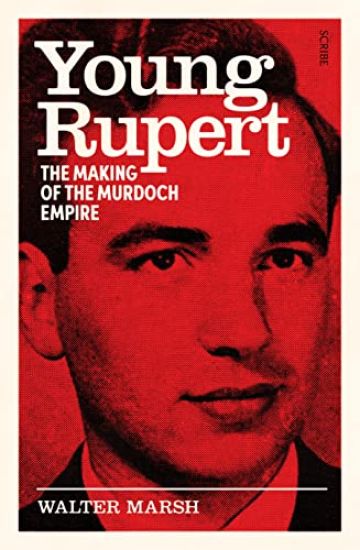
Young Rupert

Young Rupert

Walter Marsh

Scribe Publications
2023
pokkari
For half a century, the Murdoch media empire and its polarising patriarch have swept across the globe, shaking up markets and democracies in their wake. But how did it all start? In September 1953, 22-year-old Rupert Murdoch landed in Adelaide, South Australia. Fresh from Oxford with a radical reputation, the young and brash son of Sir Keith Murdoch had arrived to fulfill his father’s dying wish: for Rupert to live a ‘useful, altruistic, and full life’ in the media. For decades, Sir Keith had been a giant of the Australian press, but his final years were spent bitterly fending off rivals and would-be successors. When the dust settled on his father’s estate, Rupert was left with the Adelaide-based News Ltd and its afternoon paper The News — a minor player in a small, parochial city. But even this inheritance was soon under siege, as the left-wing ‘Boy Publisher’ stared down his father’s old colleagues at the city’s paper of record, The Advertiser, and a conservative establishment kept in power by a decades-old gerrymander. Led by Rupert’s friend, ally, and editor-in-chief Rohan Rivett, the fledgling Murdoch press began a seven-year campaign of circulation wars, expansion, and courtroom battles that divided the city and would lay the foundations for a global empire — if Rupert and Rohan didn’t end up in custody first. Drawing on unpublished archival material and new reportage, Young Rupert pieces together a paper trail of succession, sedition, and power — and a fascinating time capsule of Australian media on the cusp of an extraordinary ascension.
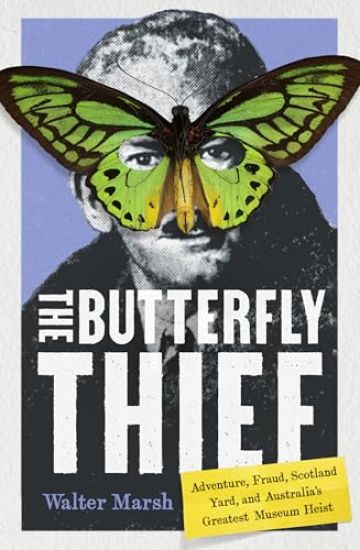
The Butterfly Thief: Adventure, Fraud, Scotland Yard, and Australia's Greatest Museum Heist
In a scientific true-crime caper stretching around the globe, The Butterfly Thief pieces together the bizarre story of a string of audacious twentieth-century burglaries at Australia's biggest museums, and their decades-long impact on the world of science. In January 1947, a chance discovery rocked the world of natural science: over 3,000 rare and precious specimens of butterflies had vanished from Australia's most prestigious museums in Sydney, Melbourne, and Adelaide. Alarmingly, the missing insects included many priceless "holotypes"--the first specimen of a given species to be identified, against which all others are compared. On the other side of the world, New Scotland Yard detectives and entomologists from the British Natural History Museum descended on a house in Surrey, England, where they found a haul of over 40,000 butterfly specimens. The culprit was a British ex-soldier, former champion skier, painter, semi-professional yodeller, and amateur lepidopterologist named Colin Wyatt. Years later, after Wyatt's interrogation and trial, the return of the butterflies to Australia, Wyatt's reemergence as a writer and adventurer, and his death in a 1975 plane crash, the very institutions that rejected him clamoured to acquire his vast illicit collection. Drawing on unpublished dossiers, case files, and on-the-ground reporting, The Butterfly Thief features a fascinating array of characters--including Nazi spies, spiritualists, and scoutmasters--and poses contemporary questions about colonialism and theft currently facing museums around the world.