Kirjojen hintavertailu. Mukana 11 342 296 kirjaa ja 12 kauppaa.

Kirjahaku

Etsi kirjoja tekijän nimen, kirjan nimen tai ISBN:n perusteella.

4 kirjaa tekijältä Wanda A. Hendricks

Fannie Barrier Williams

Fannie Barrier Williams

Wanda A. Hendricks

University of Illinois Press
2013
sidottu
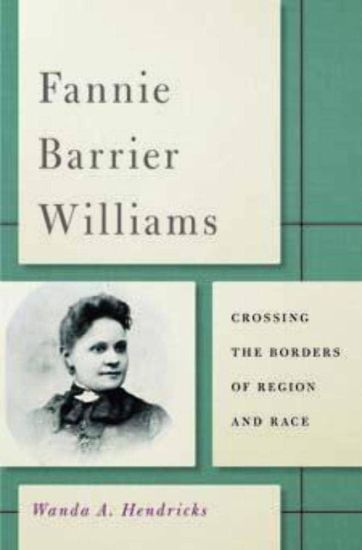
Born shortly before the Civil War, activist and reformer Fannie Barrier Williams (1855-1944) became one of the most prominent educated African American women of her generation. Hendricks shows how Williams became "raced" for the first time in early adulthood, when she became a teacher in Missouri and Washington, D.C., and faced the injustices of racism and the stark contrast between the lives of freed slaves and her own privileged upbringing in a western New York village. She carried this new awareness to Chicago, where she joined forces with black and predominantly white women's clubs, the Unitarian church, and various other interracial social justice organizations to become a prominent spokesperson for Progressive economic, racial, and gender reforms during the transformative period of industrialization. By highlighting how Williams experienced a set of freedoms in the North that were not imaginable in the South, this clearly-written, widely accessible biography expands how we understand intellectual possibilities, economic success, and social mobility in post-Reconstruction America.
The Life of Madie Hall Xuma

The Life of Madie Hall Xuma

Wanda A. Hendricks

UNIVERSITY OF ILLINOIS PRESS
2022
sidottu
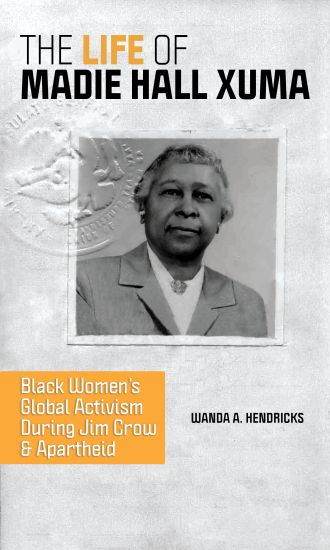
Revered in South Africa as "An African American Mother of the Nation," Madie Beatrice Hall Xuma spent her extraordinary life immersed in global women's activism. Wanda A. Hendricks's biography follows Hall Xuma from her upbringing in the Jim Crow South to her leadership role in the African National Congress (ANC) and beyond. Hall Xuma was already known for her social welfare work when she married South African physician and ANC activist Alfred Bitini Xuma. Becoming president of the ANC Women’s League put Hall Xuma at the forefront of fighting racial discrimination as South Africa moved toward apartheid. Hendricks provides the long-overlooked context for the events that undergirded Hall Xuma’s life and work. As she shows, a confluence of history, ideas, and organizations both shaped Hall Xuma and centered her in the histories of Black women and women’s activism, and of South Africa and the United States.
Fannie Barrier Williams

Fannie Barrier Williams

Wanda A. Hendricks

University of Illinois Press
2013
nidottu
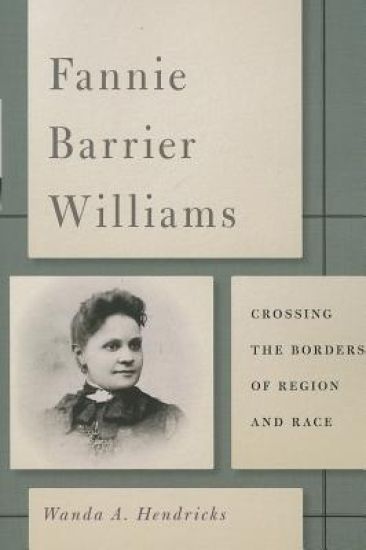
Born shortly before the Civil War, activist and reformer Fannie Barrier Williams (1855-1944) became one of the most prominent educated African American women of her generation. Hendricks shows how Williams became "raced" for the first time in early adulthood, when she became a teacher in Missouri and Washington, D.C., and faced the injustices of racism and the stark contrast between the lives of freed slaves and her own privileged upbringing in a western New York village. She carried this new awareness to Chicago, where she joined forces with black and predominantly white women's clubs, the Unitarian church, and various other interracial social justice organizations to become a prominent spokesperson for Progressive economic, racial, and gender reforms during the transformative period of industrialization. By highlighting how Williams experienced a set of freedoms in the North that were not imaginable in the South, this clearly-written, widely accessible biography expands how we understand intellectual possibilities, economic success, and social mobility in post-Reconstruction America.
The Life of Madie Hall Xuma

The Life of Madie Hall Xuma

Wanda A. Hendricks

UNIVERSITY OF ILLINOIS PRESS
2022
nidottu
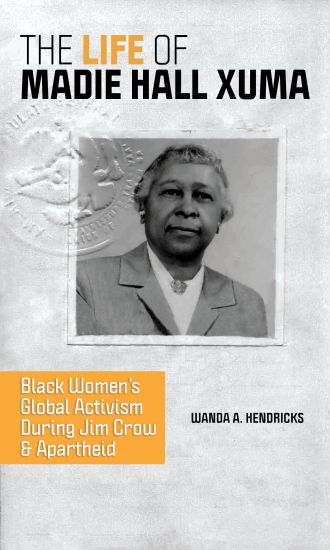
Revered in South Africa as "An African American Mother of the Nation," Madie Beatrice Hall Xuma spent her extraordinary life immersed in global women's activism. Wanda A. Hendricks's biography follows Hall Xuma from her upbringing in the Jim Crow South to her leadership role in the African National Congress (ANC) and beyond. Hall Xuma was already known for her social welfare work when she married South African physician and ANC activist Alfred Bitini Xuma. Becoming president of the ANC Women’s League put Hall Xuma at the forefront of fighting racial discrimination as South Africa moved toward apartheid. Hendricks provides the long-overlooked context for the events that undergirded Hall Xuma’s life and work. As she shows, a confluence of history, ideas, and organizations both shaped Hall Xuma and centered her in the histories of Black women and women’s activism, and of South Africa and the United States.