Kirjojen hintavertailu. Mukana 11 342 296 kirjaa ja 12 kauppaa.

Kirjahaku

Etsi kirjoja tekijän nimen, kirjan nimen tai ISBN:n perusteella.

4 kirjaa tekijältä Wang Wei

Selected Poems: Wang Wei

Selected Poems: Wang Wei

Wang Wei

Anvil Press Poetry
2009
nidottu
Wang Wei (701-761 AD) is often spoken of, with his contemporaries Li Po and Tu Fu, as one of the three greatest poets in China's 3,000-year poetic history. He was the consummate master of the short imagistic landscape poem that came to typify classical Chinese poetry, with poems of resounding tranquillity whose style and substance can be traced to his practice of Ch'an (Zen) Buddhism. But in spite of this philosophical depth, Wang is not a difficult poet. He may in fact be the most immediately appealing of China's great poets, and in Hinton's masterful translations he sounds utterly contemporary.
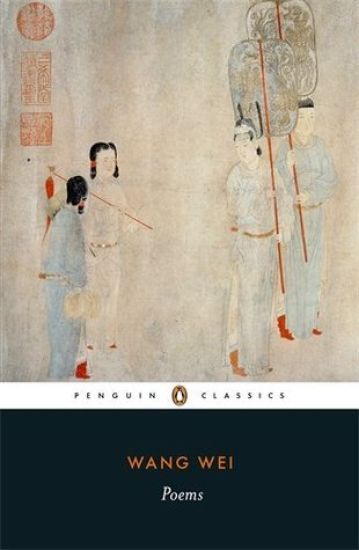
Poems

Poems

Wang Wei

Penguin Classics
2015
pokkari
Wang Wei, one of Chinese literature's greatest poets, divided his time between the court and his country estate, where he drew inspiration from the mountains and solitude. His poetry affirms his belief in a whole natural order, and his delicately observed descriptions of landscapes are infused throughout with a sense of unity and Buddhist devotion. Yet it also bears testament to the tension Wang Wei experienced in his own life, between that unity and the worldly pleasures of life at court: the result is some of the most memorable poetry in Chinese literature.
Philosophy of Science

Philosophy of Science

Wang Wei

TAYLOR FRANCIS LTD
2022
nidottu
The book is a translation of the second edition of a much-used and research-based Chinese textbook. As a succinct and issue-based introduction to the Western philosophy of science, the book brings eight focal issues in the field to the fore and augments each topic by incorporating Chinese perspectives.Followed by an overview of the historical framework and logical underpinnings of the philosophy of science, the book thoroughly discusses eight issues in the discipline: (1) the criteria of cognitive meaning, (2) induction and confirmation, (3) scientific explanation, (4) theories of scientific growth, (5) the demarcation between science and pseudoscience, (6) scientific realism and empiricism; (7) the philosophy of scientific experimentation, (8) science and value. Not confined to Western mainstream discourse in this field, the book also introduces voices of Chinese philosophers of note and adopts a stance that productively combines logical empiricism and Kuhnianism, both of which tend to be covered in less detail by many English language textbooks. In the final chapter the author offers a prognosis regarding the future of the discipline based on recent trends.This book will be of value to students who study philosophy of science and hope to gain a better understanding of science and technology.
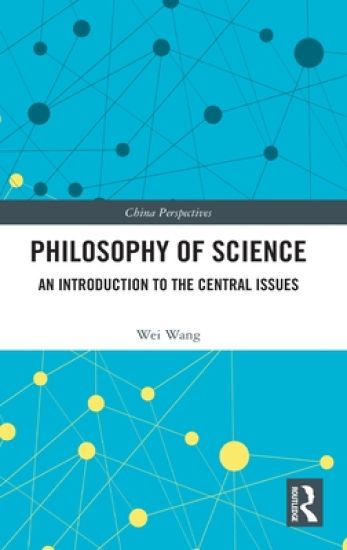
Philosophy of Science

Philosophy of Science

Wang Wei

Routledge
2020
sidottu
The book is a translation of the second edition of a much-used and research-based Chinese textbook. As a succinct and issue-based introduction to the Western philosophy of science, the book brings eight focal issues in the field to the fore and augments each topic by incorporating Chinese perspectives.Followed by an overview of the historical framework and logical underpinnings of the philosophy of science, the book thoroughly discusses eight issues in the discipline: (1) the criteria of cognitive meaning, (2) induction and confirmation, (3) scientific explanation, (4) theories of scientific growth, (5) the demarcation between science and pseudoscience, (6) scientific realism and empiricism; (7) the philosophy of scientific experimentation, (8) science and value. Not confined to Western mainstream discourse in this field, the book also introduces voices of Chinese philosophers of note and adopts a stance that productively combines logical empiricism and Kuhnianism, both of which tend to be covered in less detail by many English language textbooks. In the final chapter the author offers a prognosis regarding the future of the discipline based on recent trends.This book will be of value to students who study philosophy of science and hope to gain a better understanding of science and technology.