Kirjojen hintavertailu. Mukana 12 390 323 kirjaa ja 12 kauppaa.

Kirjahaku

Etsi kirjoja tekijän nimen, kirjan nimen tai ISBN:n perusteella.

12 kirjaa tekijältä Warren Chernaik

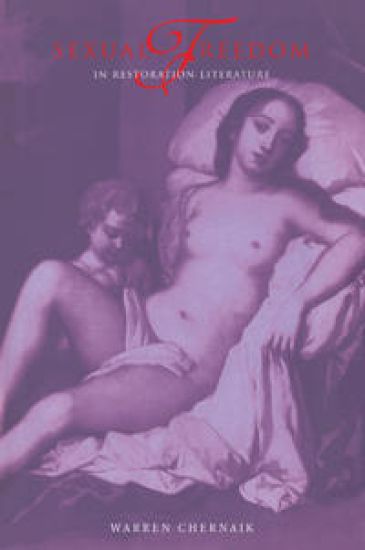
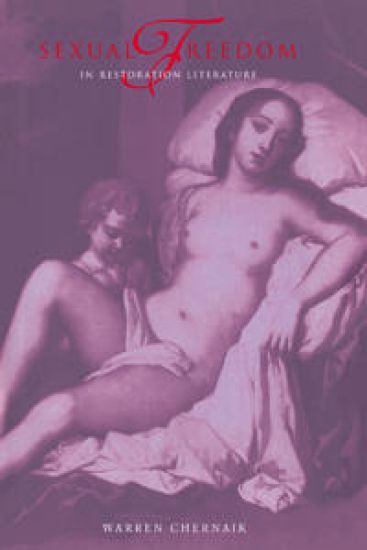
Sexual Freedom in Restoration Literature

Sexual Freedom in Restoration Literature

Warren Chernaik

Cambridge University Press
2008
pokkari
The pursuit of sexual freedom and its political, philosophical and practical implications are the themes of this wide-ranging study of restoration literature, which confronts ideological issues of sexual politics equally relevant to modern debate. The author examines the writers of the later seventeenth century in their historical context, and focuses particularly on what happens when women desire sexual freedom as well as men. In a study of the writings, notorious for their sexual candour, of the Earl of Rochester, God-haunted atheist and licensed rebel of the Restoration court, and Aphra Behn, the most prominent and most controversial woman writer of the period, the author explores some of the tensions inherent in the ideology of individual liberty as applied to the conduct of sexual relations inside and outside marriage. The works by Rochester, Aphra Behn and their contemporaries gain much of their power from the ambivalence with which they treat the competing claims of freedom and authority, rebelliousness and security, the assertion of power and the need to love.
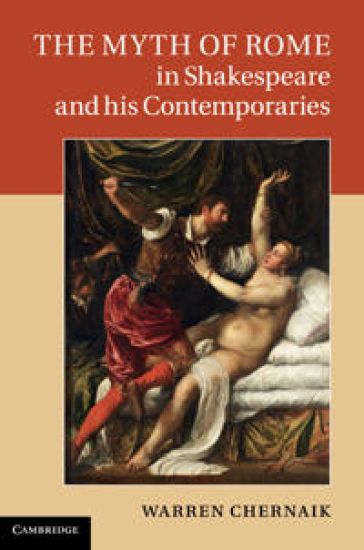
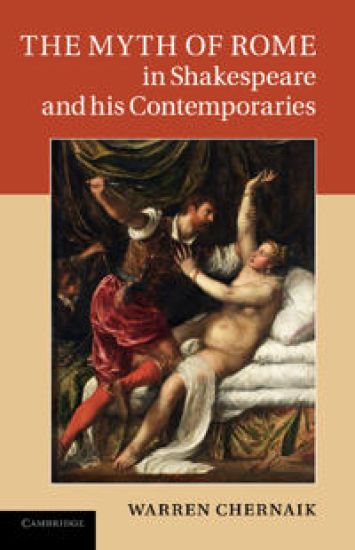
The Myth of Rome in Shakespeare and his Contemporaries

The Myth of Rome in Shakespeare and his Contemporaries

Warren Chernaik

Cambridge University Press
2011
sidottu
When Cleopatra expresses a desire to die 'after the high Roman fashion', acting in accordance with 'what's brave, what's noble', Shakespeare is suggesting that there are certain values that are characteristically Roman. The use of the terms 'Rome' and 'Roman' in Julius Caesar, Antony and Cleopatra or Jonson's Sejanus often carry the implication that most people fail to live up to this ideal of conduct, that very few Romans are worthy of the name. In this book Chernaik demonstrates how, in these plays, Roman values are held up to critical scrutiny. The plays of Shakespeare, Jonson, Massinger and Chapman often present a much darker image of Rome, as exemplifying barbarism rather than civility. Through a comparative analysis of the Roman plays of Shakespeare and his contemporaries, and including detailed discussion of the classical historians Livy, Tacitus and Plutarch, this study examines the uses of Roman history - 'the myth of Rome' - in Shakespeare's age.
Sexual Freedom in Restoration Literature

Sexual Freedom in Restoration Literature

Warren Chernaik

Cambridge University Press
1995
sidottu
The pursuit of sexual freedom and its political, philosophical and practical implications are the themes of this wide-ranging new study of restoration literature, which confronts ideological issues of sexual politics equally relevant to modern debate. The author examines the writers of the later seventeenth century in their historical context, and focuses particularly on what happens when women desire sexual freedom as well as men. In a study of the writings, notorious for their sexual candour, of the Earl of Rochester, God-haunted atheist and licensed rebel of the Restoration court, and Aphra Behn, the most prominent and most controversial woman writer of the period, the author explores some of the tensions inherent in the ideology of individual liberty as applied to the conduct of sexual relations inside and outside marriage. The works by Rochester, Aphra Behn and their contemporaries gain much of their power from the ambivalence with which they treat the competing claims of freedom and authority, rebelliousness and security, the assertion of power and the need to love.
The Cambridge Introduction to Shakespeare's History Plays

The Cambridge Introduction to Shakespeare's History Plays

Warren Chernaik

Cambridge University Press
2007
pokkari
Shakespeare's history plays, as fresh today as when they were written, are based upon the assumption that time is not simply a destroyer but a preserver, and that 'examples past' might enable us to understand the present and anticipate the future. This lively 2007 study examines the continuing tradition of Shakespeare's history plays in stage and film productions as well as giving an account of the critical debate on these plays. Following two introductory chapters giving essential background on the genre, the English history plays are discussed in turn, bringing out the distinctive characteristics of each play: the three early Henry VI plays; the perennial stage favourite Richard III; King John; Richard II; Henry IV 1 and 2, famous for the character of Falstaff; Henry V, which is treated very differently in the film versions by Olivier and Branagh; and Henry VIII. An invaluable introduction to these fascinating and complex plays.
The Cambridge Introduction to Shakespeare's History Plays

The Cambridge Introduction to Shakespeare's History Plays

Warren Chernaik

Cambridge University Press
2007
sidottu
Shakespeare's history plays, as fresh today as when they were written, are based upon the assumption that time is not simply a destroyer but a preserver, and that 'examples past' might enable us to understand the present and anticipate the future. This lively 2007 study examines the continuing tradition of Shakespeare's history plays in stage and film productions as well as giving an account of the critical debate on these plays. Following two introductory chapters giving essential background on the genre, the English history plays are discussed in turn, bringing out the distinctive characteristics of each play: the three early Henry VI plays; the perennial stage favourite Richard III; King John; Richard II; Henry IV 1 and 2, famous for the character of Falstaff; Henry V, which is treated very differently in the film versions by Olivier and Branagh; and Henry VIII. An invaluable introduction to these fascinating and complex plays.
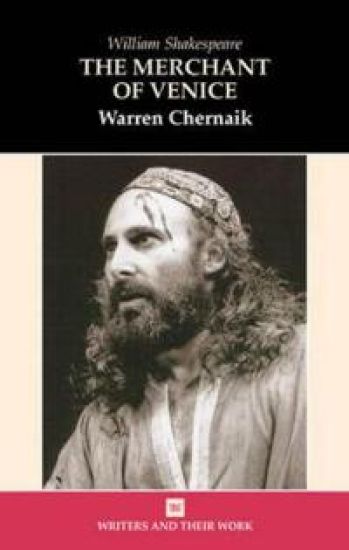
The Merchant of Venice

The Merchant of Venice

Warren Chernaik

Northcote House Publishers Ltd
2005
nidottu
The portrayal of a Jewish money-lender in The Merchant of Venice, who is full of bitterness and hatred, unrelenting in his pursuit of revenge against his enemies, can stir up feelings of unease in Jews and non-Jews alike. This book shows how directors, actors, and critics have sought by various strategies to exorcise the demon of anti-semitism.
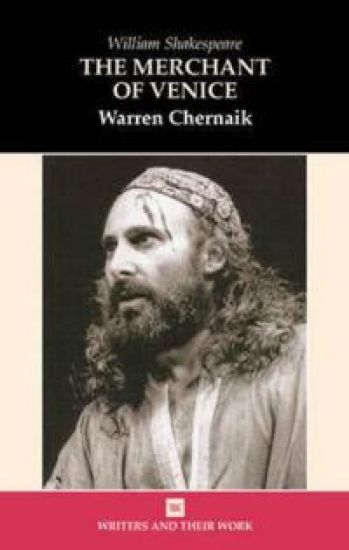
The Merchant of Venice

The Merchant of Venice

Warren Chernaik

Northcote House Publishers Ltd
2004
sidottu
The portrayal of a Jewish money-lender in The Merchant of Venice, who is full of bitterness and hatred, unrelenting in his pursuit of revenge against his enemies, can stir up feelings of unease in Jews and non-Jews alike. This book shows how directors, actors, and critics have sought by various strategies to exorcise the demon of anti-semitism.
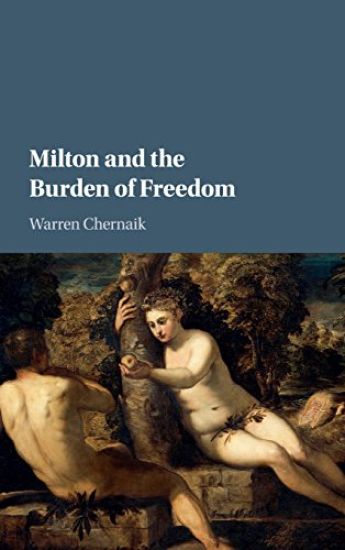
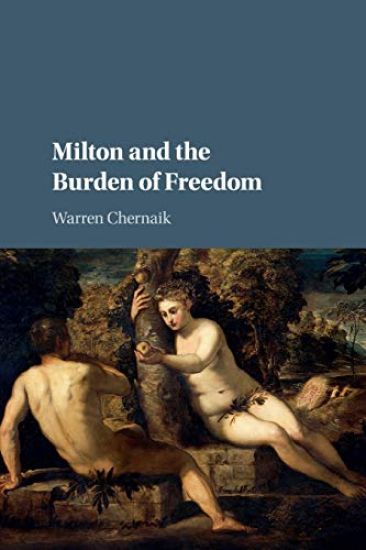
Milton and the Burden of Freedom

Milton and the Burden of Freedom

Warren Chernaik

Cambridge University Press
2017
sidottu
Throughout his writings, Milton, deeply engaged in political and theological controversy, sought to clear a space for human freedom in a world ruled by an omniscient and omnipotent deity. Paradise Lost and Samson Agonistes, as well as other works by Milton in verse and prose, explore the problematical aspects of a universe ruled by an Old Testament God of wrath, demanding obedience, who allows his creatures the freedom to be 'authors' of their own fate. Milton and the Burden of Freedom examines the contradictions inherent in Milton's religious, political, and ethical beliefs as expressed in his poems, prose writings, and the treatise De Doctrina Christiana. Milton, whose writings are rooted in the Reformed tradition while challenging Calvinist orthodoxy, is both radical and conservative. In this book, Warren Chernaik traces the evolution of Milton's attitude towards freedom, servitude and virtue during a century of political upheaval and disappointed hopes.
The Myth of Rome in Shakespeare and his Contemporaries

The Myth of Rome in Shakespeare and his Contemporaries

Warren Chernaik

Cambridge University Press
2013
pokkari
When Cleopatra expresses a desire to die 'after the high Roman fashion', acting in accordance with 'what's brave, what's noble', Shakespeare is suggesting that there are certain values that are characteristically Roman. The use of the terms 'Rome' and 'Roman' in Julius Caesar, Antony and Cleopatra or Jonson's Sejanus often carry the implication that most people fail to live up to this ideal of conduct, that very few Romans are worthy of the name. In this book Chernaik demonstrates how, in these plays, Roman values are held up to critical scrutiny. The plays of Shakespeare, Jonson, Massinger and Chapman often present a much darker image of Rome, as exemplifying barbarism rather than civility. Through a comparative analysis of the Roman plays of Shakespeare and his contemporaries, and including detailed discussion of the classical historians Livy, Tacitus and Plutarch, this study examines the uses of Roman history - 'the myth of Rome' - in Shakespeare's age.
Milton and the Burden of Freedom

Milton and the Burden of Freedom

Warren Chernaik

Cambridge University Press
2019
pokkari
Throughout his writings, Milton, deeply engaged in political and theological controversy, sought to clear a space for human freedom in a world ruled by an omniscient and omnipotent deity. Paradise Lost and Samson Agonistes, as well as other works by Milton in verse and prose, explore the problematical aspects of a universe ruled by an Old Testament God of wrath, demanding obedience, who allows his creatures the freedom to be 'authors' of their own fate. Milton and the Burden of Freedom examines the contradictions inherent in Milton's religious, political, and ethical beliefs as expressed in his poems, prose writings, and the treatise De Doctrina Christiana. Milton, whose writings are rooted in the Reformed tradition while challenging Calvinist orthodoxy, is both radical and conservative. In this book, Warren Chernaik traces the evolution of Milton's attitude towards freedom, servitude and virtue during a century of political upheaval and disappointed hopes.