Kirjojen hintavertailu. Mukana 11 342 296 kirjaa ja 12 kauppaa.

Kirjahaku

Etsi kirjoja tekijän nimen, kirjan nimen tai ISBN:n perusteella.

8 kirjaa tekijältä Warren Montag

Louis Althusser

Louis Althusser

Warren Montag

Red Globe Press
2002
sidottu
The publication of Louis Althusser's autobiography, The Future Lasts Forever, shattered the myth of Althusser as austere structural Marxist. It not only illuminated the private life of this public thinker, but suggested that his previously published works could be read very differently.Louis Althusser is the first major overview of Althusser's work since the publication in French of thousands of pages of essays, books and letters unknown before 1990, and makes a strong case for a radical reconsideration of his work in the light of this new material. Focusing particularly on Althusser's writings on art, theatre and literature (as well as those of Althusser's collaborator, Pierre Macherey), Warren Montag traces the contradictory development of Althusser's thought from the early sixties to his autobiography. Additional material includes an annotated bibliography of texts by and on Althusser, and the book also features a previously untranslated essay by the theorist on Brecht and Marx.
Louis Althusser

Louis Althusser

Warren Montag

Red Globe Press
2002
nidottu
The publication of Louis Althusser's autobiography, The Future Lasts Forever, shattered the myth of Althusser as austere structural Marxist. It not only illuminated the private life of this public thinker, but suggested that his previously published works could be read very differently.Louis Althusser is the first major overview of Althusser's work since the publication in French of thousands of pages of essays, books and letters unknown before 1990, and makes a strong case for a radical reconsideration of his work in the light of this new material. Focusing particularly on Althusser's writings on art, theatre and literature (as well as those of Althusser's collaborator, Pierre Macherey), Warren Montag traces the contradictory development of Althusser's thought from the early sixties to his autobiography. Additional material includes an annotated bibliography of texts by and on Althusser, and the book also features a previously untranslated essay by the theorist on Brecht and Marx.
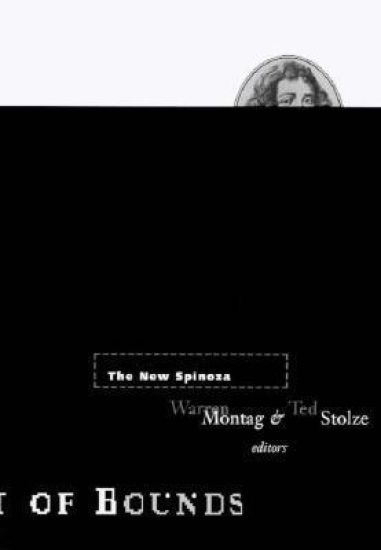
The New Spinoza

The New Spinoza

Warren Montag

University of Minnesota Press
2008
nidottu
To see the presence of Spinoza, Louis Althusser once quipped "one must at least have heard of him". The essays collected in this volume suggest that what applies to Althusser applies to this whole generation - that Spinoza is an unsuspected but very real presence in the work of contemporary phiolsophers from Deleuze and Lacan to Foucault and Derrida. This text articulates that presence, aiming to make the influence and significance of Spinoza clear for a new generation of philosophers.
Althusser and His Contemporaries

Althusser and His Contemporaries

Warren Montag

Duke University Press
2013
sidottu
Althusser and His Contemporaries alters and expands understanding of Louis Althusser and French philosophy of the 1960s and 1970s. Thousands of pages of previously unpublished work from different periods of Althusser's career have been made available in French since his death in 1990. Based on meticulous study of the philosopher's posthumous publications, as well as his unpublished manuscripts, lecture notes, letters, and marginalia, Warren Montag provides a thoroughgoing reevaluation of Althusser's philosophical project. Montag shows that the theorist was intensely engaged with the work of his contemporaries, particularly Foucault, Derrida, Deleuze, and Lacan. Examining Althusser's philosophy as a series of encounters with his peers' thought, Montag contends that Althusser's major philosophical confrontations revolved around three themes: structure, subject, and beginnings and endings. Reading Althusser reading his contemporaries, Montag sheds new light on structuralism, poststructuralism, and the extraordinary moment of French thought in the 1960s and 1970s.
Althusser and His Contemporaries

Althusser and His Contemporaries

Warren Montag

Duke University Press
2013
pokkari
Althusser and His Contemporaries alters and expands understanding of Louis Althusser and French philosophy of the 1960s and 1970s. Thousands of pages of previously unpublished work from different periods of Althusser's career have been made available in French since his death in 1990. Based on meticulous study of the philosopher's posthumous publications, as well as his unpublished manuscripts, lecture notes, letters, and marginalia, Warren Montag provides a thoroughgoing reevaluation of Althusser's philosophical project. Montag shows that the theorist was intensely engaged with the work of his contemporaries, particularly Foucault, Derrida, Deleuze, and Lacan. Examining Althusser's philosophy as a series of encounters with his peers' thought, Montag contends that Althusser's major philosophical confrontations revolved around three themes: structure, subject, and beginnings and endings. Reading Althusser reading his contemporaries, Montag sheds new light on structuralism, poststructuralism, and the extraordinary moment of French thought in the 1960s and 1970s.
Balibar and the Citizen Subject

Balibar and the Citizen Subject

Warren Montag

Edinburgh University Press
2018
nidottu
This collection explores Balibar's rethinking of the connections between subjection and subjectivity by tracing the genealogies of these concepts in their discursive history. The 12 essays provide an overview of Balibar's work after his collaboration with Althusser. They explain and expand his framework; in particular, by restoring Arabic and Islamic thought to the conversation on the citizen subject. The collection includes two previously untranslated essays by Balibar himself on Carl Schmitt and Thomas Hobbes.
The Unthinkable Swift

The Unthinkable Swift

Warren Montag

Verso Books
1994
nidottu
No major figure of the English Augustan period has generated stronger and more contradictory views than Jonathan Swift. Scourge of the Whig ascendancy in his own day, vilified by the Victorians, celebrated by Yeats, he has in recent years become a significant bone of contention for prominent figures on the left like E.P. Thompson and Perry Anderson.In this highly original and subtle new study, Warren Montag situates Swift in relation to the ideological and political currents of the late seventeenth and early eighteenth centuries-in particular to what Montag perspicaciously identifies as the long crisis of the British state. Swift's perspective, he argues, was determined less by his personality or psychology than by his position as an Anglican cleric. The church, an instrument of the Tudor and Stuart absolutist state, lapsed into institutional and ideological crisis after the Stuart's fall. In Montag's view, Swift's writings were a defense of this increasingly indefensible institution. Swift employed satire because only in the negative representations of this literary form could the now effectively 'unthinkable' doctrines of the Church be made to appear.Opening with a historical survey of the crisis of English absolutism and the Anglican Church, Montag then gives a definitive account of the specific conflicts in philosophy against which Swift's Anglican orthodoxy was aligned. Detailed examinations of Swift's two prose masterpieces, A Tale of a Tub and Gulliver's Travels, follow.Historically and philosophically informed, The Unthinkable Swift contributes not only to our understanding of a seminal figure in English literary history but also to the study of historical ideologies, in particular the once dominant religious tradition at the dawn of the first modern capitalist state.
Bodies, Masses, Power

Bodies, Masses, Power

Warren Montag

Verso Books
1999
sidottu
This book seeks to show, against the grain of English language commentary, that Spinoza is neither a Cartesian nor a liberal but precisely the most thoroughgoing materialist in the history of philosophy. The work begins by examining Spinoza's notion of the materiality of writing, a notion developed through his examination of scripture. It then postulates the three fundamental principles of Spinoza's philosophy: there can be no liberation of the mind without a liberation of the body, and no liberation of the individual without a collective liberation, and that the written form of these propositions itself possesses a corporeal existence, not as the realization or materialization of a pre-existing mental, spiritual intention, but as a body among other bodies. Ultimately, the book prompts us to consider Spinoza's philosophy anew, by replacing questions like "Who has read it?" and "Of those, how many of us have understood it?" with "What material effects has it produced, not only on or in minds, but on bodies as well?" and "To what extent has it moved bodies and what has it moved them to?"