
Kirjojen hintavertailu. Mukana 12 016 292 kirjaa ja 12 kauppaa.

Kirjahaku

Etsi kirjoja tekijän nimen, kirjan nimen tai ISBN:n perusteella.

3 kirjaa tekijältä Warren S. Poland

Intimacy and Separateness in Psychoanalysis
Clinical psychoanalysis serves as our best laboratory for exploring the riddle of what it is to be a person, and how a person is at once singularly unique while always a piece of the interpersonal fabric of humanity. In Intimacy and Separateness in Psychoanalysis, Warren Poland casts a freshly erudite eye on this paradox, resisting individual or intersubjective bias and avoiding the parochial allegiances common in our age of pluralism.Poland combines vivid reports from clinical analyses, literary readings, and his own life – all unfolding original observations on a person as both a part of and apart from human commonality. His consideration of how one person’s witnessing facilitates another’s self-definition, a concept extended here in his study of outsiderness as part of human nature, has been marked a keynote contribution. Clinical illustrations of moments that matter but are usually omitted from public presentation are set alongside examples of reading powerful fiction to show how analyst and author both incite fresh openness in a person’s mind. Poland goes farther, exposing the personal power of union and separateness in its keenest form, facing the ultimate separation of one’s own actual death. Only with separateness can true intimacy grow, and only within the fabric of others can true individuality exist. This evocative book, ranging from the lightness of whimsy to the dread of dying, allows every reader to taste of and learn from Poland’s thinking. Psychoanalyst or patient, writer or reader, each one living one’s own life – all can find new understandings in this work.

Intimacy and Separateness in Psychoanalysis
Clinical psychoanalysis serves as our best laboratory for exploring the riddle of what it is to be a person, and how a person is at once singularly unique while always a piece of the interpersonal fabric of humanity. In Intimacy and Separateness in Psychoanalysis, Warren Poland casts a freshly erudite eye on this paradox, resisting individual or intersubjective bias and avoiding the parochial allegiances common in our age of pluralism.Poland combines vivid reports from clinical analyses, literary readings, and his own life – all unfolding original observations on a person as both a part of and apart from human commonality. His consideration of how one person’s witnessing facilitates another’s self-definition, a concept extended here in his study of outsiderness as part of human nature, has been marked a keynote contribution. Clinical illustrations of moments that matter but are usually omitted from public presentation are set alongside examples of reading powerful fiction to show how analyst and author both incite fresh openness in a person’s mind. Poland goes farther, exposing the personal power of union and separateness in its keenest form, facing the ultimate separation of one’s own actual death. Only with separateness can true intimacy grow, and only within the fabric of others can true individuality exist. This evocative book, ranging from the lightness of whimsy to the dread of dying, allows every reader to taste of and learn from Poland’s thinking. Psychoanalyst or patient, writer or reader, each one living one’s own life – all can find new understandings in this work.
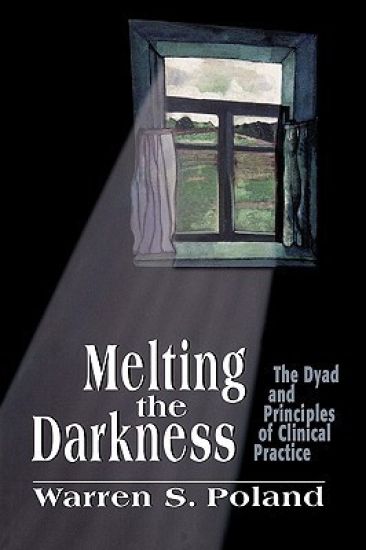
Melting the Darkness

Melting the Darkness

Warren S. Poland

Jason Aronson Inc. Publishers
1996
sidottu
Clinician and psychoanalyst Warren S. Poland addresses some of the key questions in the field today. What is an analysis? What is the relationship of the individual patient to the specific analyst and to the work at hand? How can attention to the uniqueness of an individual patient be balanced with the inevitable pressures of the clinical partnership? And, put in the other direction, how can respect for the inevitable imperatives of the dyadic field be balanced with the primacy of the exploration of the patient's mind? How can the interactive context of clinical work be created without compromising the centrality of the search for meanings derivative from unconscious forces within the patient as a singular individual?. Containing clinical examples, this book should be of interest to anyone interested in psychotherapy.