Kirjojen hintavertailu. Mukana 11 433 028 kirjaa ja 12 kauppaa.

Kirjahaku

Etsi kirjoja tekijän nimen, kirjan nimen tai ISBN:n perusteella.

6 kirjaa tekijältä Wayne Andrews

Voltaire

Voltaire

Wayne Andrews

New Directions Publishing Corporation
2007
nidottu
This is a short biography. Its subject, François Marie Arouet de Voltaire (1694-1778), would not have objected––he was careful to point out that “the surest way of being a bore is to tell everything.” What Wayne Andrews’s Voltaire may lack in laundry lists is made up in wit, learning, and an elegance of style eminently appropriate for an appreciation of a man who was never so ruthless as when eliminating the last trace of dust from his own writing. Indeed, Voltaire was the most successful writer of the eighteenth century. It matters little that his plays are today a lost cause, as is his poetry––the author of Candide and the Age of Louis XIV will always have his audience. His irreverence guarantees his immortality. While stressing Voltaire’s eternal campaign against Christianity and his monumental efforts to effect justice in an autocratic era, Andrews maintains that his primary loyalty was always to himself. The fervent anti-Christian had his firm friends in the Church. The social philosopher courted Catherine the Great with near servility. But, in Victor Hugo’s words: “His smile put an end to violence, his sarcasm put an end to despotism, his irony put an end to infallibility, his perseverance put an end to stubbornness, and the truth he proclaimed put an end to ignorance.”
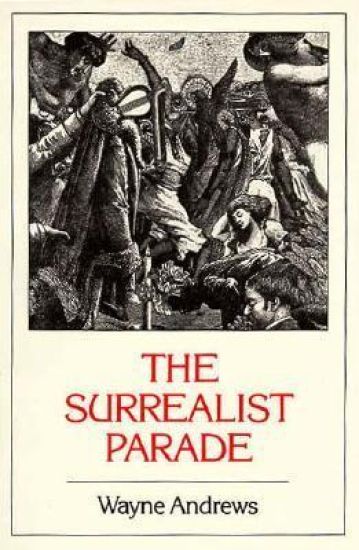
The Surrealist Parade: Literary history

The Surrealist Parade: Literary history

Wayne Andrews

New Directions Publishing Corporation
1990
sidottu
“The menace of surrealism was so frequently advertised that any reader of this book should be allowed the impudence of demanding my credentials.” So opens Wayne Andrews’s The Surrealist Parade, a portrait of the movement in literature and art by a man who, at the age of nineteen, began to correspond with its major figures and afterward came to know them well. Under the name of Montagu O’Reilly, Andrews wrote the surrealist fiction Pianos of Sympathy (1936), the very first New Directions book. In later years, Andrews became a social historian, art archivist, and scholar of architectural history, publishing no less than sixteen books, among them his well-known study of the cultural roots of Nazism, Siegfried’s Curse, and a pungent biography of Voltaire (meanwhile, Montagu O’Reilly had made a reappearance on the ND list in 1948 with Who Has Been Tampering with These Pianos?). When Andrews died in 1987, he had completed all but the last chapter of The Surrealist Parade, his portrait of a movement in art and literature that took in such disparate temperaments as André Breton, Paul Éluard, and Salvador Dalí. The book is, in the words of his lifelong friend and publisher, James Laughlin, a “little insider’s history… Montagu is very much behind Wayne in these caustic yet admiring sketches.”
The Surrealist Parade: Literary history

The Surrealist Parade: Literary history

Wayne Andrews

New Directions Publishing Corporation
1990
nidottu
“The menace of surrealism was so frequently advertised that any reader of this book should be allowed the impudence of demanding my credentials.” So opens Wayne Andrews’s The Surrealist Parade, a portrait of the movement in literature and art by a man who, at the age of nineteen, began to correspond with its major figures and afterward came to know them well. Under the name of Montagu O’Reilly, Andrews wrote the surrealist fiction Pianos of Sympathy (1936), the very first New Directions book. In later years, Andrews became a social historian, art archivist, and scholar of architectural history, publishing no less than sixteen books, among them his well-known study of the cultural roots of Nazism, Siegfried’s Curse, and a pungent biography of Voltaire (meanwhile, Montagu O’Reilly had made a reappearance on the ND list in 1948 with Who Has Been Tampering with These Pianos?). When Andrews died in 1987, he had completed all but the last chapter of The Surrealist Parade, his portrait of a movement in art and literature that took in such disparate temperaments as André Breton, Paul Éluard, and Salvador Dalí. The book is, in the words of his lifelong friend and publisher, James Laughlin, a “little insider’s history… Montagu is very much behind Wayne in these caustic yet admiring sketches.”
Architecture in Michigan

Architecture in Michigan

Wayne Andrews

Wayne State University Press
1982
nidottu
Architecture in Michigan, a pictorial survey of Michigan architecture from 1831 to the present, explores the architecture of Detroit and many other cities, towns, and villages. Here is Romantic Michigan, before the Civil War, with dozens of examples of Greek, Gothic, and Italian villas from Grosse lIe to Grass Lake, Tecumseh, and Ypsilanti, as well as Gothic churches.Then there is Glorious Michigan of the exuberant 1870s and 1880s, when architects evoked the Paris of the Second Empire and the doctrine of John Ruskin cast its peculiar spell. And Discreet Michigan, when the wealthy, following the lead of the Vanderbilts in New York, revived the Renaissance as the proper style for Michigan dynasties.And finally Modern Michigan, with Albert Kahn, the greatest factory architect in history, Eliel and Eero Saarinen, the talented Finns, the time when the buildings of modern Michigan began to acquire an international reputation. The expanded text of this unique book dips deep into Michigan history, covering every generation since Michigan entered the Union in 1837.
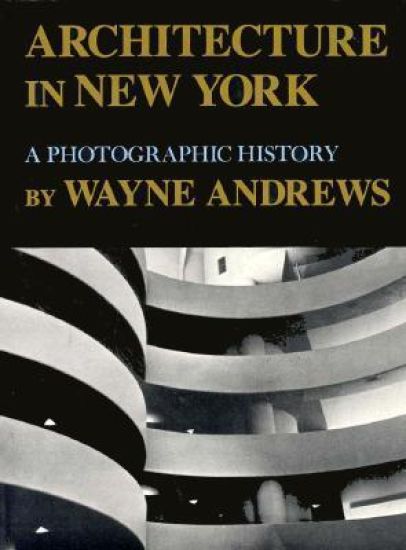
Architecture in New York

Architecture in New York

Wayne Andrews

Syracuse University Press
1995
nidottu
In the many photographs magnificently reproduced in this collection, Andrews has captured the incredible range of the architecture of New York State, from Manhattan Island to Chautauqua County. Something of the scope of this work is indicated by the fact that A. J. Davis, Richard Upjohn, James Renwick, Richard M. Hunt, Henry Hardenbergh, Daniel Burnham, Carrere & Hastings, Cass Gilbert, John Russell Pope, Louis Sullivan, Frank Lloyd Wright, Mies van der Rohe, Philip Johnson, Marcel Breuer, Eliel Saarincn, and Paul Rudolph are among the architects whose works are illustrated.