Kirjojen hintavertailu. Mukana 11 342 296 kirjaa ja 12 kauppaa.

Kirjahaku

Etsi kirjoja tekijän nimen, kirjan nimen tai ISBN:n perusteella.

14 kirjaa tekijältä Wayne C. Booth

The Essential Wayne Booth

The Essential Wayne Booth

Wayne C. Booth

University of Chicago Press
2006
sidottu
Wayne Booth wrote some of the most influential and engaging criticism of our time, most notably the 1961 classic "The Rhetoric of Fiction", a book that transformed literary criticism and became the standard reference point for advanced discussions of how fiction works, how authors make novels accessible, and how readers re-create texts. While Booth's work was formative to the study of literature, his essential writings have never been collected in a single volume - until now. Selected by Walter Jost in collaboration with Booth himself, the texts anthologized here present a picture of this indispensable critic's contributions to literary and rhetorical studies. The selections range from memorable readings of Macbeth, Jane Austen, George Eliot, and Henry James to engagements with Booth's intellectual heroes, such as Richard McKeon and Mikhail Bakhtin. But rhetoric, Booth's abiding concern as a critic and thinker, provides the organizing principle of the anthology. "The Essential Wayne Booth" illuminates the scope of Booth's rhetorical inquiry: the entire range of resources that human beings share for producing effects on one another. Whether about metaphors for our friendship with books or the two cultures of science and religion, the texts collected here always return to the techniques and ethics of our ways of communicating with each other - that is, to rhetoric. "The Essential Wayne Booth" is a capstone to Booth's long career and an eloquent reminder of the ways in which criticism can make us alive to the arts of writing, talking, and listening.
A Rhetoric of Irony

A Rhetoric of Irony

Wayne C. Booth

University of Chicago Press
1975
nidottu
Excerpts from works by Defoe, Beckett, and other writings illuminated the progresses by which individuals perceive, interpret, and communicate deliberately ironic statements in speed and writing
Critical Understanding

Critical Understanding

Wayne C. Booth

University of Chicago Press
1982
nidottu
Critics will always disagree, but, maintains Wayne Booth, their disagreement need not result in critical chaos. In Critical Understanding, Booth argues for a reasoned pluralism--a criticism more various and resourceful than can be caught in any one critic's net. He relates three noted pluralists--Ronald Crane, Kenneth Burke, and M. H. Abrams--to various currently popular critical approaches. Throughout, Booth tests the abstractions of metacriticism against particular literary works, devoting a substantial portion of his discussion to works by W. H. Auden, Henry James, Oliver Goldsmith, and Anatole France.
The Rhetoric of Fiction

The Rhetoric of Fiction

Wayne C. Booth

University of Chicago Press
1983
nidottu
The first edition of The Rhetoric of Fiction transformed the criticism of fiction and soon became a classic in the field. One of the most widely used texts in fiction courses, it is a standard reference point in advanced discussions of how fictional form works, how authors make novels accessible, and how readers recreate texts, and its concepts and terms—such as "the implied author," "the postulated reader," and "the unreliable narrator"—have become part of the standard critical lexicon. For this new edition, Wayne C. Booth has written an extensive Afterword in which he clarifies misunderstandings, corrects what he now views as errors, and sets forth his own recent thinking about the rhetoric of fiction. The other new feature is a Supplementary Bibliography, prepared by James Phelan in consultation with the author, which lists the important critical works of the past twenty years—two decades that Booth describes as "the richest in the history of the subject."
Modern Dogma and the Rhetoric of Assent

Modern Dogma and the Rhetoric of Assent

Wayne C. Booth

University of Chicago Press
1974
nidottu
When should I change my mind? What can I believe and what must I doubt? In this new "philosophy of good reasons" Wayne C. Booth exposes five dogmas of modernism that have too often inhibited efforts to answer these questions. Modern dogmas teach that "you cannot reason about values" and that "the job of thought is to doubt whatever can be doubted," and they leave those who accept them crippled in their efforts to think and talk together about whatever concerns them most. They have willed upon us a "befouled rhetorical climate" in which people are driven to two self-destructive extremes—defenders of reason becoming confined to ever narrower notions of logical or experimental proof and defenders of "values" becoming more and more irresponsible in trying to defend the heart, the gut, or the gonads. Booth traces the consequences of modernist assumptions through a wide range of inquiry and action: in politics, art, music, literature, and in personal efforts to find "identity" or a "self." In casting doubt on systematic doubt, the author finds that the dogmas are being questioned in almost every modern discipline. Suggesting that they be replaced with a rhetoric of "systematic assent," Booth discovers a vast, neglected reservoir of "good reasons"—many of them known to classical students of rhetoric, some still to be explored. These "good reasons" are here restored to intellectual respectability, suggesting the possibility of widespread new inquiry, in all fields, into the question, "When should I change my mind?"
Now Don't Try to Reason with Me

Now Don't Try to Reason with Me

Wayne C. Booth

University of Chicago Press
2006
nidottu
In this entertaining collection of essays, Wayne Booth looks for the much-maligned “middle ground” for reason—a rhetoric that can unite truths of the heart with truths of the head and allow us all to discover shared convictions in mutual inquiry. First delivered as lectures in the 1960s, when Booth was a professor at Earlham College and the University of Chicago, Now Don’t Try to Reason with Me still resounds with anyone struggling for consensus in a world of us versus them. “Professor Booth’s earnestness is graced by wit, irony, and generous humor.”—Louis Coxe, New Republic
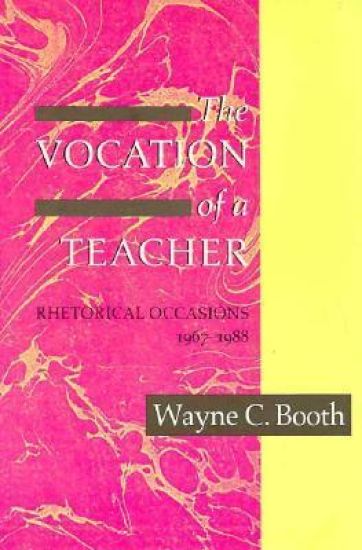
The Vocation of a Teacher

The Vocation of a Teacher

Wayne C. Booth

University of Chicago Press
1989
sidottu
This critically acclaimed collection is both a passionate celebration of teaching as a vocation and an argument for rhetoric as the center of liberal education. While Booth provides an eloquent personal account of the pleasures of teaching, he also vigorously exposes the political and economic scandals that frustrate even the most dedicated educators. "[Booth] is unusually adept at addressing a wide variety of audiences. From deep in the heart of this academic jungle, he shows a clear eye and a firm step."--Alison Friesinger Hill, New York Times Book Review "A cause for celebration...What an uncommon man is Wayne Booth. What an uncommon book he has provided for our reflection." --James Squire, Educational Leadership "This book stands as a vigorous reminder of the traditional virtues of the scholar-teacher."--Brian Cox, Times Literary Supplement
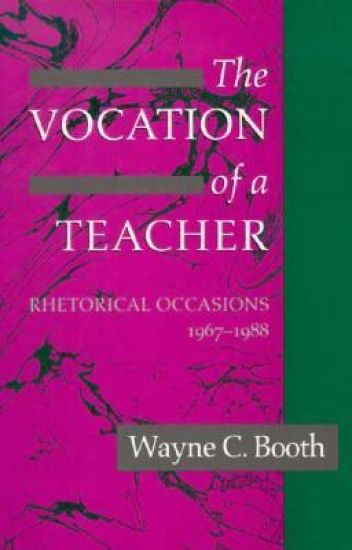
The Vocation of a Teacher

The Vocation of a Teacher

Wayne C. Booth

University of Chicago Press
1991
nidottu
This critically acclaimed collection is both a passionate celebration of teaching as a vocation and an argument for rhetoric as the center of liberal education. While Booth provides an eloquent personal account of the pleasures of teaching, he also vigorously exposes the political and economic scandals that frustrate even the most dedicated educators. "[Booth] is unusually adept at addressing a wide variety of audiences. From deep in the heart of this academic jungle, he shows a clear eye and a firm step."—Alison Friesinger Hill, New York Times Book Review"A cause for celebration. . . . What an uncommon man is Wayne Booth. What an uncommon book he has provided for our reflection."—James Squire, Educational Leadership"This book stands as a vigorous reminder of the traditional virtues of the scholar-teacher."—Brian Cox, Times Literary Supplement
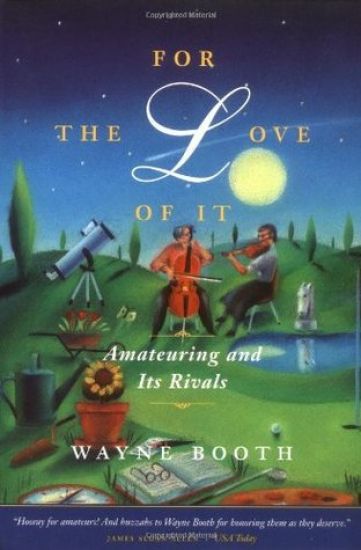
For the Love of It

For the Love of It

Wayne C. Booth

University of Chicago Press
2000
nidottu
Why would anyone spend free hours and weekends on a demanding practice that promises no payoff in money, fame, or power? Is it true that anything worth doing is worth doing only if you can get credit for doing it really well? Why do amateurs do what they do? Wayne Booth found himself enticed by these questions after taking up the cello at age 31 and then experiencing decades not just of unforeseen struggle but of comic and humiliating disasters - followed by hours of astonishing bliss playing chamber music. This book tells the story not only of this intimate struggle between man and cello but also of the larger struggle between a society obsessed with success and payoff and individuals who choose challenging hobbies that yield no payoff except the love of it. This fundamental opposition leads Booth into diverse meditations on how amateuring relates to all other loves and pleasures. In his celebration of how the amateur's labouring can blossom, he thus joins a long line of thinkers who have puzzled over the meanings of "fun", "work" and "love."
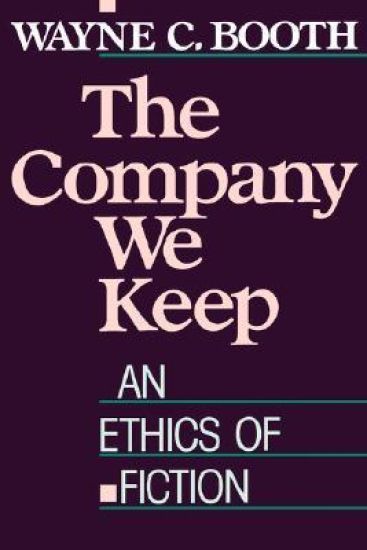
The Company We Keep

The Company We Keep

Wayne C. Booth

University of California Press
1989
pokkari
In "The Company We Keep", Wayne C. Booth argues for the relocation of ethics to the center of our engagement with literature. But the questions he asks are not confined to morality. Returning ethics to its root sense, Booth proposes that the ethical critic will be interested in any effect on the ethos, the total character or quality of tellers and listeners. Ethical criticism will risk talking about the quality of this particular encounter with this particular work. Yet it will give up the old hope for definitive judgments of 'good' work and 'bad'. Rather it will be a conversation about many kinds of personal and social goods that fictions can serve or destroy. While not ignoring the consequences for conduct of engaging with powerful stories, it will attend to that more immediate topic, What happens to us as we read? Who am I, during the hours of reading or listening? What is the quality of the life I lead in the company of these would-be friends? Through a wide variety of periods and genres and scores of particular works, Booth pursues various metaphors for such engagements: 'friendship with books', 'the exchange of gifts', 'the colonizing of worlds', 'the constitution of commonwealths'. He concludes with extended explorations of the ethical powers and potential dangers of works by Rabelais, D. H. Lawrence, Jane Austen, and Mark Twain.
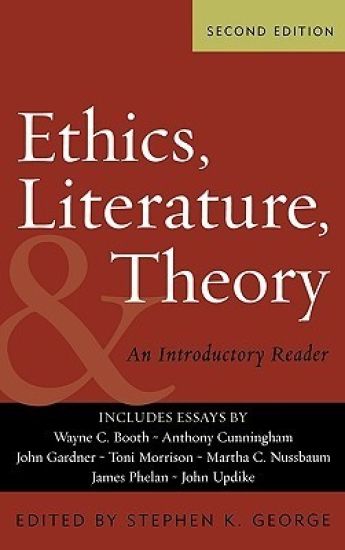
Ethics, Literature, and Theory

Ethics, Literature, and Theory

Wayne C. Booth

Sheed Ward,U.S.
2005
sidottu
Ethics, Literature, and Theory: An Introductory Reader brings together the work of contemporary scholars, teachers, and writers into lively discussion on the moral role of literature and the relationship between aesthetics, art, and ethics. Do the rich descriptions and narrative shapings of literature provide a valuable resource for readers, writers, philosophers, and everyday people to imagine and confront the ultimate questions of life? Do the human activities of storytelling and complex moral decision-making have a deep connection? What are the moral responsibilities of the artist, critic, and reader? What can religious perspectives_from Catholic to Protestant to Mormon_contribute to literary criticism? What do we mean when we talk about ethical criticism and how does this differ from the common notion of censorship? Thirty well known contributors reflect on these questions including: literary theorists Marshall Gregory, James Phelan, and Wayne Booth; philosophers Martha Nussbaum, Richard Hart, and Nina Rosenstand; and authors John Updike, Charles Johnson, Flannery O'Connor, and Bernard Malamud. Divided into four sections, with introductory matter and questions for discussion, this accessible anthology represents the most crucial work today exploring the interdisciplinary connections among literature, religion and philosophy.
Ethics, Literature, and Theory

Ethics, Literature, and Theory

Wayne C. Booth

Sheed Ward,U.S.
2005
nidottu
Ethics, Literature, and Theory: An Introductory Reader brings together the work of contemporary scholars, teachers, and writers into lively discussion on the moral role of literature and the relationship between aesthetics, art, and ethics. Do the rich descriptions and narrative shapings of literature provide a valuable resource for readers, writers, philosophers, and everyday people to imagine and confront the ultimate questions of life? Do the human activities of storytelling and complex moral decision-making have a deep connection? What are the moral responsibilities of the artist, critic, and reader? What can religious perspectives—from Catholic to Protestant to Mormon—contribute to literary criticism? What do we mean when we talk about ethical criticism and how does this differ from the common notion of censorship? Thirty well known contributors reflect on these questions including: literary theorists Marshall Gregory, James Phelan, and Wayne Booth; philosophers Martha Nussbaum, Richard Hart, and Nina Rosenstand; and authors John Updike, Charles Johnson, Flannery O'Connor, and Bernard Malamud. Divided into four sections, with introductory matter and questions for discussion, this accessible anthology represents the most crucial work today exploring the interdisciplinary connections among literature, religion and philosophy.
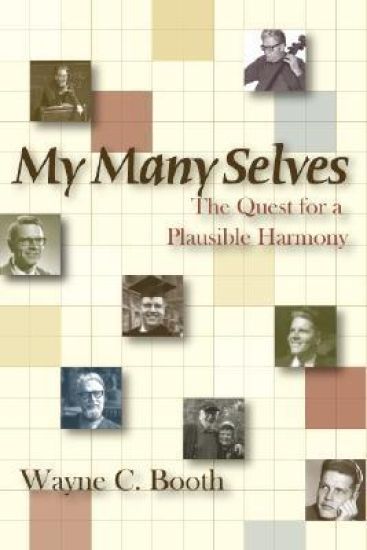
My Many Selves

My Many Selves

Wayne C. Booth

Utah State University Press
2006
pokkari
In his autobiography, My Many Selves, Wayne C. Booth is less concerned with his professional achievements---though the book by no means ignores his distinguished career---than with the personal vision that emerges from a long life lived thoughtfully. For Booth, even the autobiographical process becomes part of a quest to harmonize the diverse, often conflicting aspects of who he was. To see himself clearly and whole, he broke the self down, personified the fragments, uncovered their roots in his experience and background, and engaged those selves and experiences in dialogue. Basic to his story and to its lifelong concern with ethics and rhetoric was his Mormon youth in rural Utah. In adulthood he struggled with that background, abandoning most Mormon doctrines, but he retained the identity, ethical questions, and concern with communication that this upbringing gave him. The uncommon wisdom and careful attention that empower Wayne Booth's many other books cause My Many Selves to transcend its genre, as the best memoirs always do. The book becomes a window through which we who read it will see our own conflicts, our own ongoing struggle to live honestly and ethically in the world.Wayne Booth died in October 2005, soon after completing work on this autobiography.
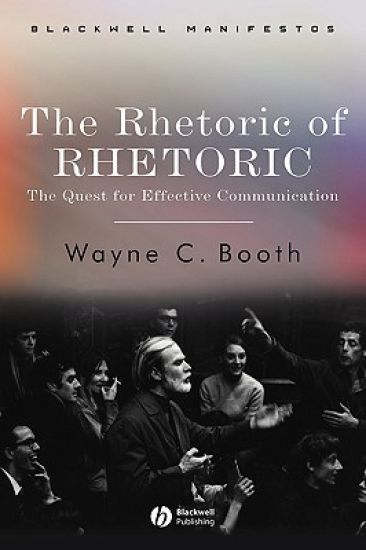
The Rhetoric of RHETORIC

The Rhetoric of RHETORIC

Wayne C. Booth

Wiley-Blackwell (an imprint of John Wiley Sons Ltd)
2004
nidottu
In this manifesto, distinguished critic Wayne Booth claims that communication in every corner of life can be improved if we study rhetoric closely. Written by Wayne Booth, author of the seminal book, The Rhetoric of Fiction (1961). Explores the consequences of bad rhetoric in education, in politics, and in the media. Investigates the possibility of reducing harmful conflict by practising a rhetoric that depends on deep listening by both sides.