Kirjojen hintavertailu. Mukana 11 342 296 kirjaa ja 12 kauppaa.

Kirjahaku

Etsi kirjoja tekijän nimen, kirjan nimen tai ISBN:n perusteella.

5 kirjaa tekijältä Wayne Dawkins

Sam Lacy and Wendell Smith

Sam Lacy and Wendell Smith

Wayne Dawkins

TAYLOR FRANCIS LTD
2024
nidottu
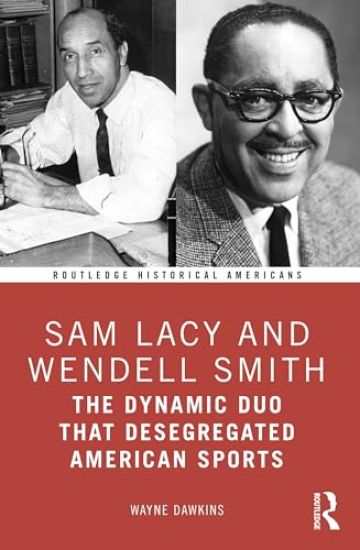
This dual biography highlights the transformative influence of Sam Lacy and Wendell Smith, two journalists who changed American sport and society through their calls to desegregate Major League Baseball and recognize Black baseball players.In a decade-long battle, Lacy and Smith tirelessly advocated for the inclusion of Black players in the major leagues, reporting in the Baltimore Afro-American and Pittsburgh Courier, respectively. Both sports writers covered players in the Negro Leagues, following off-season games in places like Mexico, Cuba, and the Dominican Republic. In 1947, Lacy’s and Smith’s work helped break through MLB’s racial barriers when Jackie Robinson joined the Brooklyn Dodgers. Over the coming years, Lacy and Smith, on individual career trajectories but sharing a common goal, would report on the dissolution of the Negro Leagues and future MVPs such as Willie Mays, Hank Aaron, and Elston Howard. The book considers the lasting legacies of these sports journalists, both recognized in the writers’ wing of the Baseball Hall of Fame.Through its thoughtful analysis of Lacy and Smith’s groundbreaking impact on America’s pastime, this book will appeal to students and general readers interested in sports history and journalism and Afro-American history.
Sam Lacy and Wendell Smith

Sam Lacy and Wendell Smith

Wayne Dawkins

TAYLOR FRANCIS LTD
2024
sidottu
This dual biography highlights the transformative influence of Sam Lacy and Wendell Smith, two journalists who changed American sport and society through their calls to desegregate Major League Baseball and recognize Black baseball players.In a decade-long battle, Lacy and Smith tirelessly advocated for the inclusion of Black players in the major leagues, reporting in the Baltimore Afro-American and Pittsburgh Courier, respectively. Both sports writers covered players in the Negro Leagues, following off-season games in places like Mexico, Cuba, and the Dominican Republic. In 1947, Lacy’s and Smith’s work helped break through MLB’s racial barriers when Jackie Robinson joined the Brooklyn Dodgers. Over the coming years, Lacy and Smith, on individual career trajectories but sharing a common goal, would report on the dissolution of the Negro Leagues and future MVPs such as Willie Mays, Hank Aaron, and Elston Howard. The book considers the lasting legacies of these sports journalists, both recognized in the writers’ wing of the Baseball Hall of Fame.Through its thoughtful analysis of Lacy and Smith’s groundbreaking impact on America’s pastime, this book will appeal to students and general readers interested in sports history and journalism and Afro-American history.
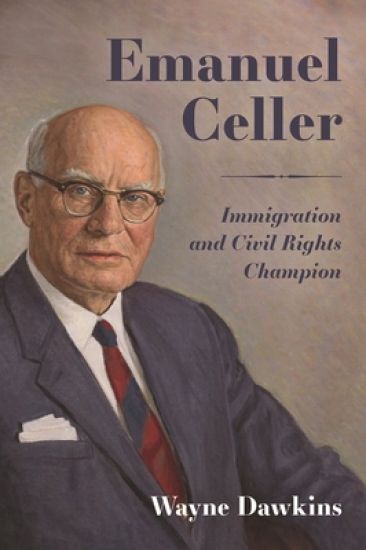
Emanuel Celler

Emanuel Celler

Wayne Dawkins

University Press of Mississippi
2020
sidottu
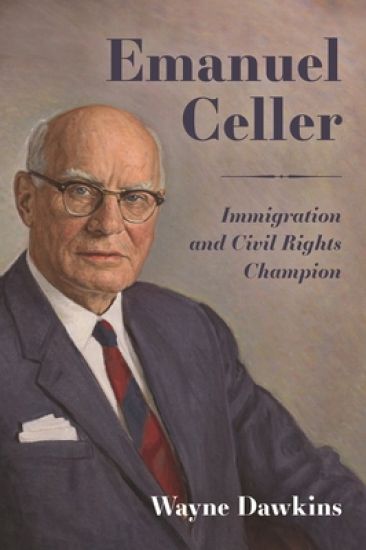
Congressman Emanuel Celler (1888-1981) was a New York City congressman who served in the United States House of Representatives from 1923 to 1973. Celler's almost fifty-year career was highlighted by his long fight to eliminate national origin quotas as a basis for immigration restrictions and his battles for civil rights legislation. In Emanuel Celler: Immigration and Civil Rights Champion, author Wayne Dawkins introduces new readers to a figure integral to our contemporary political system. Celler's own immigrant background framed his lifelong opposition to immigration restrictions and his corresponding support for reducing barriers for immigrant entry into the United States. After decades of struggle, he proposed and steered through the House the Hart-Celler Act of 1965, which eliminated national origins as a consideration for immigration, profoundly shaping modern America. Celler was also a consistent advocate for civil rights. As chairman of the House Judiciary Committee from 1949 to 1973 (except for a break from 1953 to 1955), Celler was involved in drafting and passing the Civil Rights Act of 1964, the Voting Rights Act of 1965, and the Civil Rights Act of 1968. During his career he was also deeply involved in landmark antitrust legislation, the establishment of US ties with the state of Israel, and the Gun Control Act of 1968, and was the author of three constitutional amendments, including the 25th that established presidential succession. Dawkins profiles a complex politician who shaped the central tenets of Democratic Party liberalism for much of the twentieth century and whose work remains central to the nation, and our political debates, today.
Emanuel Celler

Emanuel Celler

Wayne Dawkins

University Press of Mississippi
2020
nidottu
Congressman Emanuel Celler (1888-1981) was a New York City congressman who served in the United States House of Representatives from 1923 to 1973. Celler's almost fifty-year career was highlighted by his long fight to eliminate national origin quotas as a basis for immigration restrictions and his battles for civil rights legislation. In Emanuel Celler: Immigration and Civil Rights Champion, author Wayne Dawkins introduces new readers to a figure integral to our contemporary political system. Celler's own immigrant background framed his lifelong opposition to immigration restrictions and his corresponding support for reducing barriers for immigrant entry into the United States. After decades of struggle, he proposed and steered through the House the Hart-Celler Act of 1965, which eliminated national origins as a consideration for immigration, profoundly shaping modern America. Celler was also a consistent advocate for civil rights. As chairman of the House Judiciary Committee from 1949 to 1973 (except for a break from 1953 to 1955), Celler was involved in drafting and passing the Civil Rights Act of 1964, the Voting Rights Act of 1965, and the Civil Rights Act of 1968. During his career he was also deeply involved in landmark antitrust legislation, the establishment of US ties with the state of Israel, and the Gun Control Act of 1968, and was the author of three constitutional amendments, including the 25th that established presidential succession. Dawkins profiles a complex politician who shaped the central tenets of Democratic Party liberalism for much of the twentieth century and whose work remains central to the nation, and our political debates, today.
City Son

City Son

Wayne Dawkins

University Press of Mississippi
2020
nidottu
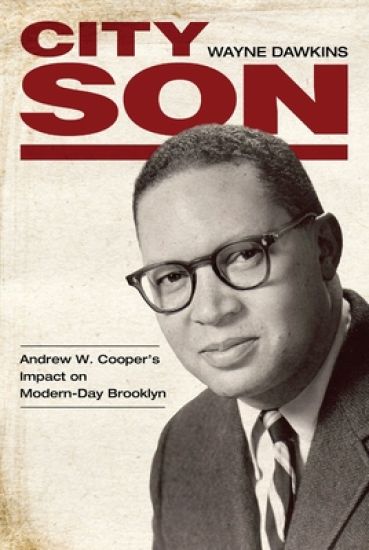
In 1966, a year after the Voting Rights Act began liberating millions of southern blacks, New Yorkers challenged a political system that weakened their voting power. Andrew W. Cooper (1927-2002), a beer company employee, sued state officials in a case called Cooper vs. Power. In 1968, the courts agreed that black citizens were denied the right to elect an authentic representative of their community. The 12th Congressional District was redrawn. Shirley Chisholm, a member of Cooper's political club, ran for the new seat and made history as the first black woman elected to Congress. Cooper became a journalist, a political columnist, then founder of Trans Urban News Service and the City Sun, a feisty Brooklyn-based weekly that published from 1984 to 1996. Whether the stories were about Mayor Koch or Rev. Al Sharpton, Howard Beach or Crown Heights, Tawana Brawley's dubious rape allegations, the Daily News Four trial, or Spike Lee's filmmaking career, Cooper's City Sun commanded attention and moved officials and readers to action. Cooper's leadership also gave Brooklyn - particularly predominantly black central Brooklyn - an identity. It is no accident that in the twenty-first century the borough crackles with energy. Cooper fought tirelessly for the community's vitality when it was virtually abandoned by the civic and business establishments in the mid-to-late twentieth century. In addition, scores of journalists trained by Cooper are keeping his spirit alive.